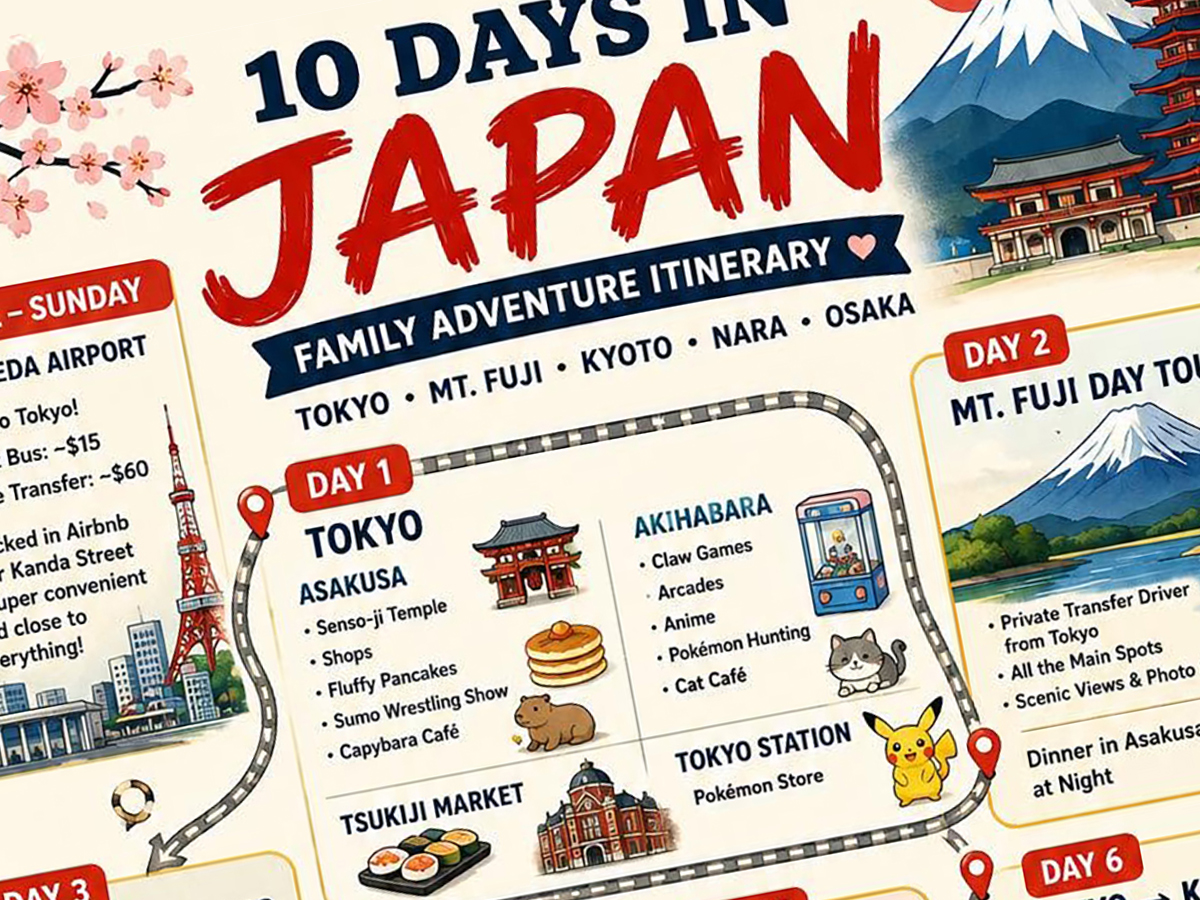
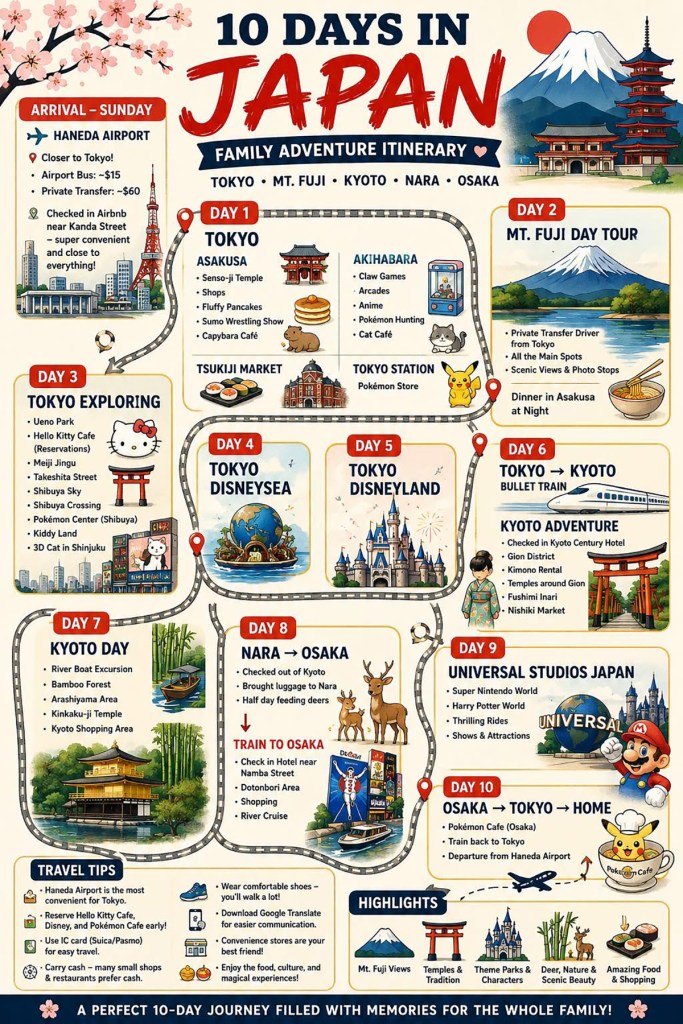
You’ve seen those pretty Japan itineraries everyone is posting online, right? They’re decorated with cherry blossoms! Mt. Fuji! Pagodas! They’re packed with all kinds of sightseeing ideas that look like fun, illustrated with enticing pictures of the wonders in store for each day. And all you have to do to save yourself hours of research and planning is ask AI to do it for you.
The only problem is…it’s all wrong. If you try to follow its recommendations, you’re in for some frustrating, disappointing days.
But why?
You know that saying, “garbage in, garbage out”? Think about how AI works. It scampers about digesting everything that’s been posted on the web that’s related to your prompt, then dishes up the most likely answer based on a crowd-sourced mash-up.
Which will (for starters) only include the places where crowds go. If you love holding your camera over your head and trying to get a picture of whatever you went there to see, you’ll have a delightful experience.
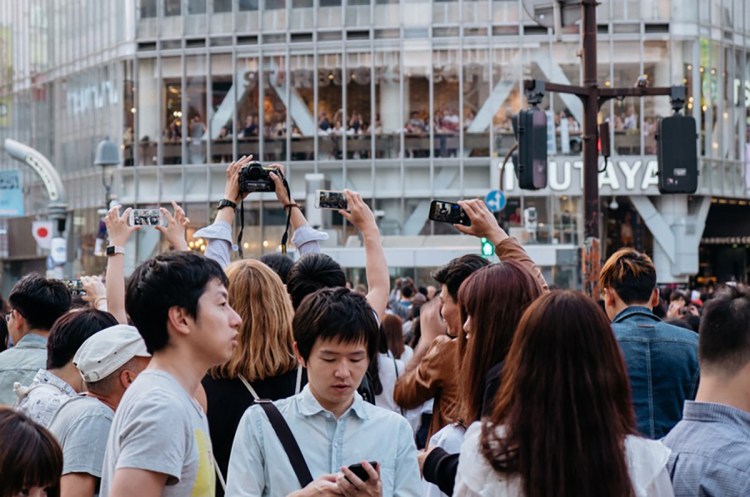
Also, crowd sourcing is only as good as the crowd it’s sourced from. What if the “crowd” posting in English is mostly made up of one-visit tourists, whose interests and needs are not the same as yours?
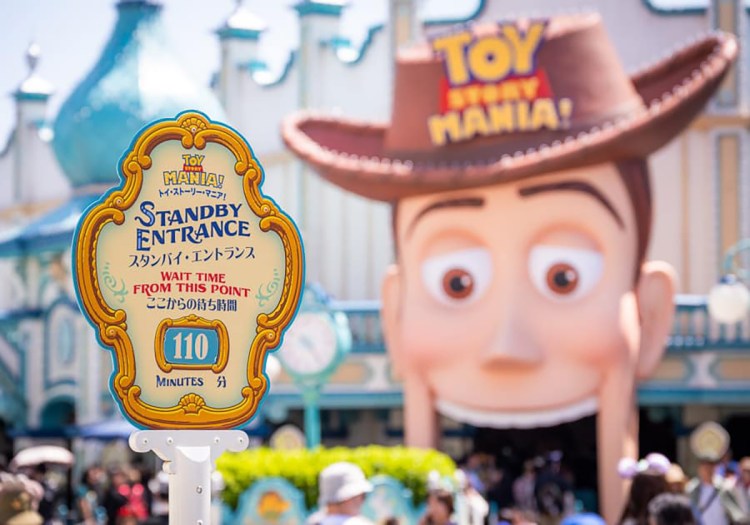
For example, why does the itinerary at the top of this page suggest three whole days spent at theme parks? Maybe it’s because so many Japan travel sites are aimed at people traveling with kids, or because the most prolific and active online posters are big fans sharing tips on how to navigate the arcane systems designed to extract the most profit in exchange for the least fun.
Or what if the “crowd” is skewed by influencers who went to Japan once for ten days and don’t really know anything about the country, but have hundreds of thousands of equally ignorant followers who shared their “insights” and pretty pictures?
The truth is, AI delivers recommendations based on information about Japan that’s written by the hordes of people who are only one vacation more knowledgable than you are.
Okay, but why not use AI to give myself some ideas as a starting point, refine my prompts until it only includes places I’d really like to see, then fact-check it?
That works better. But in the case of Japan travel, you’re still setting yourself up for disappointment. Japan is one of the most AI-slop-dominated destinations on the web. Unless you’re a wizard at identifying AI-doctored photos that lead you to expect a view that just plain doesn’t exist when you get there…
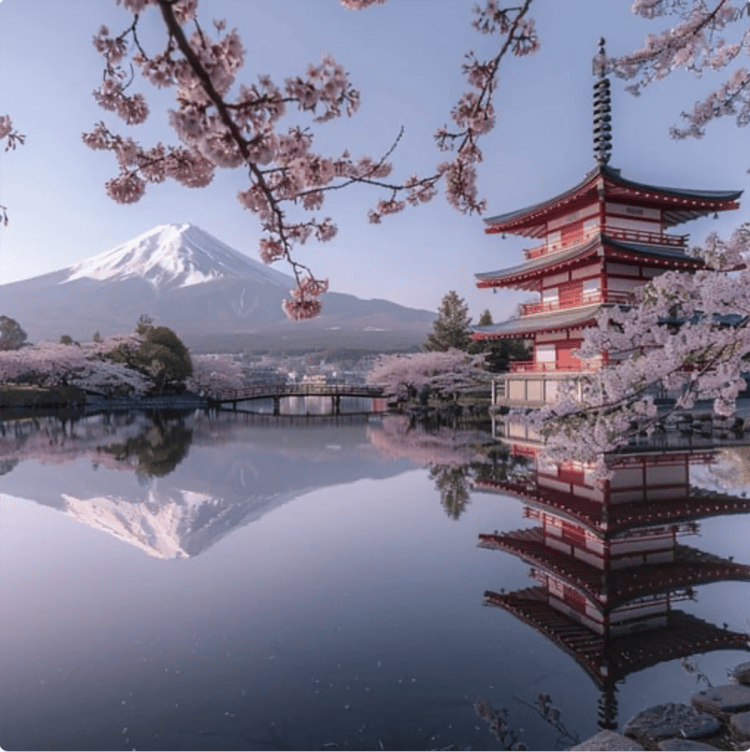
or already know that the place only looks like the pictures at certain times of year…
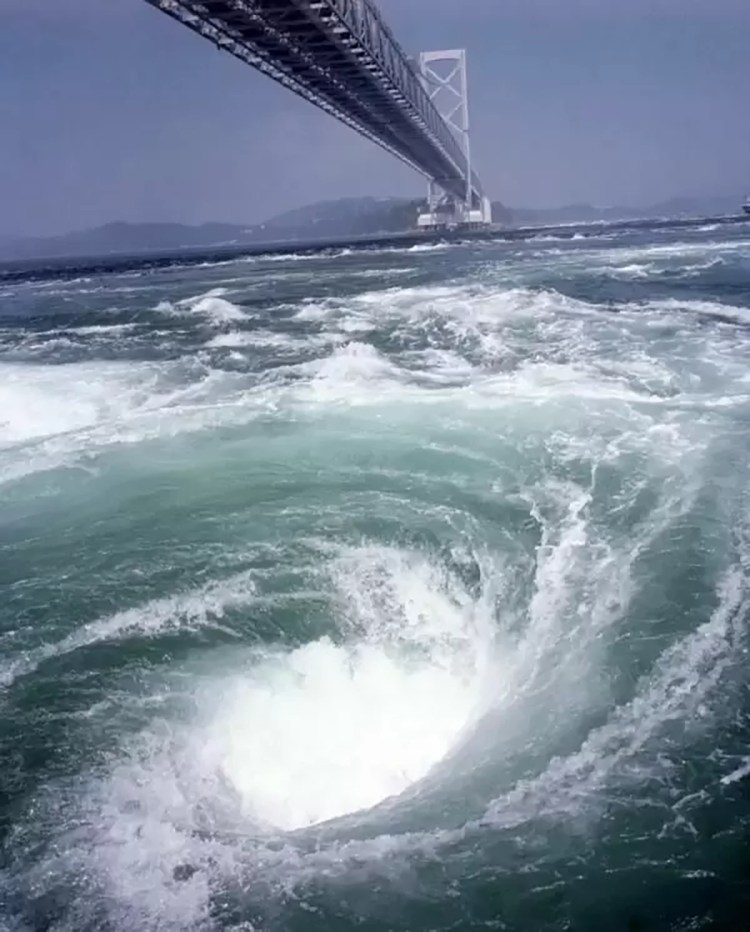
or know it’s not closed on the day you planned to go…

or that it requires an advance reservation to see it, but books up months in advance, you’re going to waste at least one day of your precious vacation time finding out the hard way.
A lot of knowing what to see and when to see it requires local knowledge and/or being able to get information from websites written only in Japanese. Yes, you can use Google Translate. Yes, you can do an image search of the photo online and compare it to all the others to see what a place really looks like.
Remind me how much time and effort AI is saving you now?
Lucky for you, there’s a faster, more reliable (and much more fun) way to plan the Japan trip of your dreams
It will also put destinations on your radar that are far more wonderful than the overtouristed, crowd-sourced path.
Here is a list of sites I use regularly, maintained by seasoned Japan travel experts, many of whom not only speak Japanese but actually live in Japan, and have been to the destinations they recommend multiple times so they can give reliable advice about how (and when!) you can enjoy them too.
If you have no idea where to start:
Japalanese—A site aimed at making Japan travel planning easy from start to finish. It’s written by an Australian journalist who thoroughly researches the facts and winkles out how-tos that are utterly reliable (including all things Disney, DisneySea and Universal, if those are on your must-see list). She also hosts a Facebook group called Japan Trip Planning for Beginners where she and others answer questions you might have.
GaijinPot—This one started as a site to help foreigners get jobs in Japan and navigate the ins and outs of living here, but has vastly expanded to include excellently curated recommendations and advice for traveling in Japan (with nice photos of the destinations!) that can be browsed by season and region.
The Tokyo Guide I Wish I’d Had—This is where I take my friends when they come to Japan. Includes an assortment of Perfect Days in Tokyo that are plug-and-play (and better than AI if saving time and effort is your goal). Like everything I write, this site is AI-free, ad-free and all the photos are pix I took myself on-site. My reward for writing and maintaining it is that some of you may also enjoy my books, if mysteries set in Japan are your cup of tea.
If you’d like expert recommendations from professional tour guides:
MactionPlanet—A site run by Tokyo’s best bespoke tour guide, on which he shares spots—both quirky and mainstream— that are must-sees in his expert opinion.
Unseen Japan—A site run by an seasoned Japan traveler and professional tour guide who has been everywhere and seen everything. He lays out a smorgasbord of destinations so you can decide what appeals to you, based on accurate information and photos.
If you want a vast, searchable source for accurate information, timing, and maps to specific places and events:
TimeOutTokyo—An ad-supported but very comprehensive and searchable site that’s kept reliably up to date with regard to dates, times and locations of a wide variety (including some pretty obscure) destinations. They also have a searchable archive of features with curated lists recommending “Best Of” spots for eats, drinks, and special interests. (Lots of “where to and when to,” but not much “how to.”)
Tokyo Cheapo—A rival of TimeOutTokyo that reliably provides similar information, with an added emphasis on stuff you can do cheaply or for free.
One more thing: The only Japan information AI delivers that’s NOT suspect is sourced from websites where real people with real knowledge have taken the time to photograph the real places, write reliable travel advice, and keep it updated. AI scrapes all their hard work without credit or links, so travelers stop visiting those sites to get the information they provide. How long do you think these reliable sources of information are going to exist, once there’s no incentive to continue investing the considerable time and effort it takes? If we don’t shun AI now, pretty soon there’s going to be nothing to check it against.
•
If you enjoyed this, subscribe! It’s free!

The last thing Birdie needs is to turn her life upside down solving a murder that was committed before she was born...

Birdie is a true daughter of the pleasure quarter. The number one apprentice to Yoshiwara’s number one courtesan, she’d rather do anything than derail her future life of wearing opulent robes and entertaining lords of the land. But when her search for the mother she never knew takes a dangerous turn, she faces an impossible choice: betray her own flesh and blood, or live the rest of her life being hunted by a powerful man who won’t stop until they’re both dead…

“…a complete immersion in a world of beauty, drama, secrets, and betrayals.”
—Kim Hays, author of the Polizei Bern series
•

Jonelle Patrick writes novels set in Japan, and blogs at Only In Japan and The Tokyo Guide I Wish I’d Had
•
If you enjoyed this, subscribe!
Get Japanagram recipes, books, travel and more delivered right to your email. And of course, it’s FREE!


