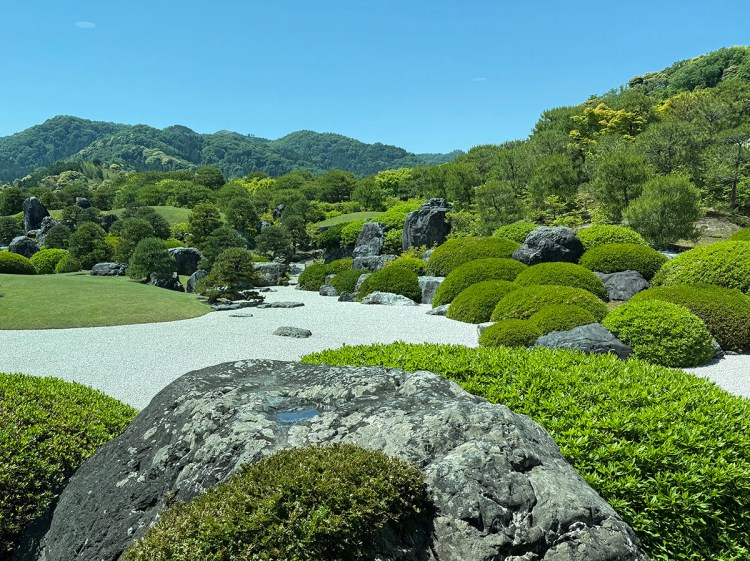
As you gaze at the Adachi Museum’s rolling hills planted with artfully shaped foliage…
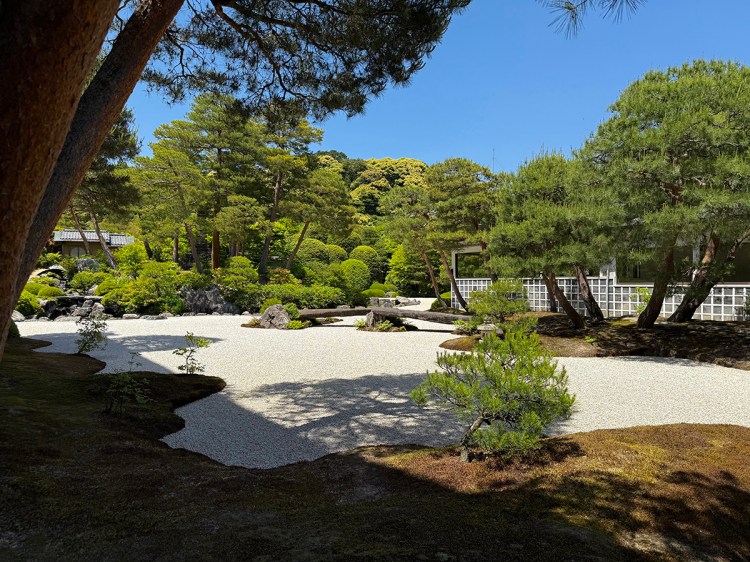
its series of achingly beautiful rock gardens…
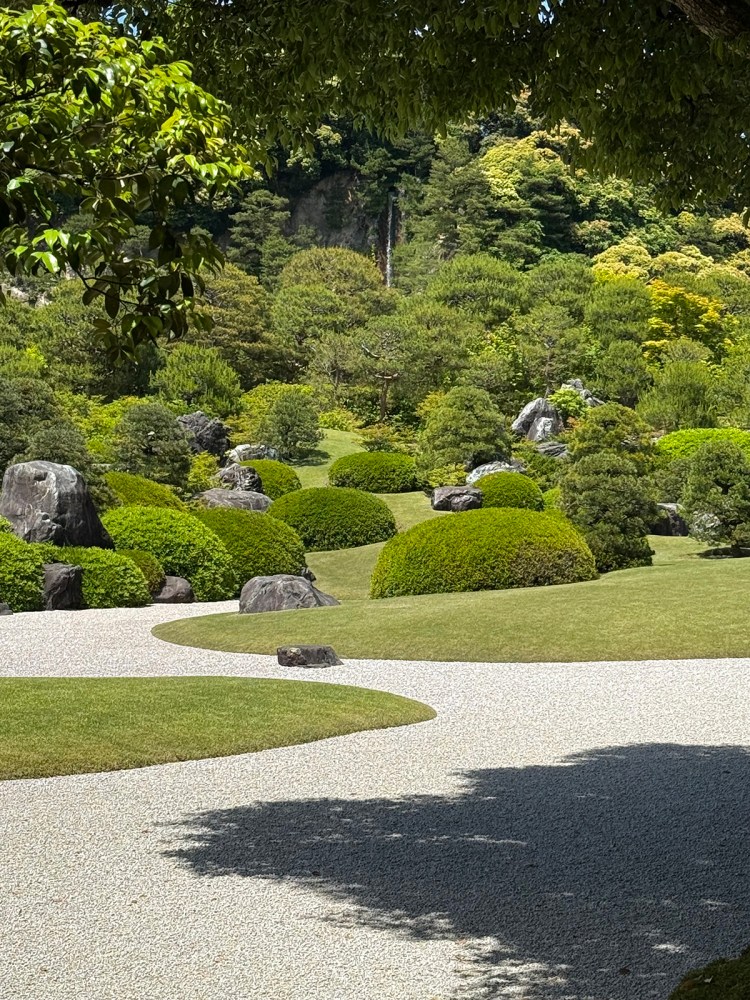
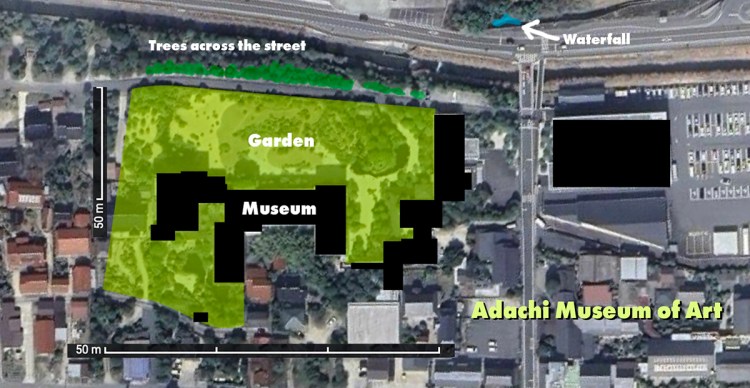
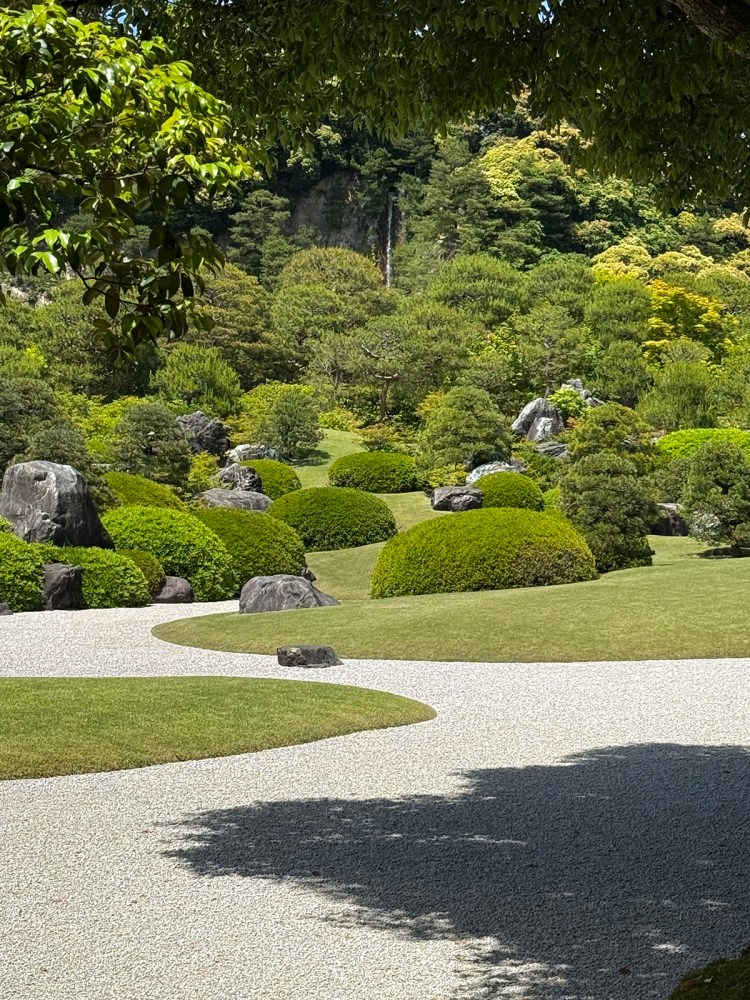
with spectacular water features (that even include this perfect thread of a waterfall)…
you begin to feel immersed in a new and better world. How could you not unwind and smile, surrounded by nature in its most perfect form?
There are lots of reasons the Adachi Museum is often cited as the #1 Japanese garden in Japan, and one of them is that it’s located way out in Shimane prefecture, where civilization isn’t pressing in on all sides. So, it can afford to be huge, right?
But…is it?
I went for a walk the day after I burned my entire phone battery snapping photos of its pleasing vistas, and as I strolled past the corner where the museum property ends…
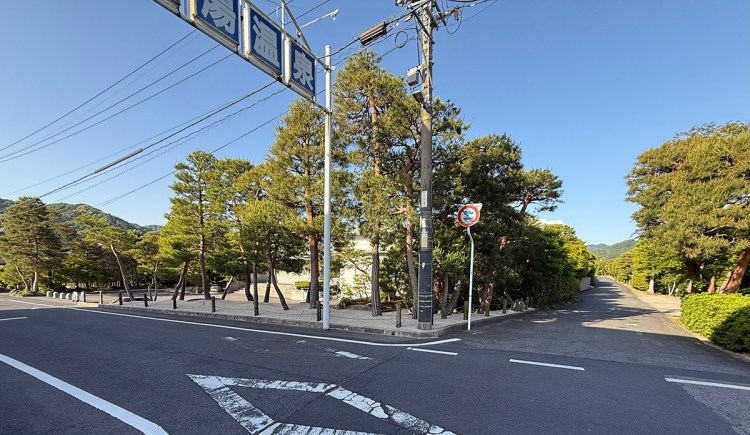
I thought, wow, even the trees outside the museum on the bordering street are trimmed to a faretheewell. How nice of them to do that for their neighbors. That’s commitment!
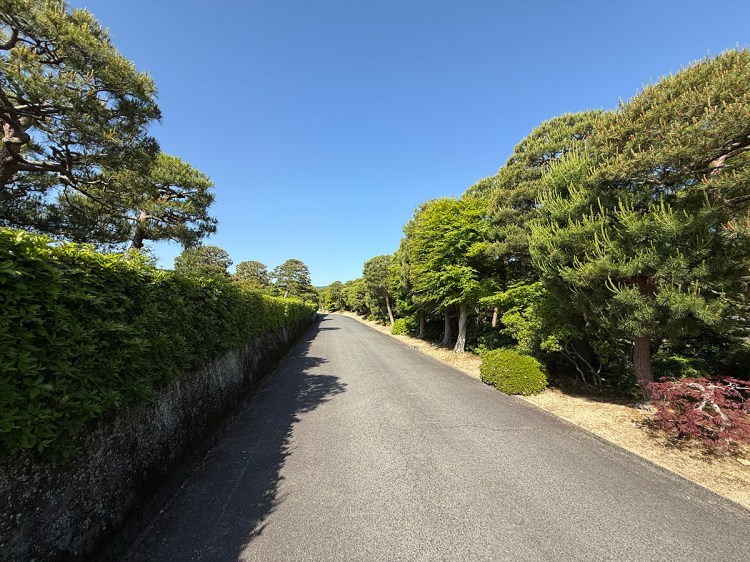
But it turned out to be more. Much more.
Curious about how big the garden really is, I walked along until I came to the end of the wall. It took me…two minutes. Wait, what? That can’t be right, because it took me over an hour to beadily flit from window to window, snapping photos of that garden from inside the museum.
Nope, it’s true. Two minutes. I went back and timed it. How can a garden with views that seem to go on forever be contained in less than a New York city block?
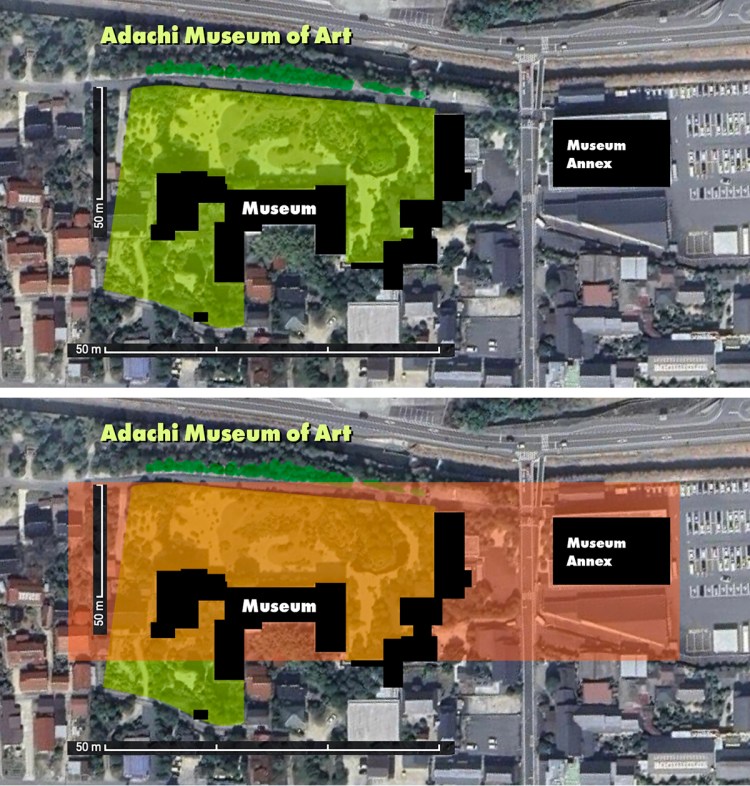
I couldn’t believe my eyes. But now I was really curious. How does the illusion work? What magic tricks did the designer employ to make it look so much bigger from the inside than it does from the outside?
Here’s what I discovered:
Magic trick #1: Prune the plantings on the “horizon” to be smaller than the ones in front
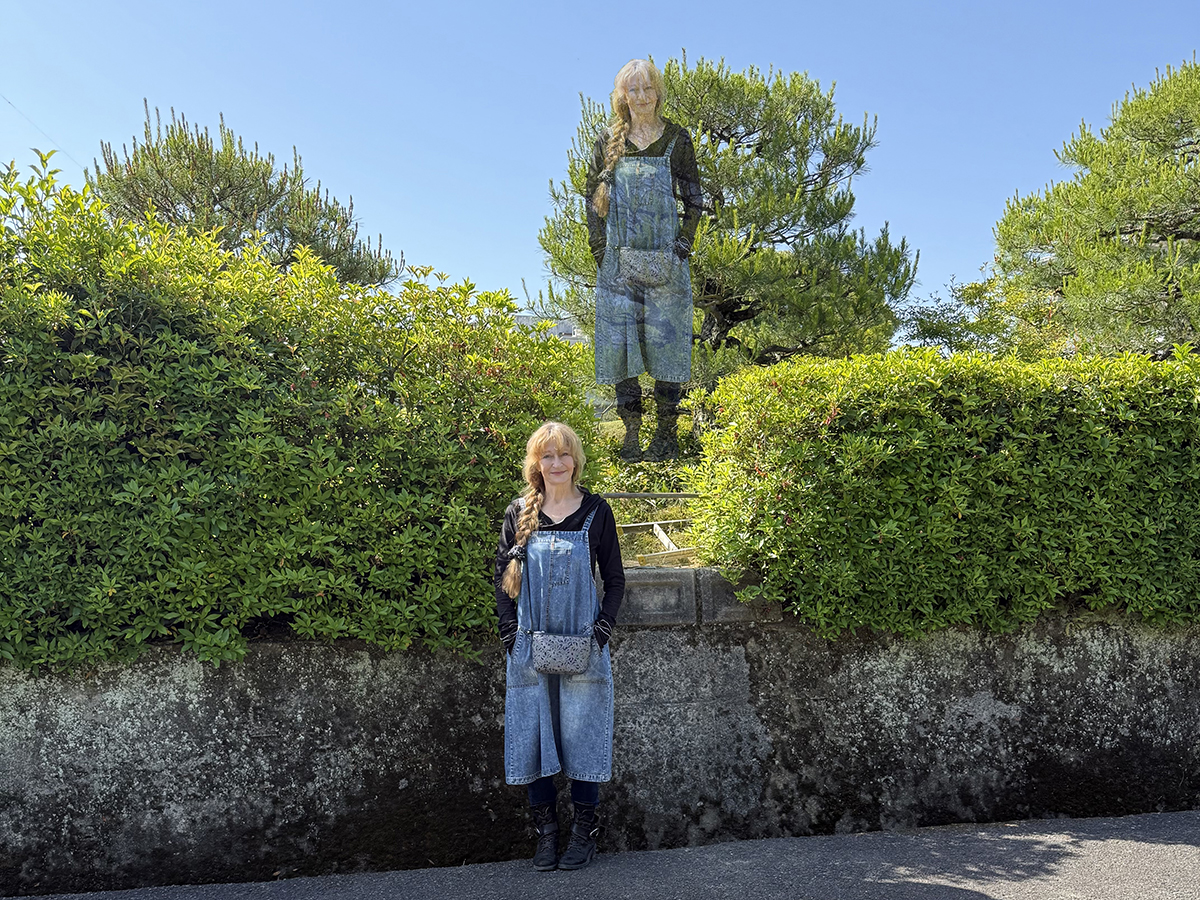
Here I am, outside the garden, standing next to the wall that runs along the farthest-away point of the vista. Look carefully, and you’ll see that inside the stone wall is a small berm of lawn with pine trees sprouting from just below the crest (they’re behind it, as viewed from the museum building, that white one in the background).
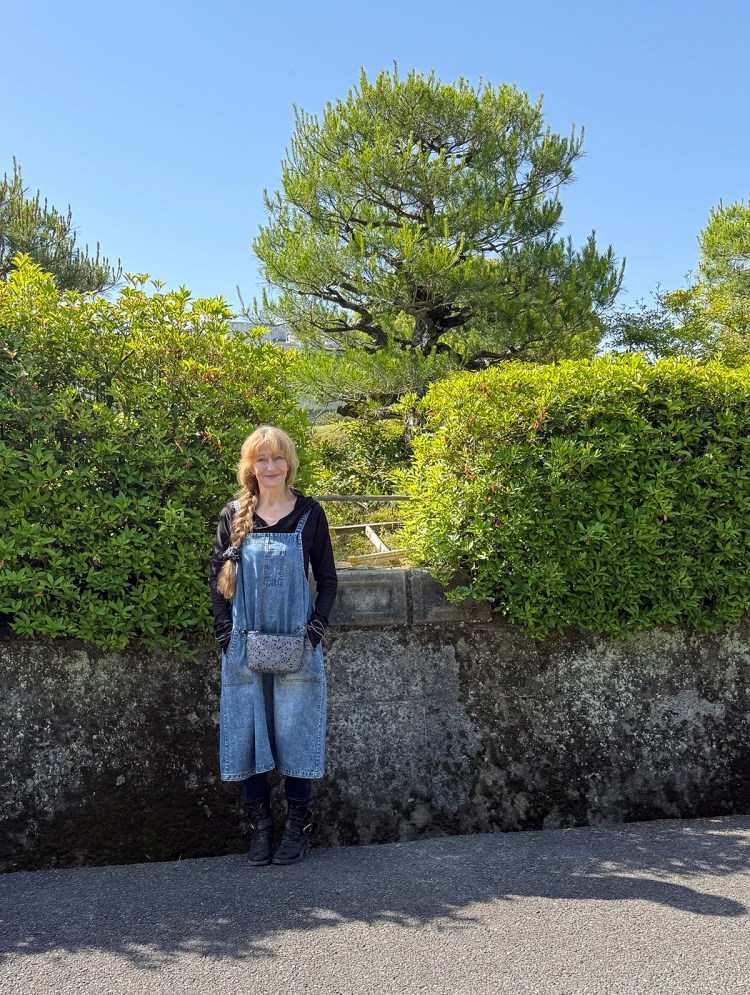
These are not full-size trees. They’ve been pruned like semi-bonsai, so they’re only one Jonelle tall!
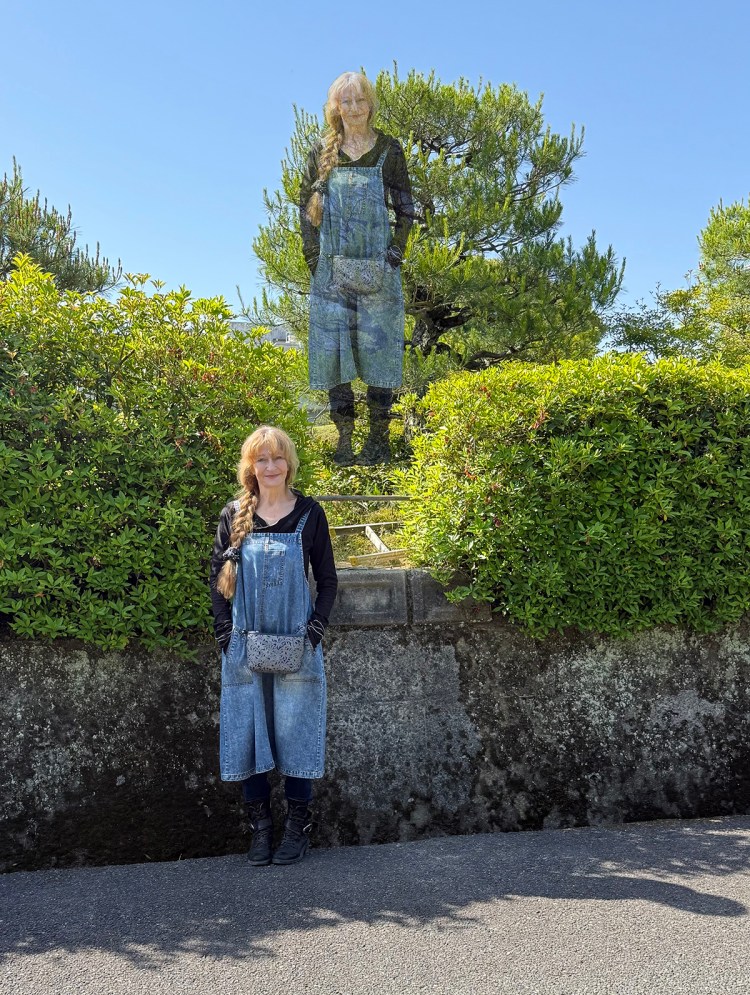
But because of the way the trunks are hidden behind the “hill,” they look like the tops of distant trees growing in a valley beyond.
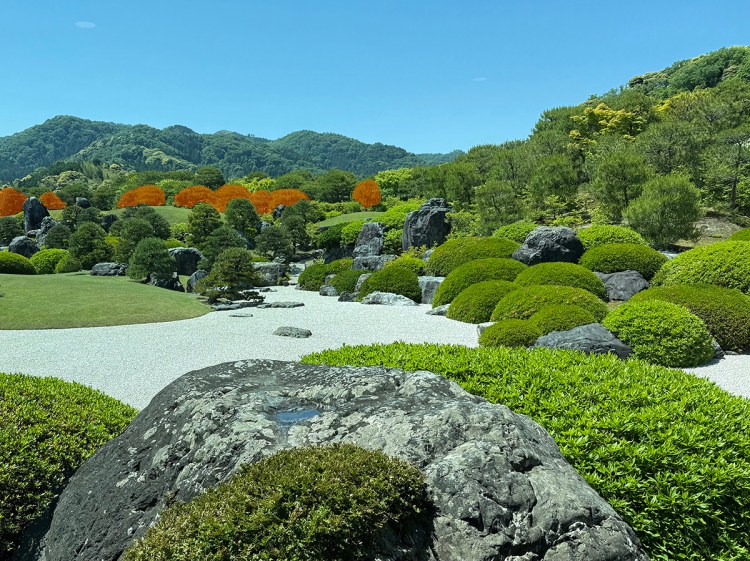
Magic trick #2: Borrow scenery from the surrounding landscape
This waterfall is not only outside the garden…
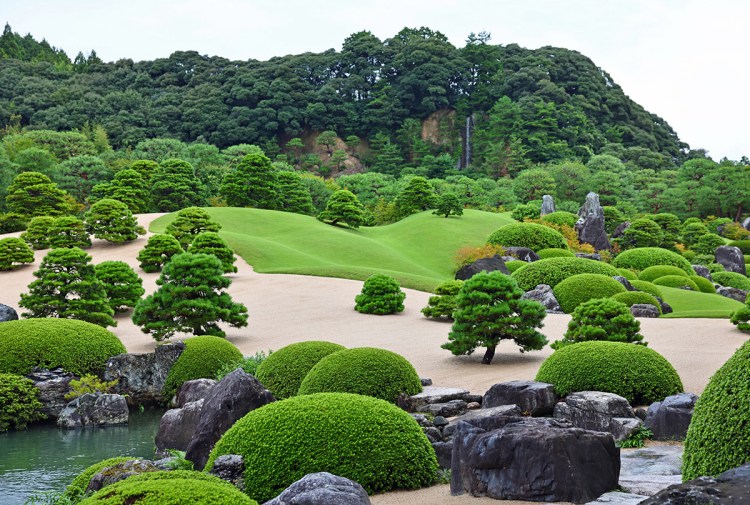
everything pink is on the other side of that side street, and everything blue is beyond that, on a cliffside that’s across a river and a highway.
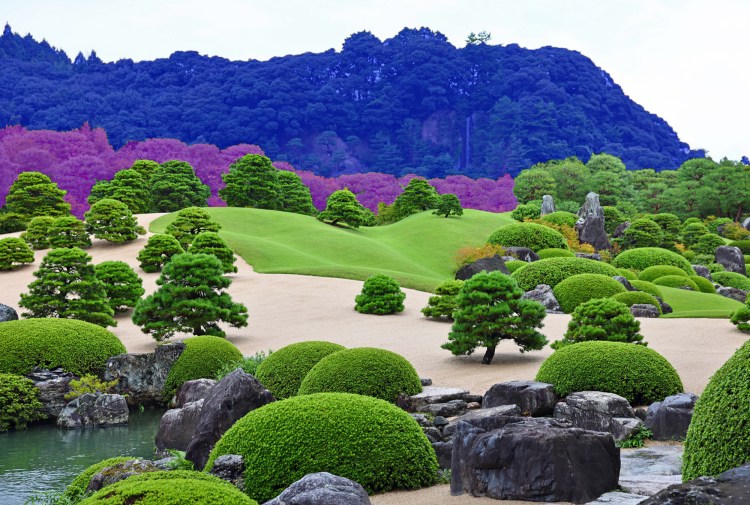
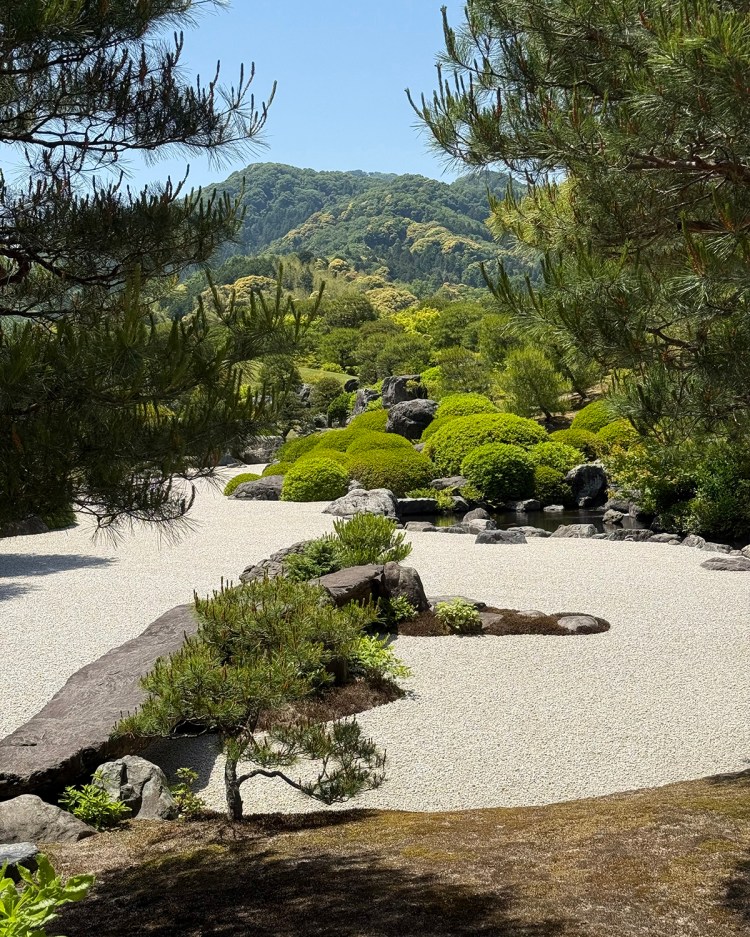
Magic trick #3: Choose trees and bushes that mimic the outside landscape
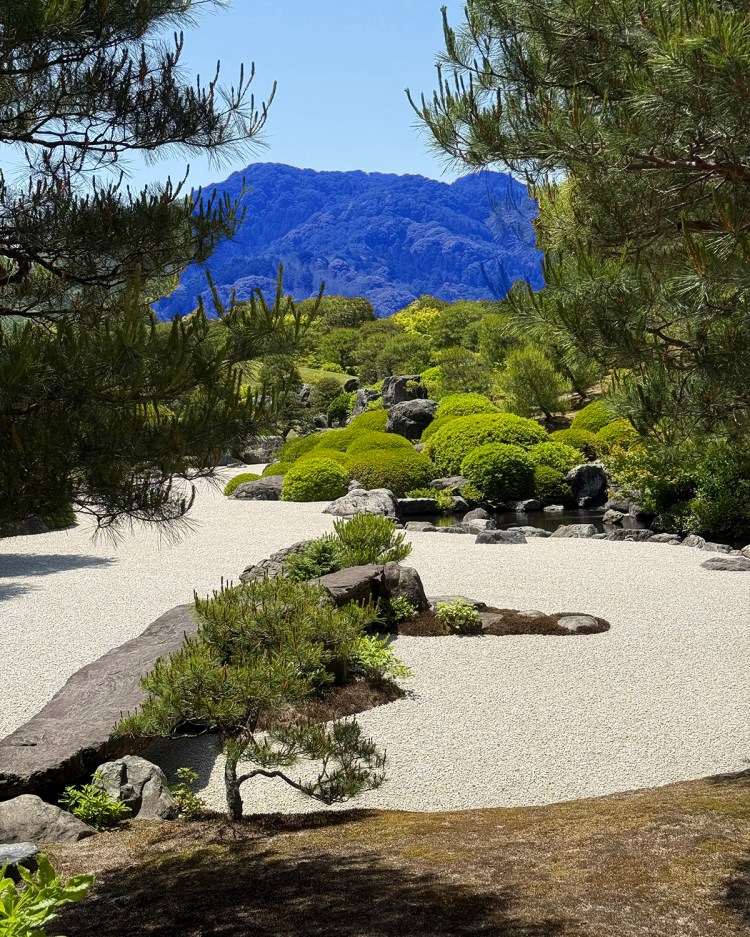
Notice how the colors, shapes, and textures of the plantings inside the garden echo the distant ones, and are planted in an arrangement that gives the impression that they follow that ridge running up the mountainside?
Everything blue here is actually outside the garden, on a distant mountain.
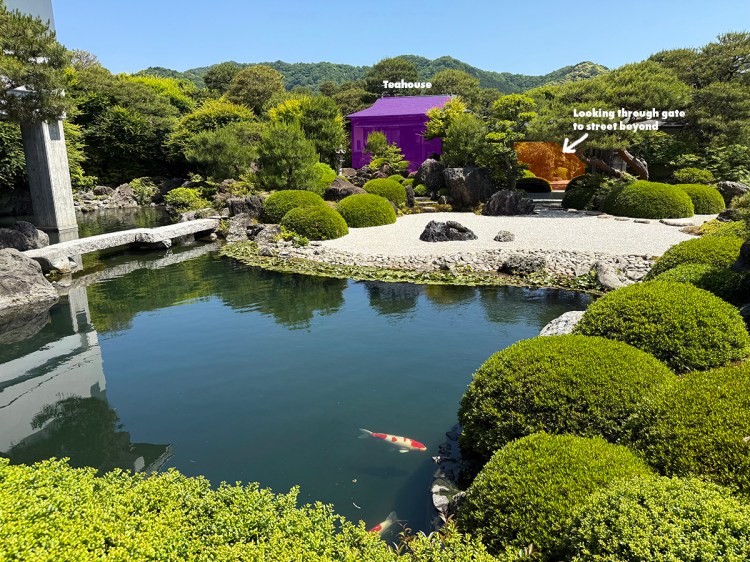
On the other side of the museum, a path to the right of that rustic teahouse on the far side of the koi pond appears to lead outward to a nice ramble in the hills beyond…
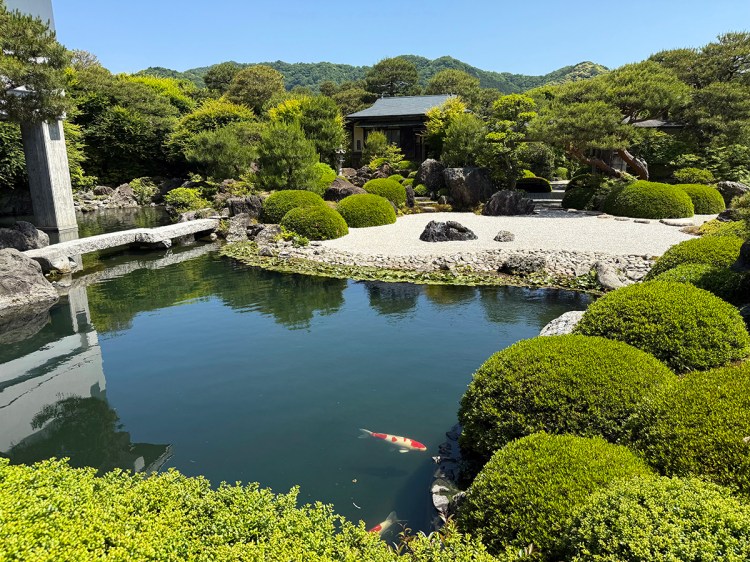
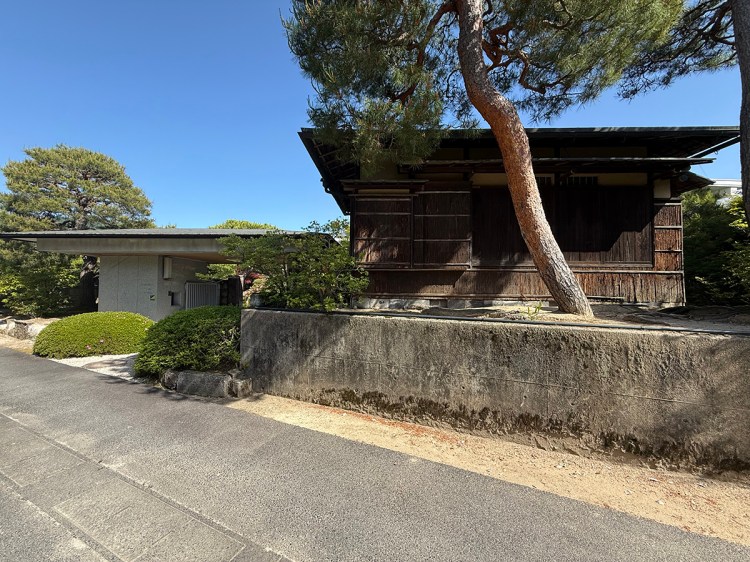
but in fact, it leads to a gate that opens right onto the street outside, and the greenery we see through it is planted on the other side of the pavement.
Here’s the view from outside the garden. See the open gate to the left of the wooden teahouse’s rear wall?
Magic trick #4: Control how people view the garden
If people were allowed to stroll through this garden and indulge the nearly irresistible urge to wander down every inviting path, they would very quickly discover how small it really is, and how shrimpy the plants on the far side of the garden are. But because it can only be viewed from behind the museum’s windows…
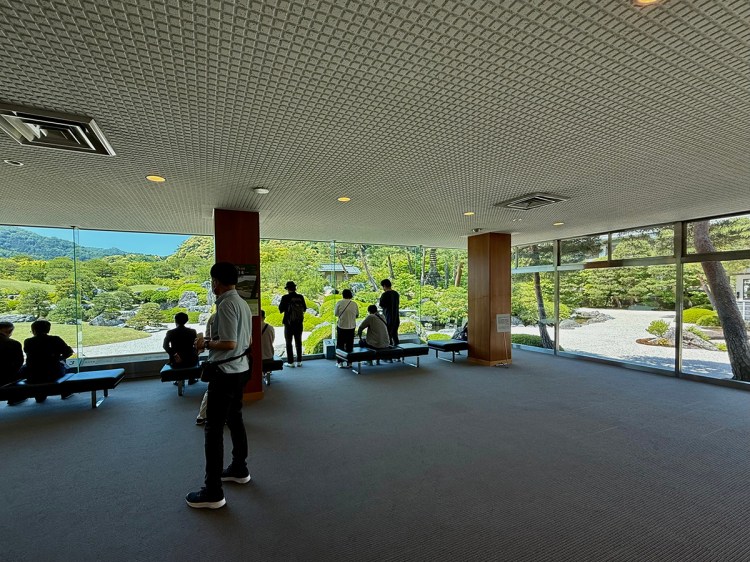
the fantasy of being immersed a wide world that’s as beautiful as a Japanese garden is alive and well and living in Shimane!
•For f••
•
If you enjoyed this, subscribe! It’s free!

The last thing Birdie wants to do is turn her life upside down solving a murder that was committed before she was born...

Birdie is a true daughter of the pleasure quarter. The number one apprentice to Yoshiwara’s number one courtesan, she’d rather do anything than derail her future life of wearing opulent robes and entertaining lords of the land. But when her search for the mother she never knew takes a dangerous turn, she faces an impossible choice: betray her own flesh and blood, or live the rest of her life being hunted by a powerful man who won’t stop until they’re both dead…

Jonelle Patrick writes novels set in Japan, and blogs at Only In Japan and The Tokyo Guide I Wish I’d Had


One thought on “Garden tricks unmasked: How the Adachi Museum garden makes you think it’s huge”