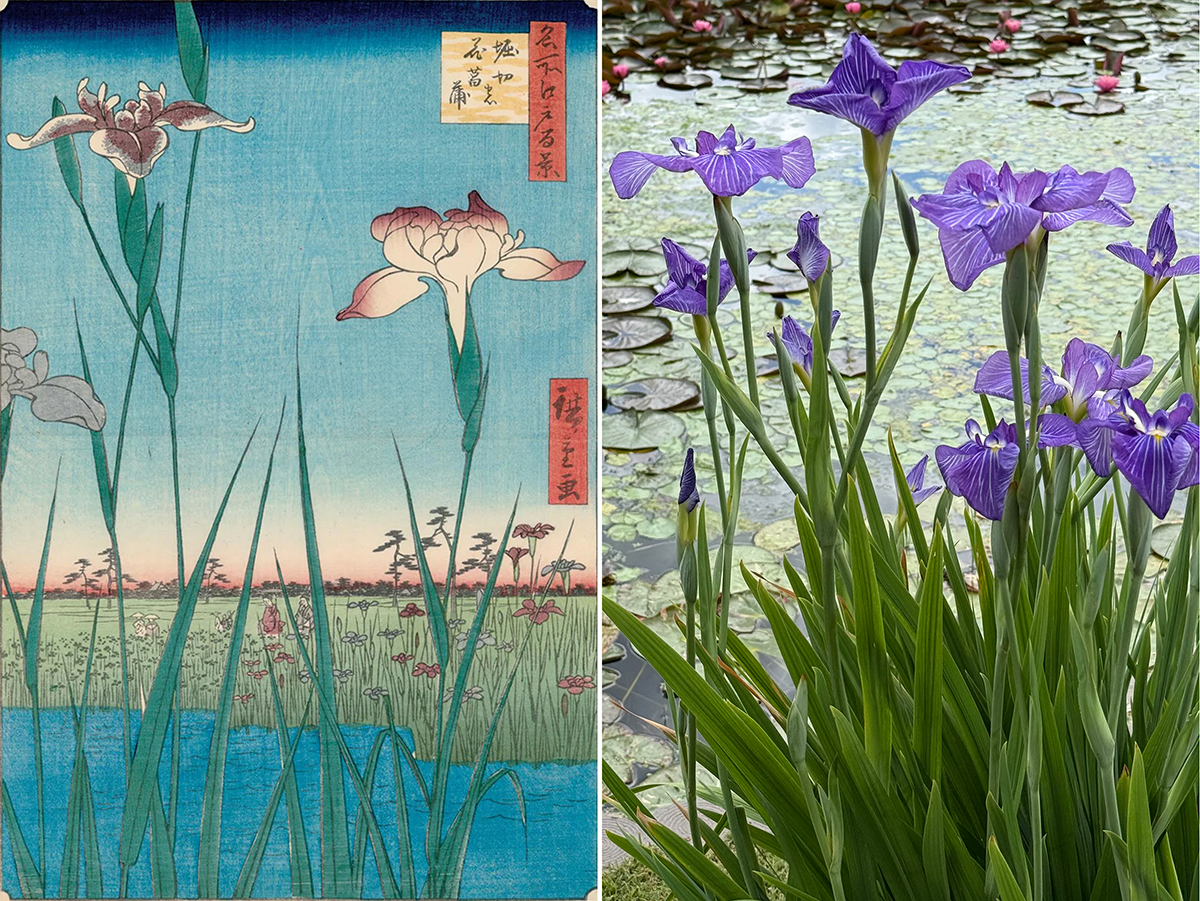
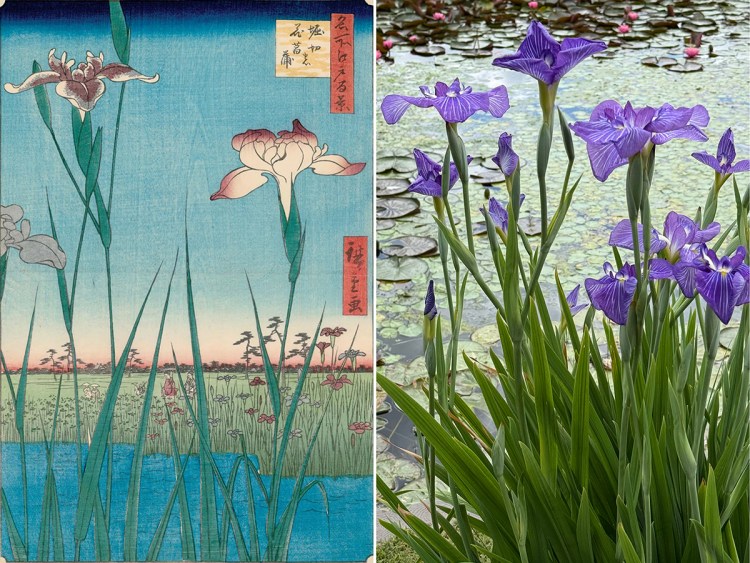
Hiroshige immortalized Horikiri Shōbu-en in “One Hundred Famous Views of Edo” in 1857, Toyokuni used it as a location for his series of beauties in 1859…
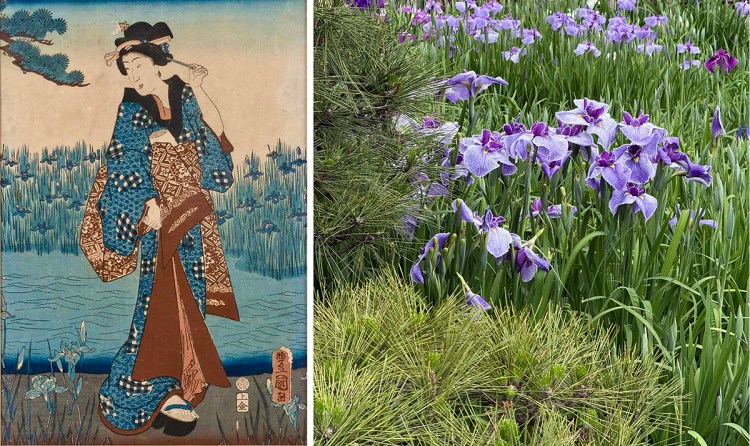
Adachi Ginkō hopped on the bandwagon in 1889…
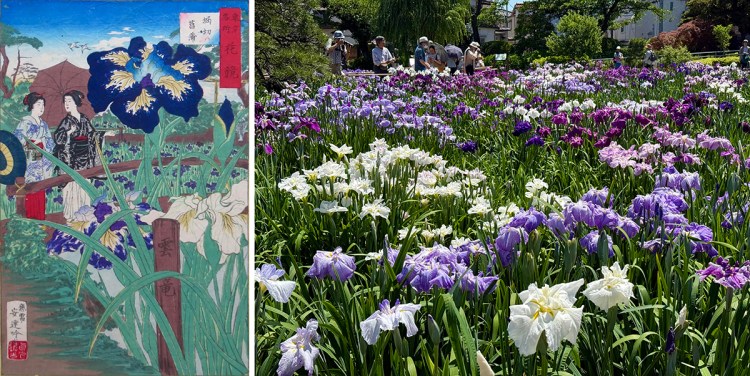
and that’s just a small sample of the artists who have been inspired to immortalize this garden devoted to one of Japan’s most beloved traditional flowers. The Horikiri Iris garden was the destination for samurai-era flower viewing in early June. It’s celebrated not just for its flowers, but also for its artfully pruned pines…
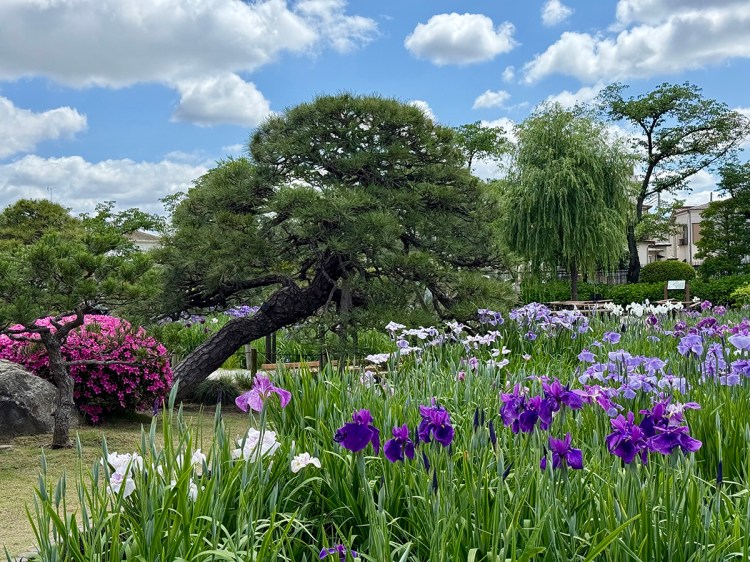
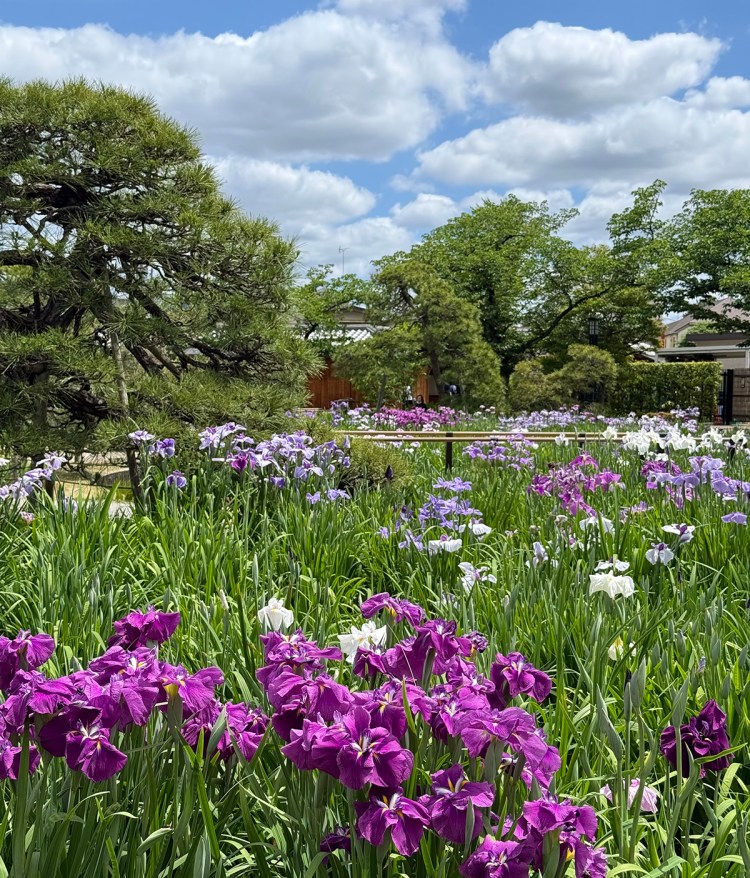
which frame the purple goodness…
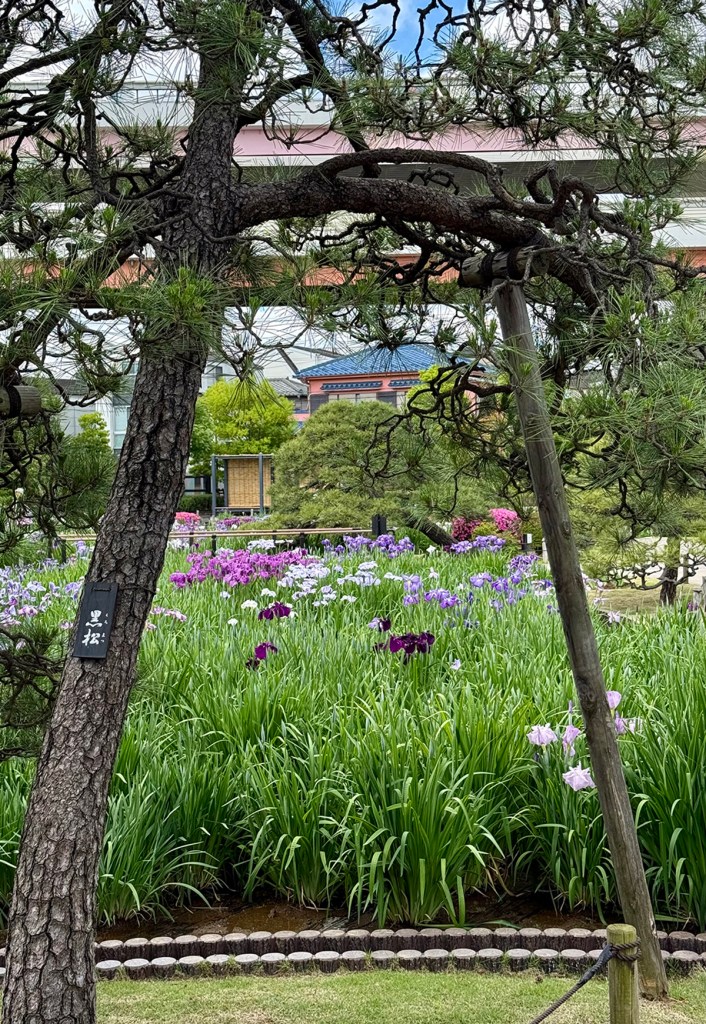
in uniquely Japanese style.
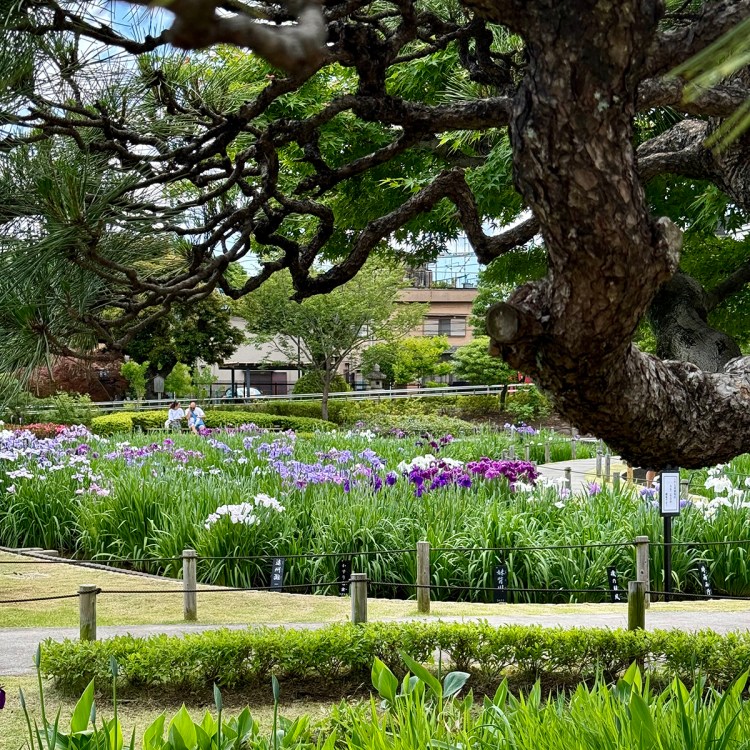
But when the flowers reach peak bloom (in late May these days, due to climate change) it’s hard to tear your eyes away from the profusion of purple…
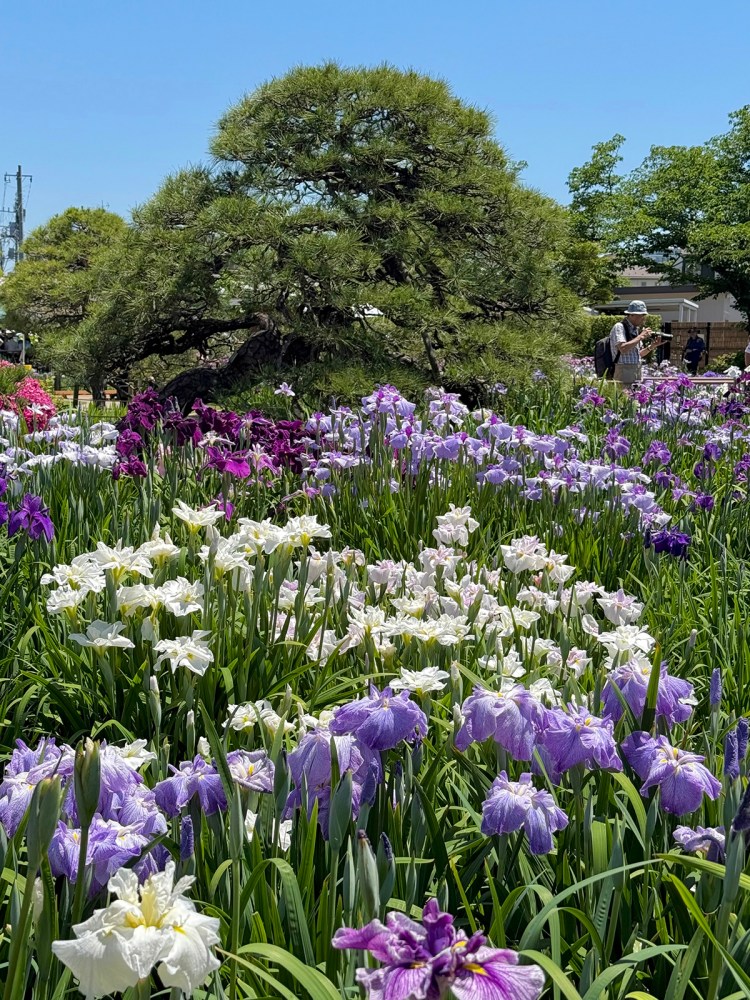
which extends as far as the eye can see.
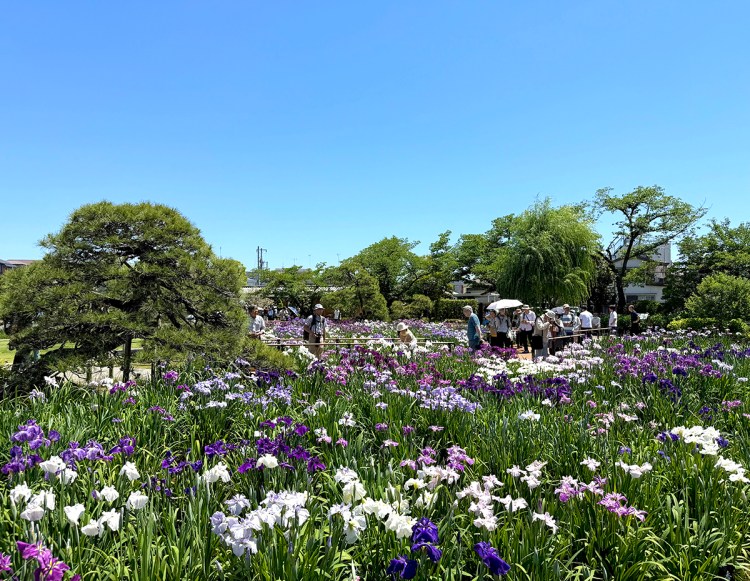
There are over 6,000 plants…
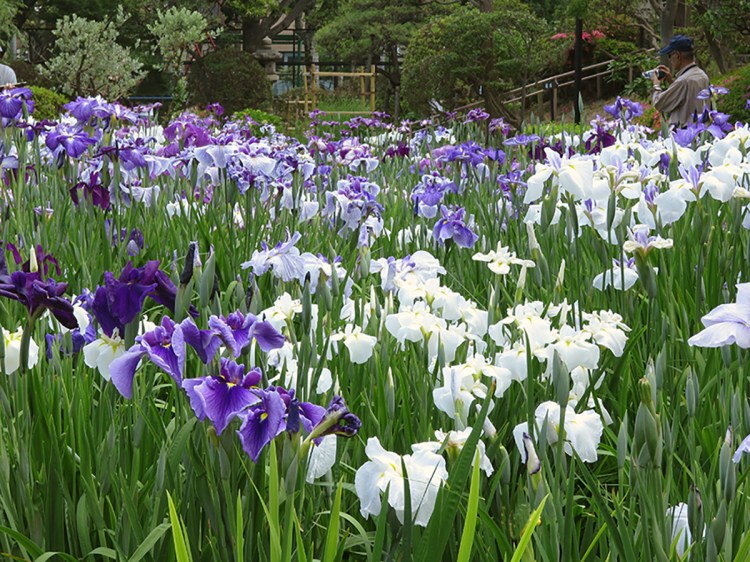
and 200 unique varieties…
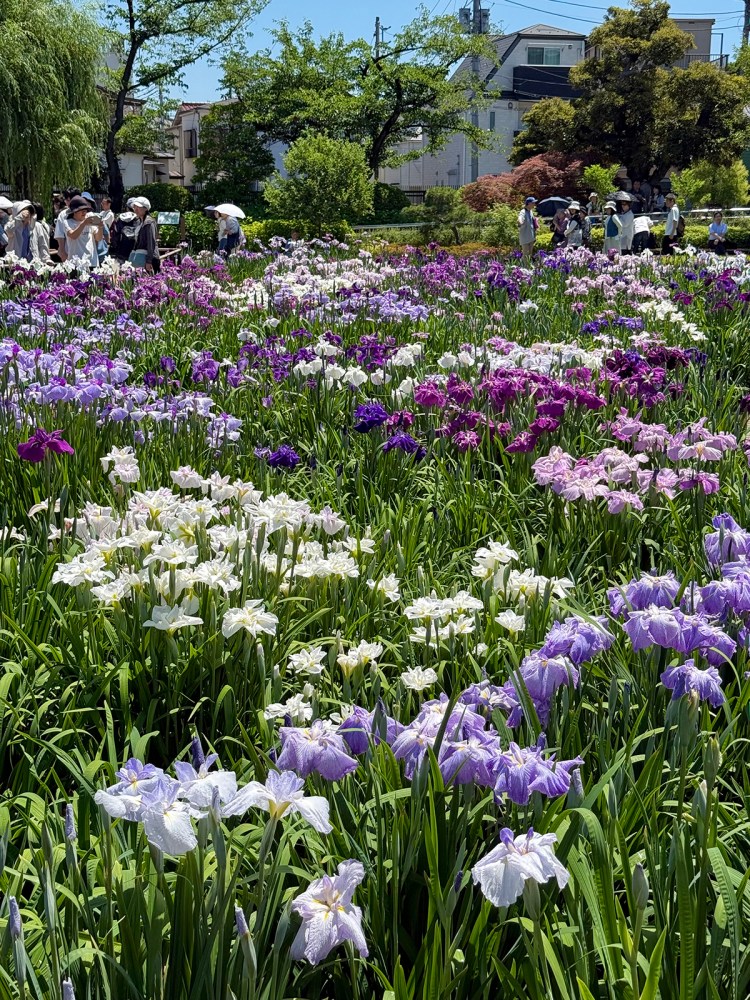
all blooming at the same time in shades of purple, pink and white…
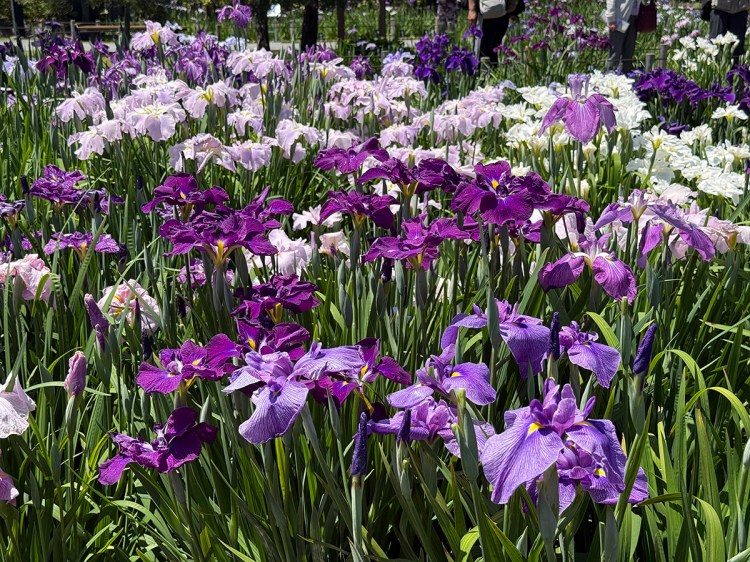
in rare and delicate forms that range from butterfly to ballerina.
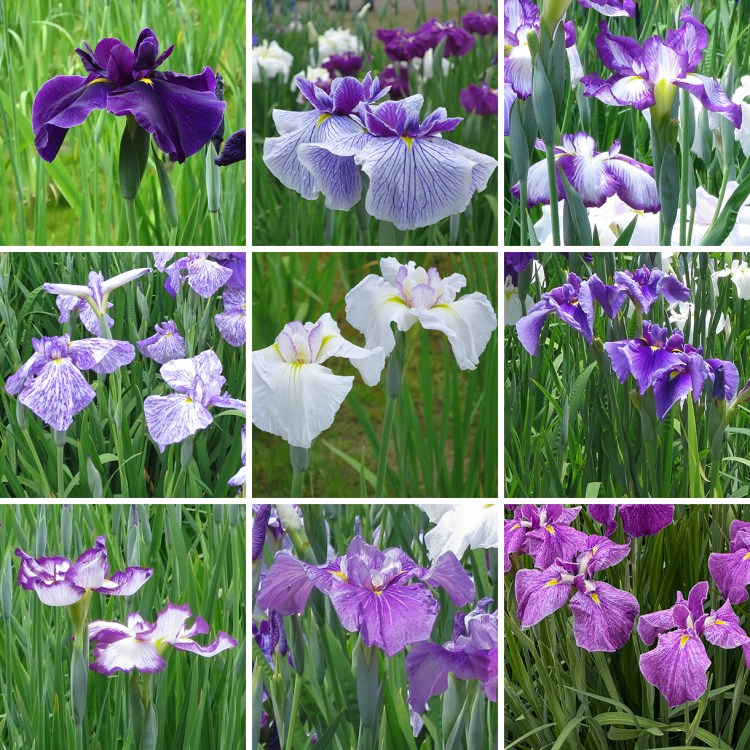
This is, by the way, VERY hard to do—most iris gardens look like a sea of green leaves with polka dots of purple here and there because iris plants have a seven year life cycle. The first year, they don’t bloom at all. The second year, they have a few blooms. Years three through five, they’ll really put on a show, then in years six and seven, they bloom less and less. If you want a garden that looks like THIS, with all different varieties blooming like crazy at the same time, it requires a lot of management, serious culling and replanting, and (I suspect) a massive greenhouse offsite for getting the plants to blooming age before installing them in the garden.
As an iris garden fanatic, I can tell you how rare it is to find one that combines typical Japanese-style background trees, bridges and lanterns…
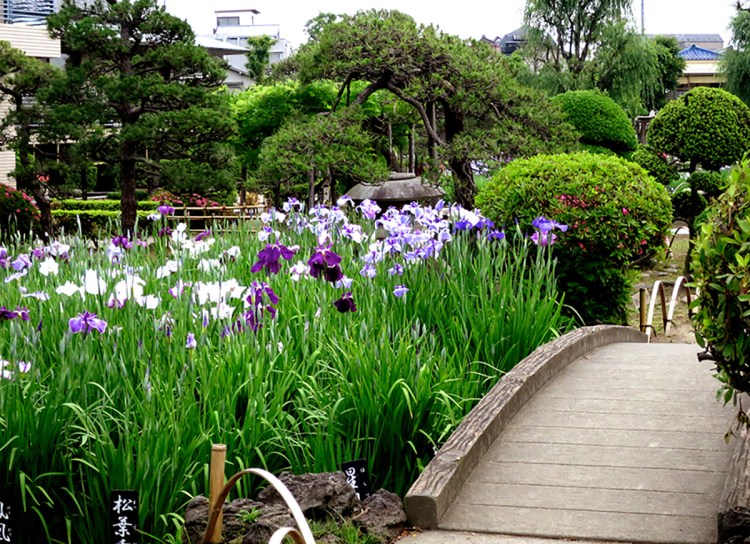
with an orchestrated peak bloom of flowers…
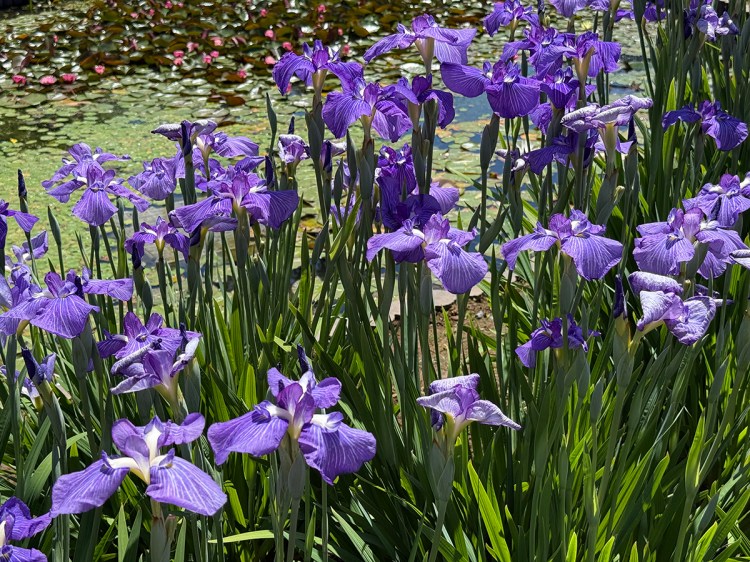
while also honoring its heritage as a living museum of the cultivars that people traveled from far and wide to see two centuries ago, back in the days when it wasn’t as easy as hopping on a train or two.
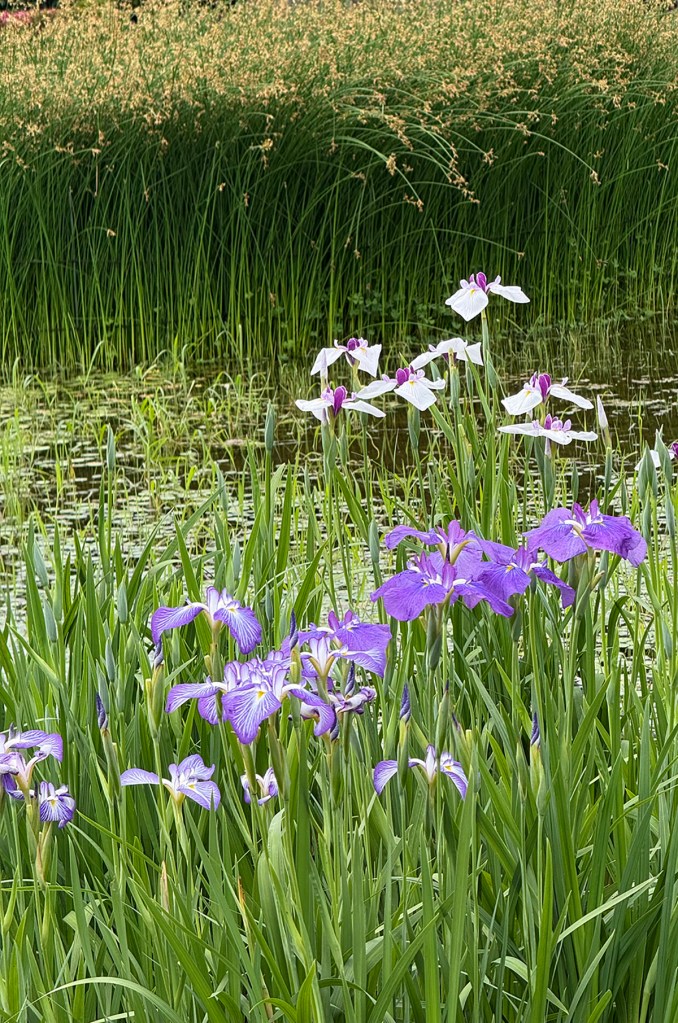
But guess what’s the biggest surprise of all? It’s FREE!
Horikiri Shōbu-en
Open: Every day
Hours: 9:00 – 17:00
Admission: Free
Iris season: Fourth week in May through first week in June
•
If you enjoyed this, subscribe! It’s free!

The last thing Birdie needs is to turn her life upside down solving a murder that was committed before she was born...

Birdie is a true daughter of the pleasure quarter. The number one apprentice to Yoshiwara’s number one courtesan, she’d rather do anything than derail her future life of wearing opulent robes and entertaining lords of the land. But when her search for the mother she never knew takes a dangerous turn, she faces an impossible choice: betray her own flesh and blood, or live the rest of her life being hunted by a powerful man who won’t stop until they’re both dead…

“…a complete immersion in a world of beauty, drama, secrets, and betrayals.”
—Kim Hays, author of the Polizei Bern series
•

Jonelle Patrick writes novels set in Japan, produces the monthly Japanagram newsletter, and blogs at Only In Japan and The Tokyo Guide I Wish I’d Had

