

I follow a lot of travel advice forums, and there’s one question that comes up again and again:
How can someone with tattoos enjoy the iconic Japanese baths (and gyms and beaches and water parks) in a country that bans people with ink from using them?
(And don’t stop reading if your skin is a blank slate, because this isn’t just about tattoos. Don’t tell me you’ve never been tempted to take a picture in a no-photo zone if nobody’s watching!)
Answers to the tattoo question are all over the map. The most practical ones advise tattooed travelers to seek out inns and attractions that welcome inked guests or to book a room in a traditional inn that offers private baths. Sneakier ones tell people to wear long sleeves while checking in, or bring flesh-colored patches to cover them, or to go at times when nobody else is there and hope nobody complains.
A better way to answer this question might be to ask yourself, “What am I hoping to take away from this experience?”
Am I there to savor the moment and enjoy it to the fullest? Or am I doing it so I can tell others about the amazing experience I had?
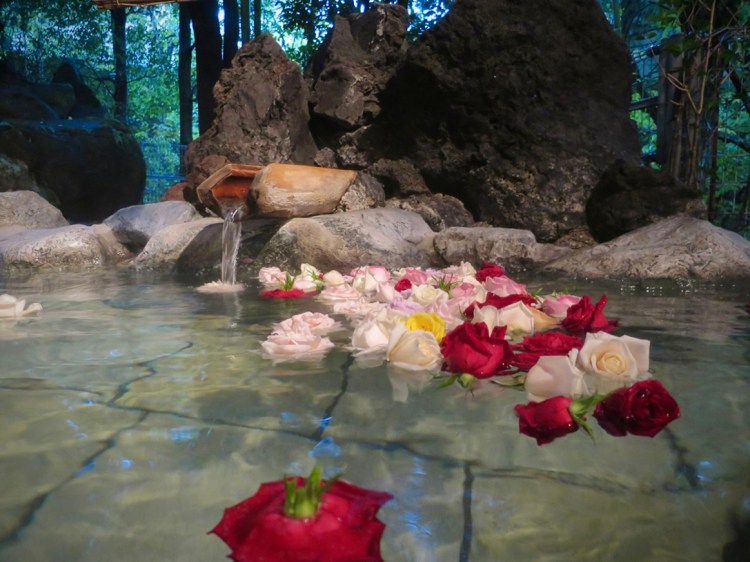
Not that there’s anything wrong with wanting to share the wonder. But as someone who writes about Japan because she hopes that people who love to read about Japan might also love to read her novels set in Japan, I’ve discovered that seeing Japan through the lens of “how can I share this?” instead of “what’s it like to be here right now?” are two different things, and it’s impossible to do both at once. If you’re so busy worrying that every Japanese person who walks through the door might be there to kick you out (or tell you to stop taking pictures or peeking behind the screen), you might miss the experience you came for.
True Confession…
My temptation isn’t taking a dip with tattoos, it’s taking photos at the Fukugawa Fudo-san fire ceremony (but it’s soooo photogenic!) or in stores that have signs posted against photography (but I’d be telling potential customers about them!) at museum exhibits (this display is such a perfect example of something people who can’t come to Japan will never see!)
I wrestled with it again and again, until I read a comment someone online made about how Americans think breaking rules is OK if nobody catches you. And then it became simple. Is it right or is it wrong?
And even if I disagree with the rule (for heaven’s sake, why are photos prohibited at the bonsai museum? To protect the privacy of the trees? Are they afraid there will be counterfeit bonsai…in fifty years?) I decided I would stop letting myself be tempted. Because if someone sees that photo in one of my posts, it would make it okay for them to break the rules too. And the last thing I want is for Japan to get fed up with the mass flaunting and ban all foreigners from seeing all the things I love so much.
•

Jonelle Patrick writes novels set in Japan, and blogs at Only In Japan and The Tokyo Guide I Wish I’d Had


How does one make decisions?
If your criteria is “Is this right or wrong?” Then the choice seems clear.
However …
What is the “it” in the previous line?
Does “it” mean “following the rule”? Or “doing the forbidden action”?
Less clear, but still the same criteria — right versus wrong.
But not all people think doing the right thing is important.
They might have completely different criteria for making their decision.
[Thanks for sparking thoughts on an interesting topic. — Lois Richter]
LikeLiked by 1 person
Thank you for taking this question even deeper than I’d thought about it myself! I’ve been mulling it over for the past few hours, and I think what I’m trying to nudge people into thinking about is that we should expand our definition of “right” behavior and “wrong” behavior to think beyond our own personal beliefs, especially when we’re traveling. That the standards for right and wrong when we’re away from home should consider the comfort and practices of the place we’re visiting, and err on the side of not breaking whatever rule is more strict. In the US (where I live when I’m not in Japan), we seem to have lost a common standard for what’s right and what’s wrong, and many of my fellow Americans take the “if you can get away with it and it’s not illegal” to be the definition of what’s “right.” And while this attitude may not be condemned at home, the result in Japan is that many places are just banning entry to foreigners altogether, which hurts us all.
LikeLike