
Ginkon-yu Onsen in Hokkaido

This month I’m inviting you to come with me to one of the most magical places I’ve ever been—the inn with seven secluded hot spring baths set in a forest next to a rushing river! We’ll cleverly plan our trip to arrive at the earliest possible check-in time, because there are twenty-five rooms but only seven private baths, and we can do the math. Let’s stash our stuff in our room, grab our towels, and change into our yukatas right away to see if we can make it to one of them before the sun goes down.
And we’re in luck! Exchanging our room key at the front desk for the hand-carved bath key that someone just returned, we discover our first bath is the one I’ve been dying to try.

Our destination is circled on the map, and off we go…

The way to Katsura-no-yū is beyond this portal…
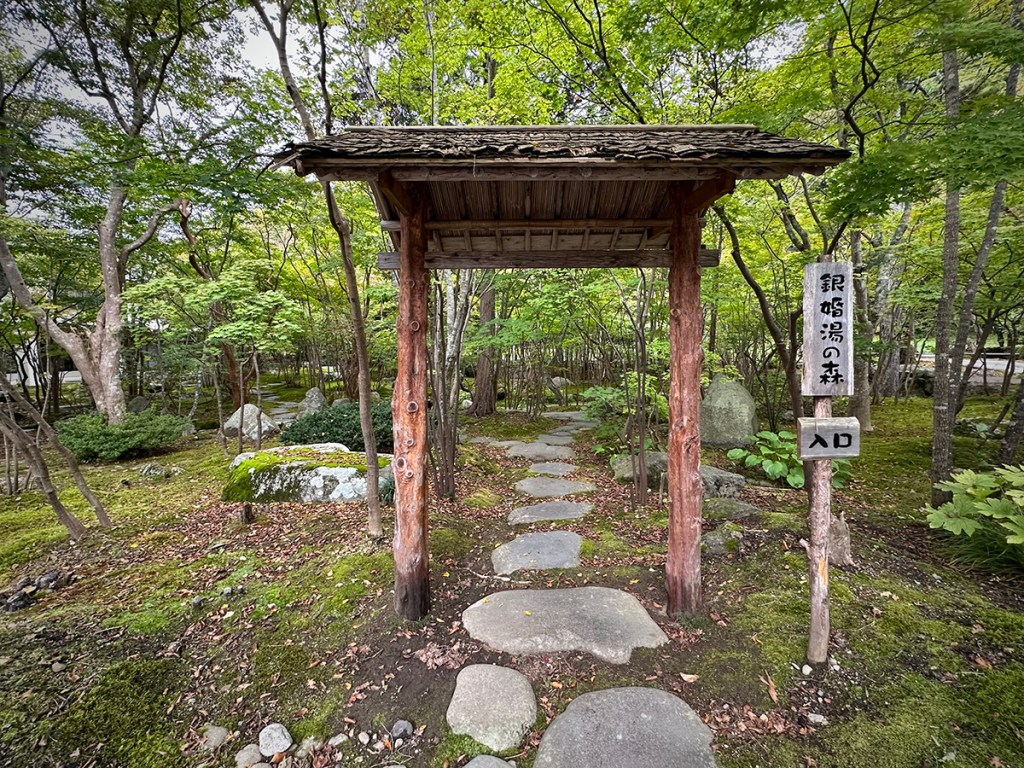
and through the inn’s moss garden. This glorious landscape alone would be enough to draw guests from all over Japan, but Ginkon-yū’s baths are so unique, the acres of rippling moss, stately trees and artfully-placed stones are merely the appetizer for the main event.

As eager as we are to find the bath, we can’t help but stop to listen to the trickle of water in this stone basin…
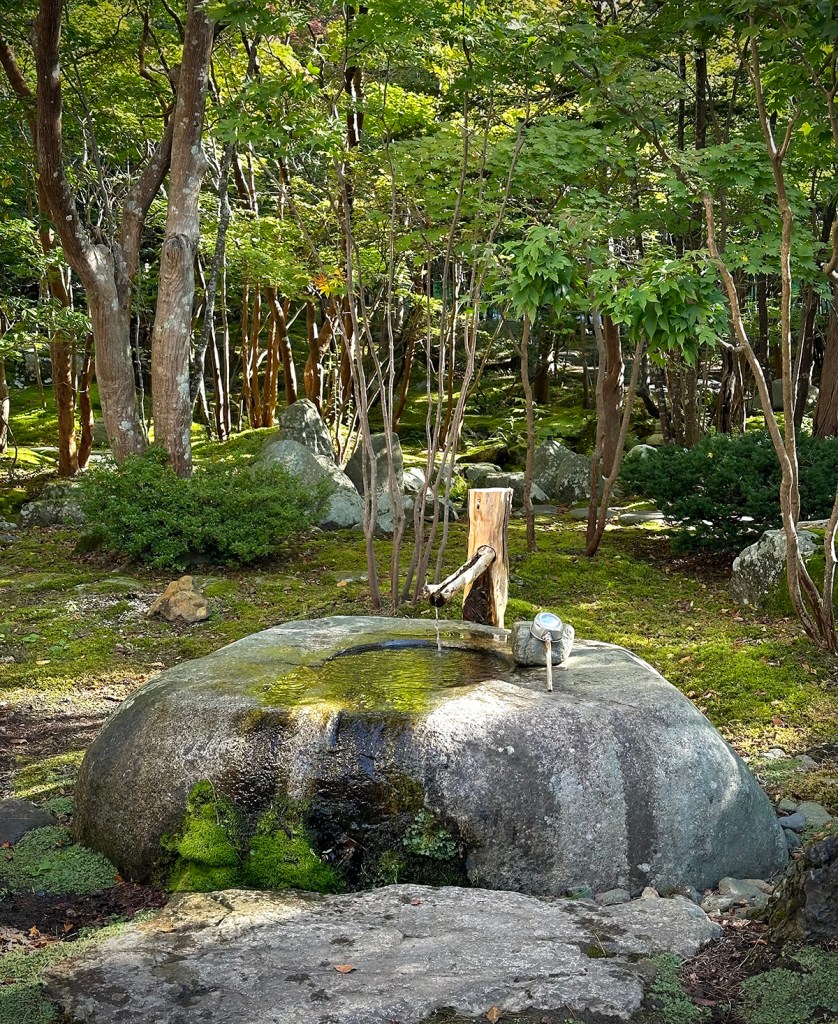
and pause to enjoy the view from the stepping stones as we cross a small stream…

wending our way past the big stone lantern…

over the bridge…
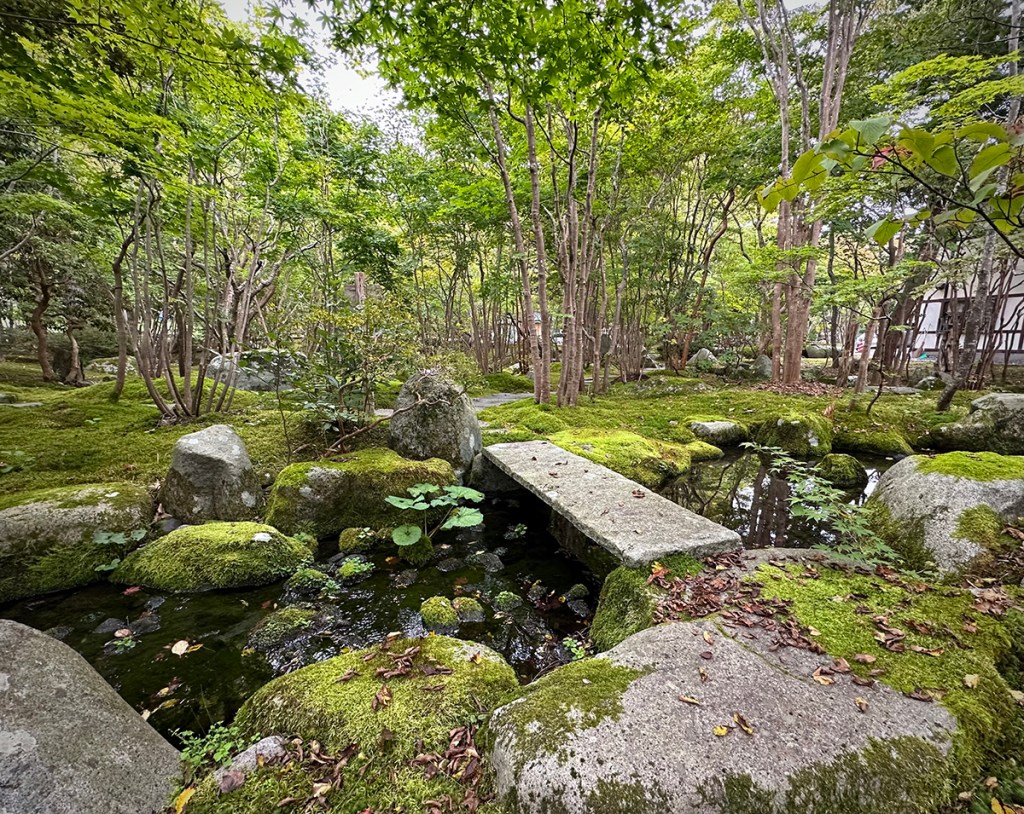
and through the woods.

If we stop to properly appreciate the magnificent specimen trees on all sides, we might not find the bath before it closes at 6:00…

so we reluctantly hurry on until we catch sight of the sign pointing us to Katsura-no-yū, straight down this cathedral-like promenade.

And there it is! Like a tiny treehouse in the forest…

the steps beckon us up to see what’s inside.
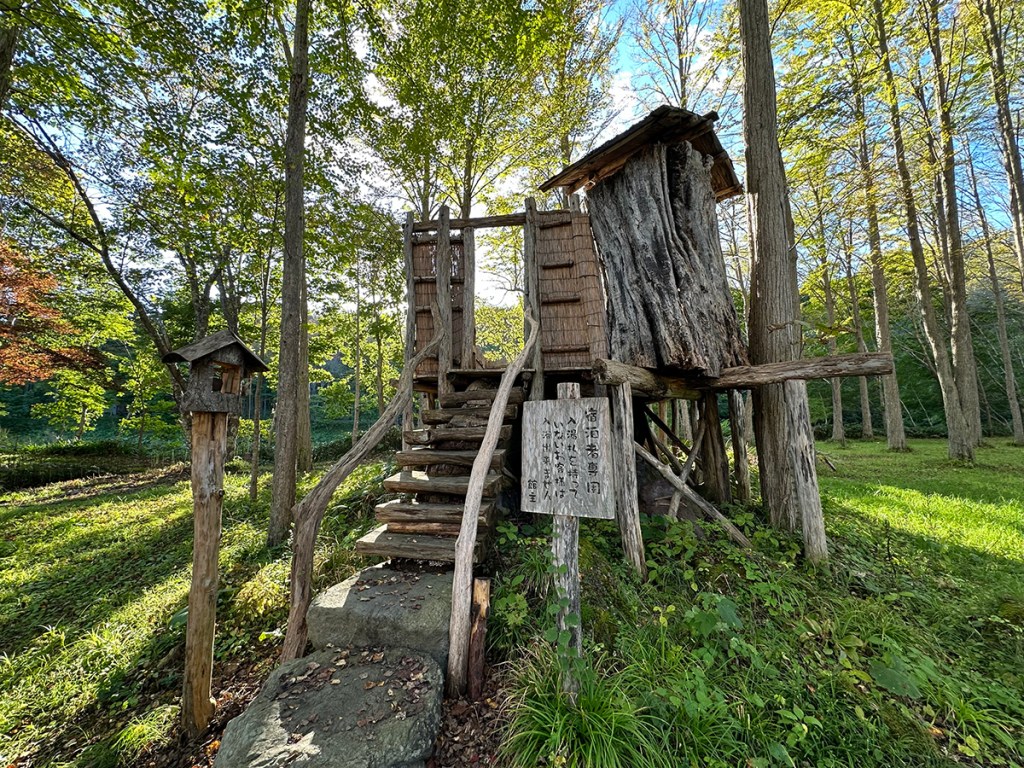
And Katsura-no-yū does not disappoint! This one is made of stone, carved into the top of a giant boulder.

Let’s nip into the fairy house to change…

hooking our yukatas into one of its charming natural hanger holes.
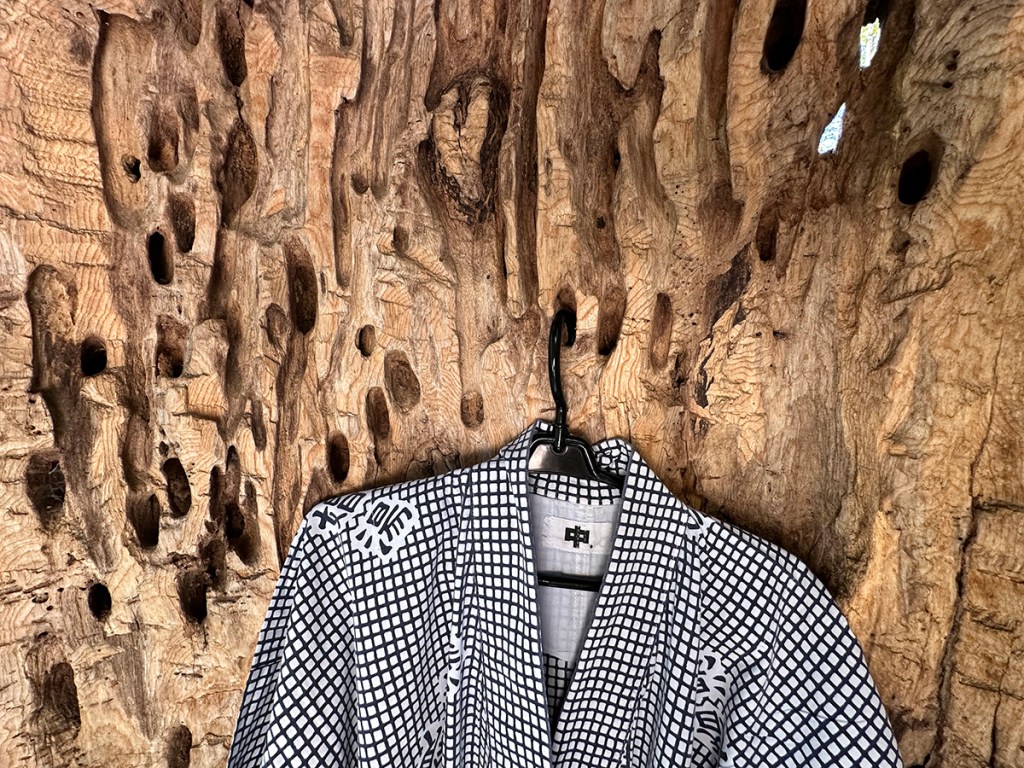
Then it’s time to ease our way into the steaming hot water! Up to our necks in bliss, we let the forest settle all around us, and soon, all we can hear is the calling birds and whispering leaves all around.
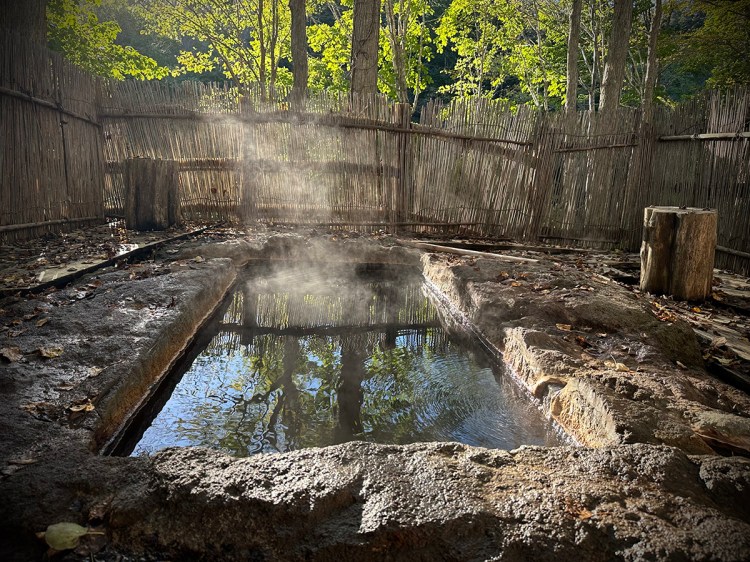
Steamy and ready to return, shall we see if there’s time for one more bath before dinner?
Yes! It must be our lucky day, because another guest just brought back a key! This one is to the bath called Momiji-no-yū, and according to our map, it’s on the far side of the river.

To get there, we make our way across a picturesque suspension bridge…

over the river…
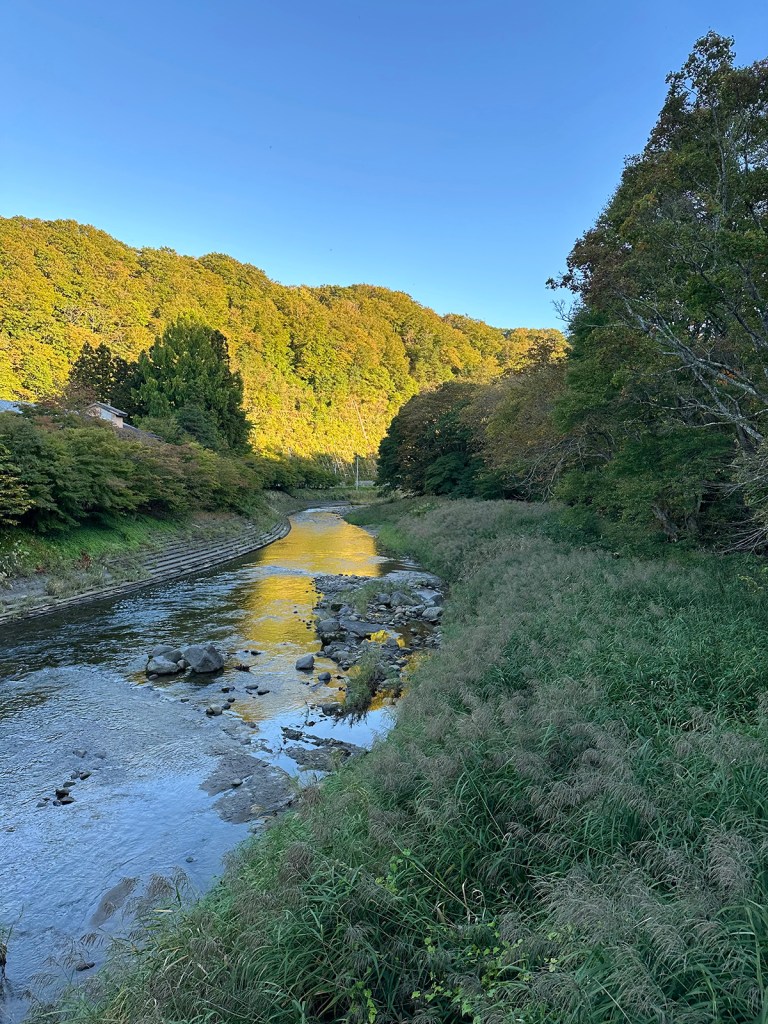
and follow the path through the trees until another weathered door appears!

Beyond it, we discover that this bath is also carved from great hunks of native stone, but this one sits in a ferny glade under an ancient spreading tree.

The sun is nearly down by the time we’re thoroughly wrinkly, so we return to our room, where we open the wide windows to the gentle sound of the river rushing by.

And now it’s time for dinner! We make our way through the inn…

to find the hallway with private dining nooks on either side. Here’s the one with our room’s name on it!

The sake flows, the kaiseki-style dinner is abundant, and full of delicious surprises.
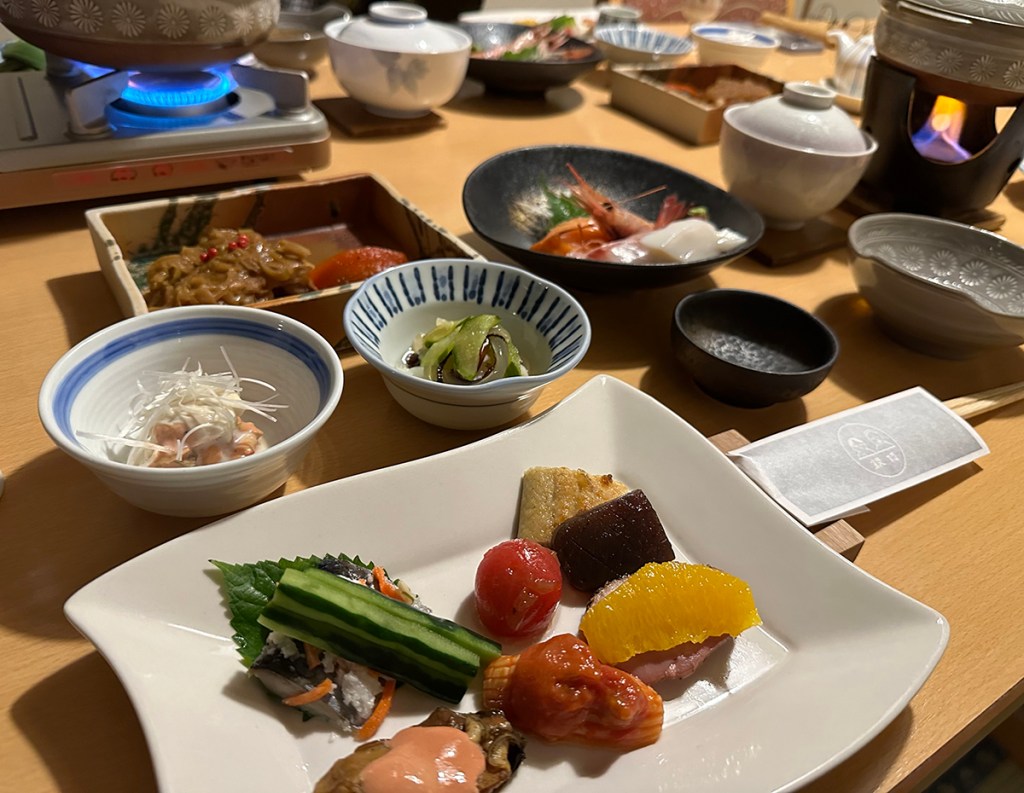
Afterward, we return to find comfy futons awaiting. After all that hot water and good food, it’s time to sleep.

My travel buddy Susan has been to Ginkon-yū before and knows from experience that one night isn’t long enough to try all the baths, so we booked ourselves in for two nights. This has the added benefit of not getting up at zero-dark-thirty to stand in line in the lobby for a bath key. We get up at a reasonable hour and enjoy our breakfast, then after the rest of the guests check out on Sunday morning, we’ve got the place to ourselves.
Our first destination requires another stroll across the river. Once again a mysterious wooden door appears in the forest.

(By the way, each key is a different shape and it’s not for unlocking the door…

it’s for locking it behind you to ensure no other guests surprise you while you’re enjoying the waters au naturel.)
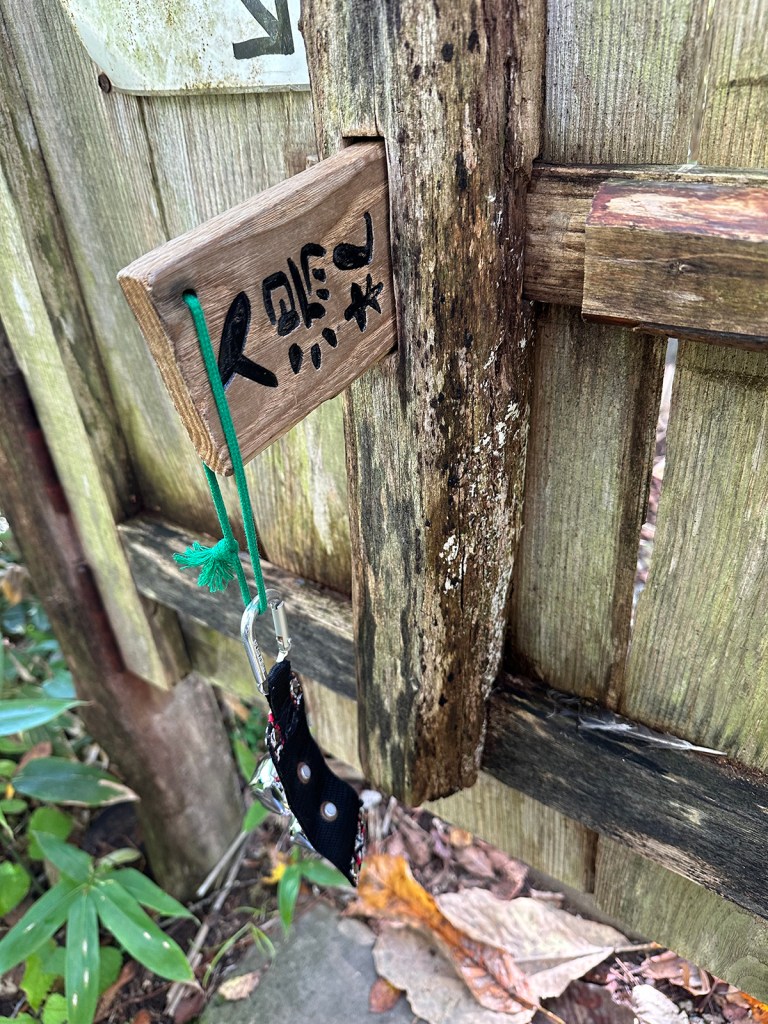
Down the steps we go, scuffing through a drift of fallen leaves…

to a brushy changing hut that springs up before us, almost as if it grew there.

We shed our yukatas and climb into our third sparkling bath, which is called Donguri-no-yū because it’s shaped like an acorn.
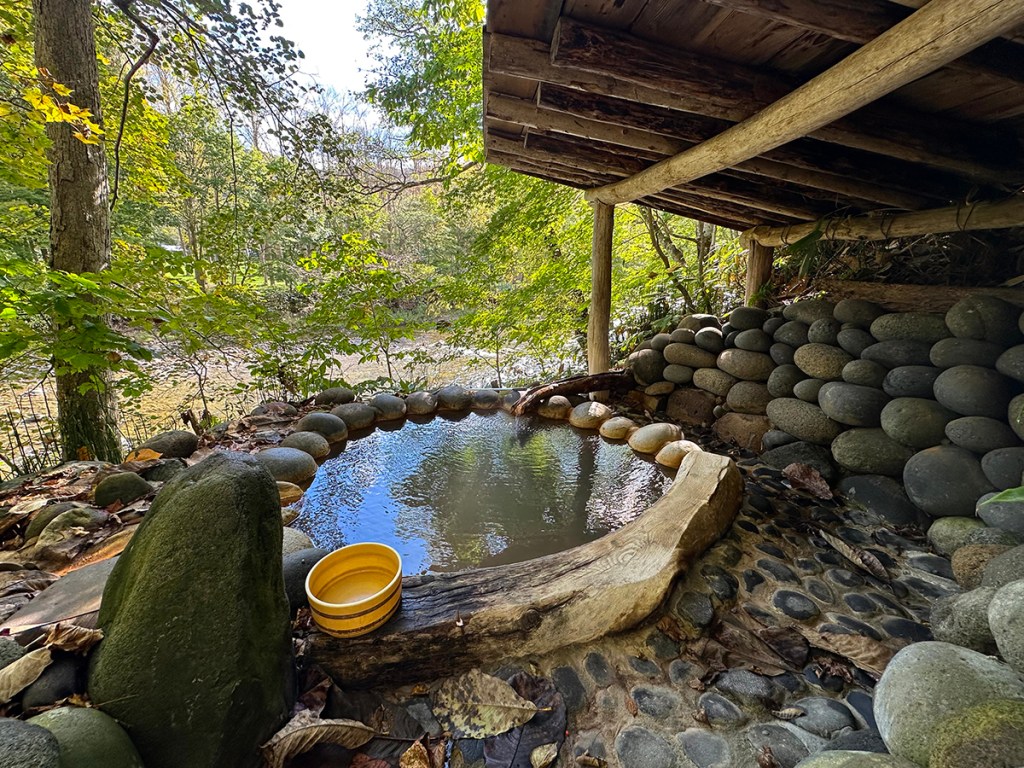
As steaming mineral water trickles in through its branchy spout, we lean back against the smooth, round, stones and listen to the sound of the river flowing by below.

The Ginkon-yū staff generously allow us to stay on to enjoy the baths all day while they clean the rooms and get ready for more guests to check in at 3:00. (And because this inn is so far from any other source of food, they thoughtfully send a tray to our room at noon, heaped with the delicious soba noodles the staff eats for lunch.)
Then we’ve got more baths to enjoy before today’s guests arrive! At the front desk we request another key, eager to see what lies behind the door at Tochini-no-yū.

This time, we find two of the most spectacular baths at Ginkon-yū. The first is carved from a hollow log, and although it’s only big enough for one bather at a time…
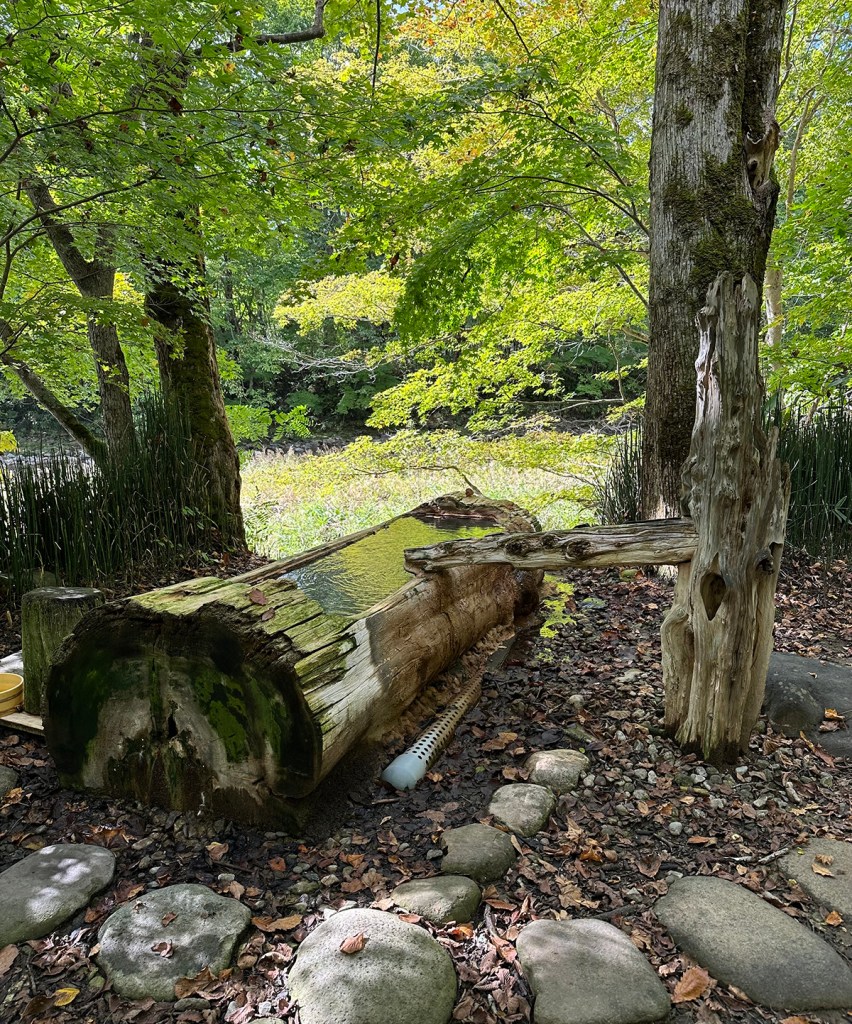
there’s a second bath behind the Tochini-no-yū door, and it’s perched right at the edge of the riverbank, overlooking the rushing stream. But as we gaze at the rushing water…

…are those moving things fish? Yes, the salmon are running! How often do you get front row seats to watch big fish swimming upstream to spawn?

That’s pretty hard to beat, so it’s a good thing that Bath #6 is so different from the others. The first five feel like they sprouted naturally in the woods, but the lovely Kimi-no-yū is more like chancing across a Japanese version of Hansel and Gretel’s cottage.

Its soothing mineral pool is sheltered from the elements by a cozy wooden hut. I almost wish that rain were pattering on the roof, because this would be the perfect refuge!
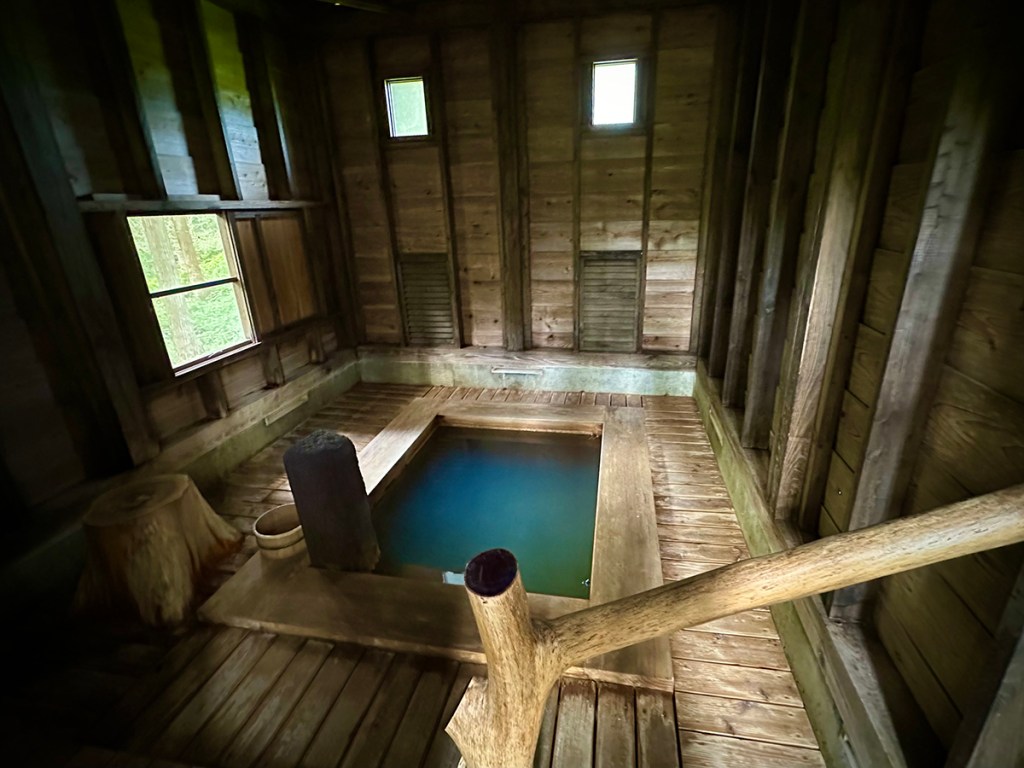
And finally, Bath #7. Katarai-no-yū is actually the easiest to visit anytime because it doesn’t require a key.

Guests can soak their feet near the main lodge and enjoy nature all around—rain or shine—while waiting for a key to one of the other baths to be returned.

There is no onsen like this anywhere else in the world, so if hot spring baths feature in your idea of nirvana, it’s well worth the schlep to get here!
By the way, the little shop in the lobby sells the best souvenirs in all Japan: keychains with little replicas of the keys to your favorite baths!

Essential tips for staying at Ginkon-yū
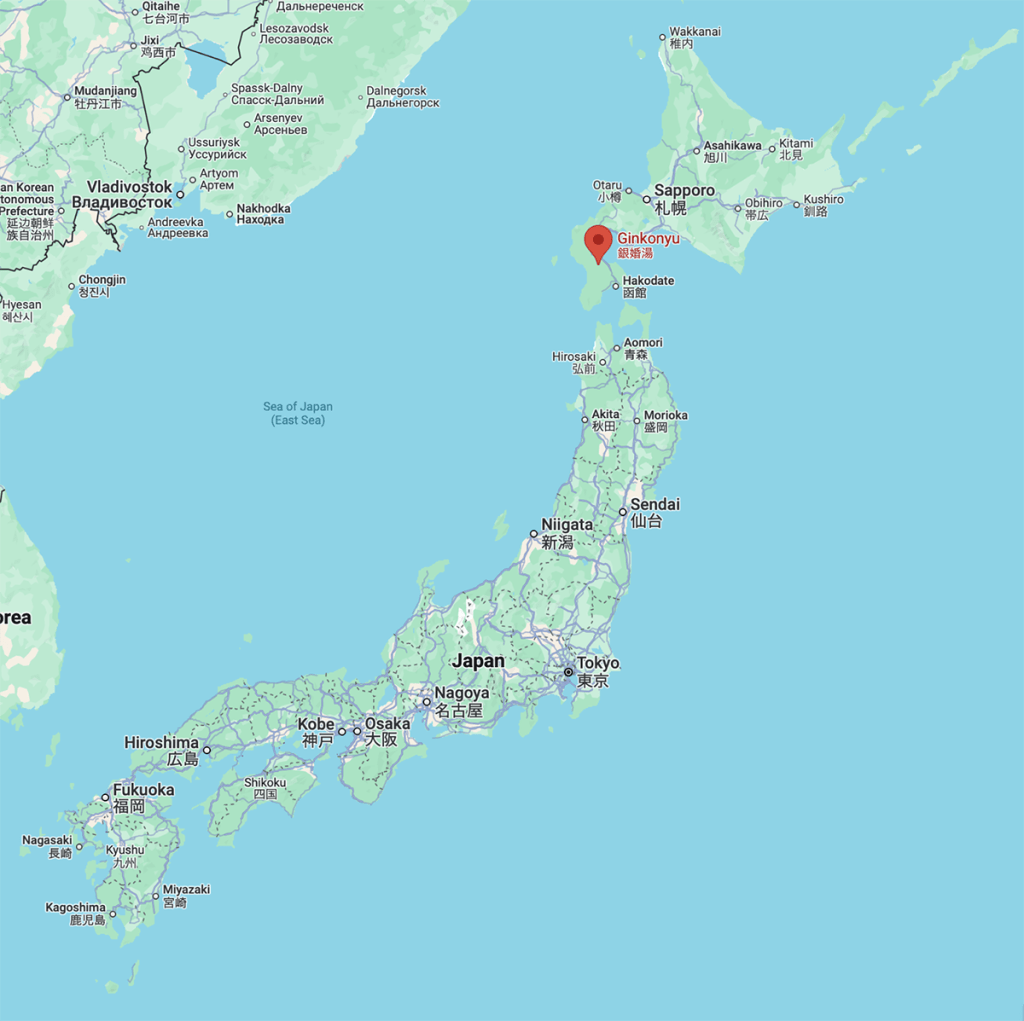
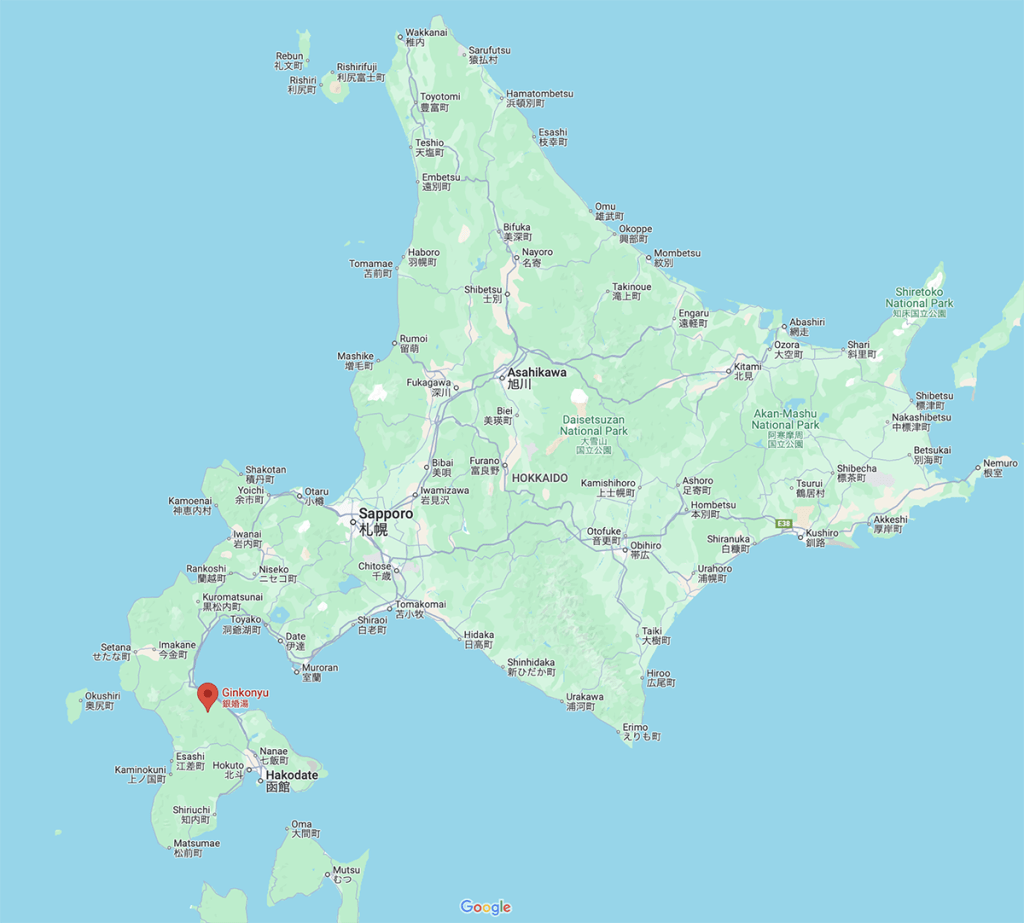
Here’s where Ginkon-yū is:
And here’s a closer look:
Getting to Ginkon-yū
To get to Ginkon-yū, you get to ride one of the most iconic country train lines in Japan! It runs along elevated levees between the rice fields, just like in the anime.
The closest train stop is Yakumo Station on the Hakodate Line. You need to know which train you’re arriving on before you make your reservation, because the Ginkon-yū van will arrive at the appointed time to drive you the final twenty minutes to the inn. Be forewarned that only a few trains run every day, so allow plenty of time to make your connection. If you miss it, the taxi ride between the Shin-Hakodate-Hokuto bullet train terminal and Yakumo Station will cost you over ¥20,000 (which I know from sad personal experience because there was a freak train stoppage on the day we returned and we would have missed our train back to Tokyo if we’d waited).
To figure out how to get to Ginkon-yū, use the Japan Navigation phone app, plugging in your actual date and preferred arrival/departure time. Here’s where to get the app and how to use it.
•
Click here for more Beyond Tokyo posts

•
Or get more must-see destinations sent to your email every month when you subscribe!

•

•
•
Jonelle Patrick writes novels set in Japan, produces the monthly Japanagram newsletter, and blogs at Only In Japan and The Tokyo Guide I Wish I’d Had
 Japanagram
Getting Japanagram is like…I only get dessert once a month and this is it!
LikeLiked by 1 person
Thank you, lovely woman, for what is surely the best compliment I’ve ever received! I am smiling again, just reading it. It’s so hard to know what will surprise and delight, and it really makes my day to hear that it makes you happy to see the Japanagram in your in-box every month. You’re the best! ヽ(*^ω^*)ノ
LikeLike