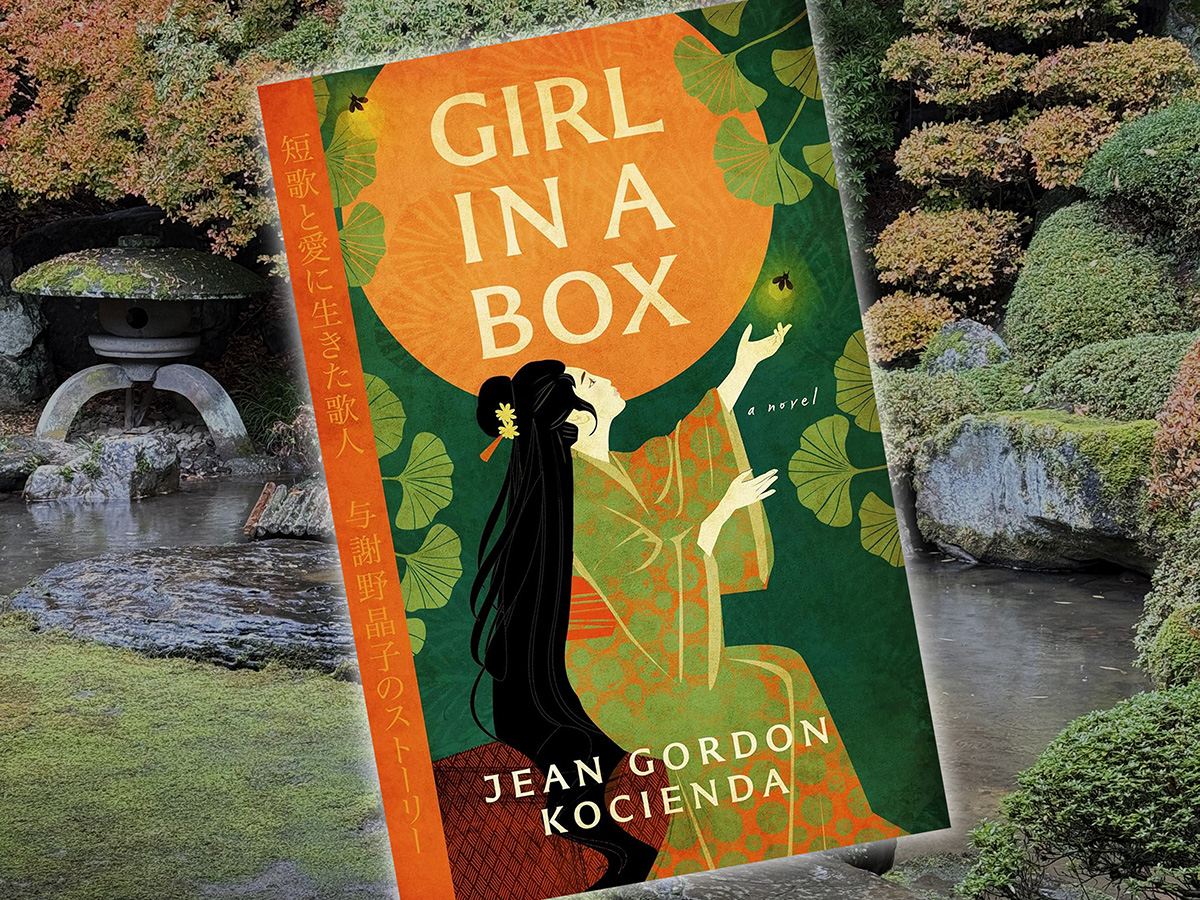
An interview with the author, Jean Gordon Kocienda
This month’s Book Giveaway is Girl in a Box by Jean Gordon Kocienda, a novel based on the life of Akiko Yosano, a famous Jazz Age poet. Akiko rose to stardom in the booming pre-war period when Japan reopened to the West after three hundred years of isolation, and Japan’s greatest literary talents were fizzing with new ideas and fresh inspiration. Her talent and fame far outshone her husband, but like many women throughout history, she bore him thirteen children and faithfully supported his efforts to be a respected member of the literary community, despite the fact that their relationship was tumultuous, even painful. Let’s talk to the author about how Akiko carved out a name for herself, despite the world’s attempts to put her neatly back in her box…
•
Jonelle: You used Akiko’s poems to anchor her key life events in Girl in a Box—how did you find out what was happening in her life at the time she wrote those poems? How much is fact and how much is imagined?
Jean: I used online resources to trace important events in her life, along with personal essays and the memoirs of her two daughters to create timelines—spreadsheets on my computer as well as a big wall-sized timeline with sticky notes. Then I compared those to publication dates of her poetry collections. Sometimes I came across frustrating contradictions. I followed Akiko’s life as faithfully as I could, but there were “holes” in my information. When in doubt, I gave priority to storytelling. Sometimes a poem she wrote later in her life seemed to speak to something that happened earlier, but the main events in the novel are true to Akiko’s life.
Jonelle: Did your impression of Akiko change as you learned more about her?
Jean: This is a great question! I faced an inconvenient truth when I read her daughter Uchiko’s memoir, Murasaki-gusa. It seems that Akiko was not always a great mother—in fact, Uchiko describes a mother who was distant and cold. Uchiko was a twin; her sister died in childbirth. Perhaps grief and exhaustion colored Akiko’s relationship with the surviving baby. Still, it was a disappointment to read that Akiko sent three of her daughters away as infants to be raised by foster families, and that she and Uchiko never really connected emotionally. I struggled with how to represent this in the novel but ultimately decided that it was an important story to tell. It helps us to understand Akiko as a human being who faced real constraints and made hard decisions that sometimes hurt those she loved and cared for.
Jonelle: How do you think her life and career would have been different if she were born today?
Jean: For starters, she probably wouldn’t have given birth to thirteen babies. She also would have had access to a better education, better health care (allowing her to live longer), and a more equal relationship with her husband Tekkan. And yet—could she have made a living as a writer? You tell me!
Jonelle: Of all the women you could have written about, what sparked your interest in Akiko Yosano as a main character?
Jean: I grew up with Asia on my mind (lived in Kyoto for four years as an English teacher and attended Kyoto University as an auditing student), influenced by a woman who had escaped from a difficult family situation to live a life of her choosing. I first read about Yosano Akiko in a graduate Japanese Literature course in 1994 and took a stab at translating some of her tanka poems. It took the intervening thirty years to drag me through the life experience that helped me fully appreciate why Akiko became a feminist.
Akiko is compelling to me because of her desperation and her moxie. She was a bright light that had been closed into a box—the box of her family’s and her society’s expectations that she would be a good daughter and give her life to her family’s business and dutifully accept an arranged marriage when it was time. She was desperate to break away from that. So many of us, I think, not just women but particularly women, feel boxed in, trapped. The weight of family and social responsibility and the need to earn a living or live a certain way makes us feel desperate. It drives some people mad, drives them to break things to get free. Akiko DID break free, more than once in her life, but kept feeling that the world insisted on closing back down over her. How many of us feel that way? Do I? Yes I do.
You can order Girl in a Box right now, or check out the May Japanagram to see if you won a copy. All subscribers are automatically entered to win—if you’re not yet a member of this lucky group, click this button to subscribe, and be automatically signed up to enter.

•
And speaking of resourceful women in impossible situations…
This addition to the pack will be out April 21st!
The Samurai’s Octopus
by Jonelle Patrick
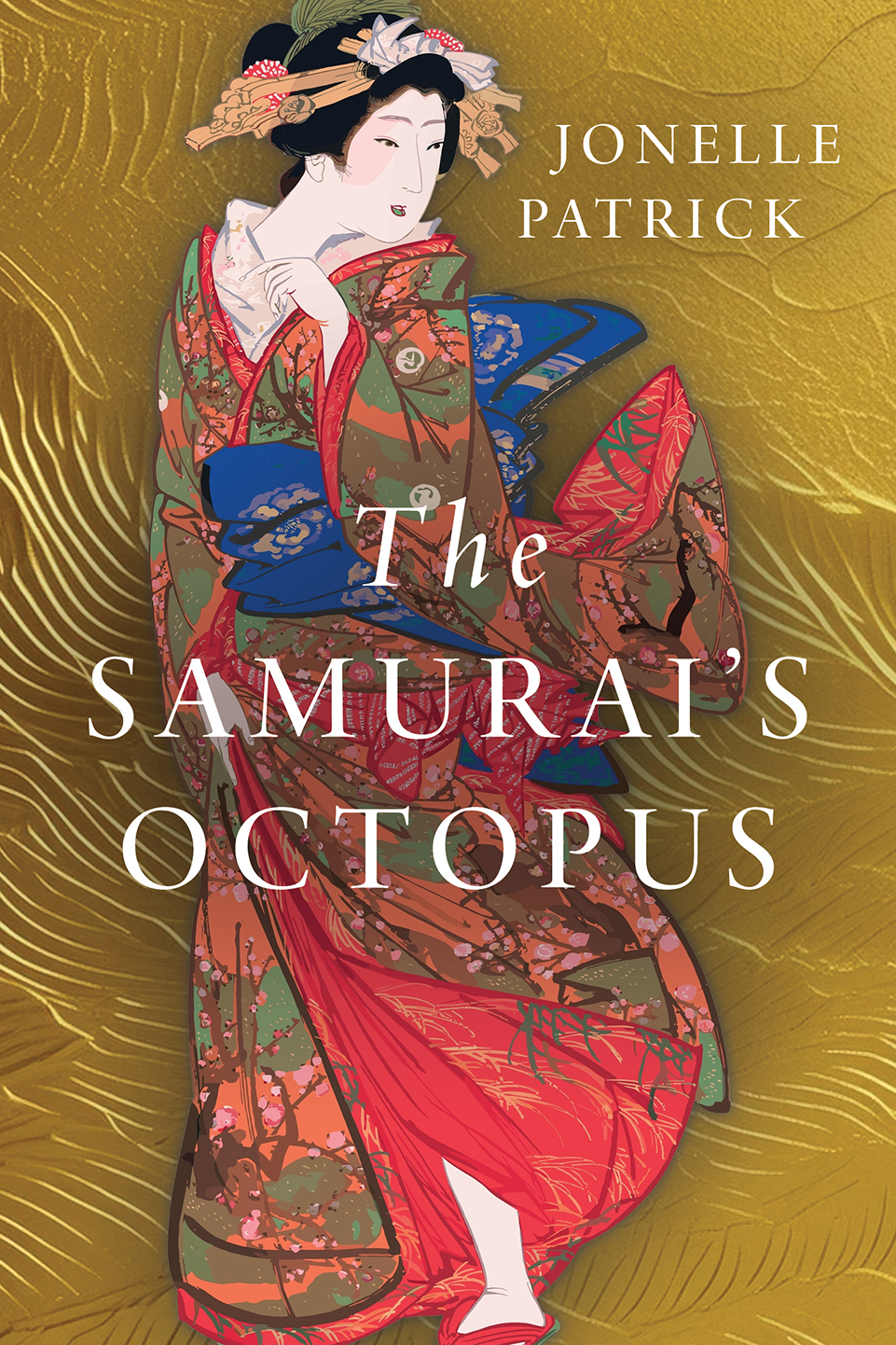
Year: 1784
Setting: Yoshiwara pleasure quarter, Edo, Japan (modern day Tokyo)
Main character: A young woman being raised by the courtesans in the pleasure house where her mother died giving birth to her
The pickle she’s in: Exposing the crimes of one powerful man and betraying the secrets of another might win her freedom from a life of indentured servitude in a pleasure house, but is giving up her chance to become a rich and privileged first-rank courtesan worth the risk?
The burning questions: How can a girl who was born into the lowest position in a society triumph over men born into the highest? Learn more
How I pick the book giveaway winners: At the end of March, I will load all the email addresses of current Japanagram subscribers into an online random name picker and ask it to choose one lucky subscriber to get the book from this month’s review. I’ll publish the winner’s email in the next Japanagram (obscured in a way so only the subscriber will be able to recognize it as their own, of course) so check your April Japanagram to see if you won!
If you’d like to be automatically entered to win the book or Japan swag giveaway, subscribe!
•
Will this be your new favorite mystery too?
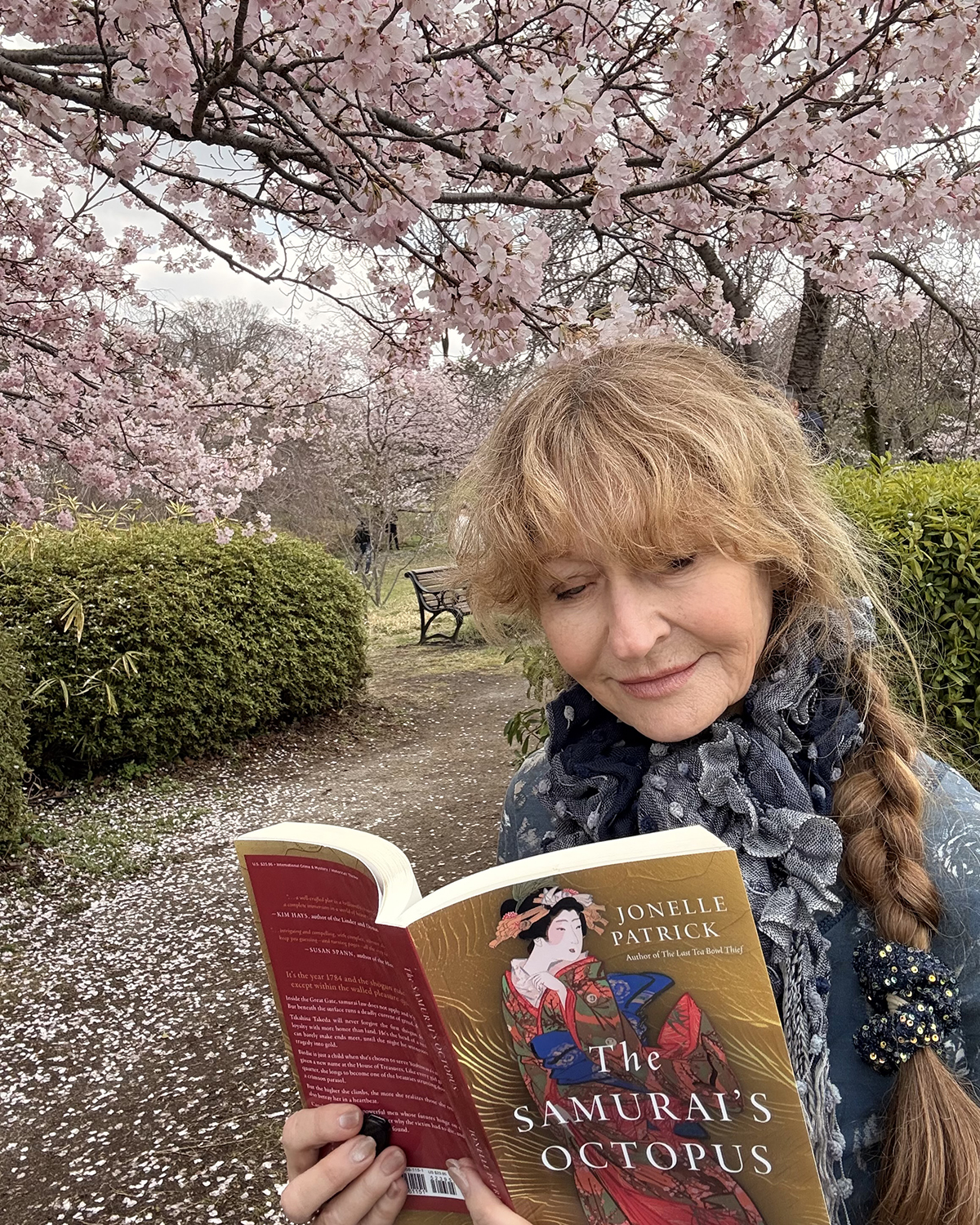
“An exhilarating plot and characters that step off the page make this a must-read novel.”—Terry Shames, Macavity Award-winning author of the Samuel Craddock series
•

Jonelle Patrick writes novels set in Japan, and blogs at Only In Japan and The Tokyo Guide I Wish I’d Had
 Japanagram