
Tateshina Shinyu Onsen in Nagano Prefecture

Is there anywhere better to curl up with a good book than a Japanese hot spring inn that inspired over a dozen famous Japanese poets and novelists in the early 1900s?
Literary lights gathered for months at a time at Tateshina to pen their novels, poems and plays…

which was a renowned literary retreat even before the hotel officially opened in 1926.
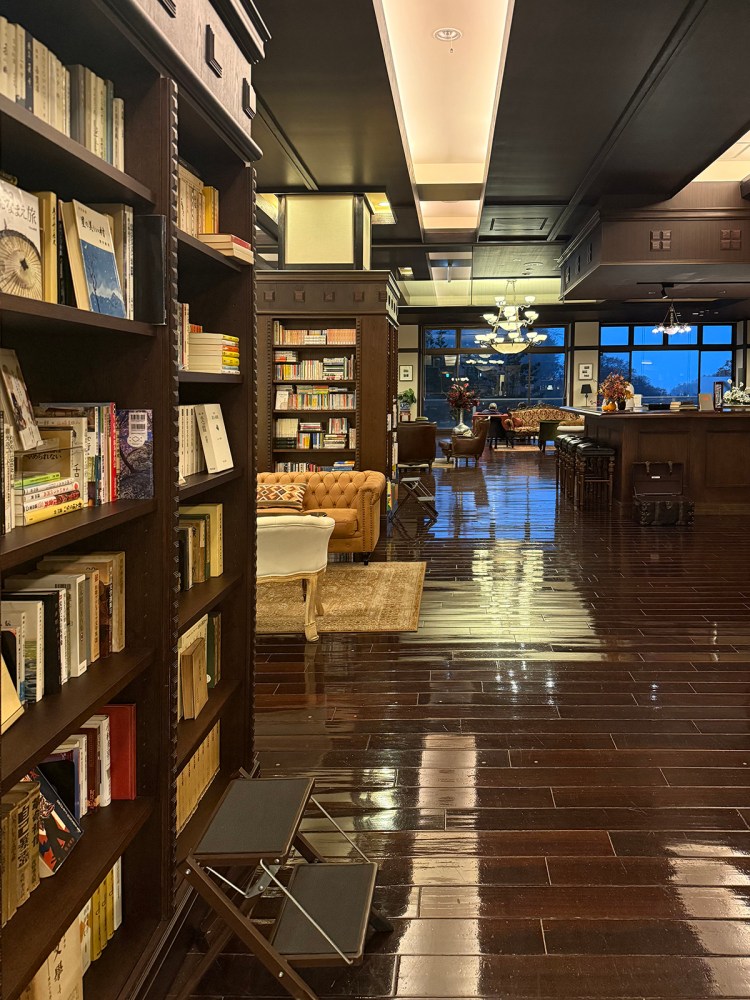
This book-filled inn still feels like a place from a bygone and more gracious era…

with comfy seats and an old-fashioned mahogany bar…
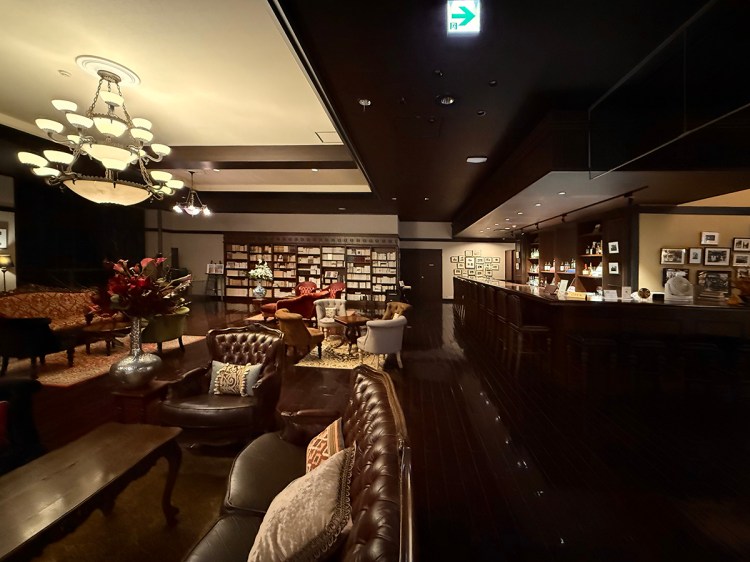
built to offer quiet reading nooks around every corner…
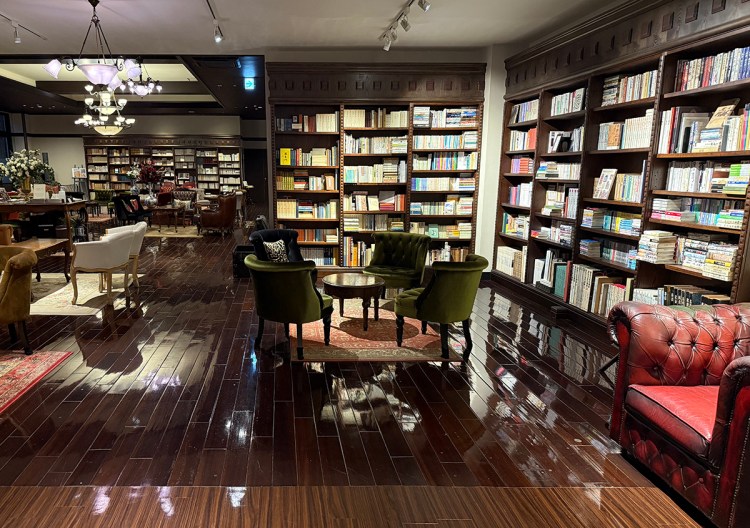
before heading to your private dining room for a fabulous evening meal. The hotel celebrates the period when Japan opened to the West after hundreds of years of isolation, so the menus alternate between traditional Japanese kaiseki…

featuring game from the surrounding mountains and freshwater fish…

to Japanese-inspired French cuisine. If you’re there on a night with a traditional Japanese dinner, you’ll get a more Western-style breakfast, and vice versa!
The hotel is a 30-minute ride from Chino Station in Suwa (the free hotel shuttle bus runs twice a day, once in mid-morning and once mid-afternoon) and is situated alongside a rushing river.

The trails leading off the road from the hotel quickly immerse us in the best kind of “forest bathing,” winding down through mossy trees…

to waterfalls cascading over green velvet rocks.

On the way into town, we could ask the shuttle bus driver to drop us off at Lake Tateshina—it’s a renowned leaf-viewing spot in the fall, and a gorgeous walk that delivers rushing streams and leafy shade at any time of year.
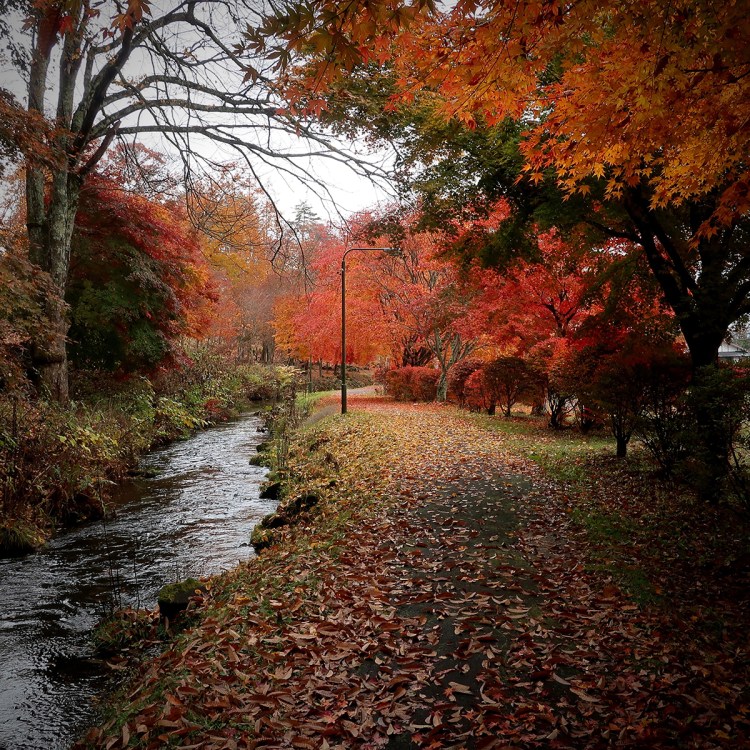
(Worth mentioning is that if you have a car and would like to venture a little farther afield, Mishaka-ike Pond is famous for its mirror-like reflection of the surrounding trees and is only a thirty-minute drive away along the scenic Venus Line highway.)

But there’s plenty to see in nearby Suwa, so let’s stay on the shuttle!
Kami-Suwa Station Area
Let’s get on the train at Chino Station and get off at the next stop, so we can enjoy Kami-Suwa Station’s free public footbath before heading to…
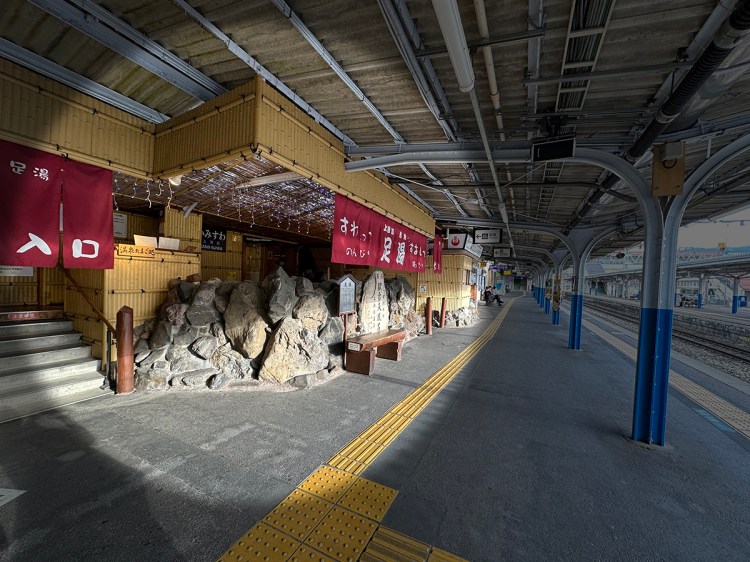
Takashima Castle, which is small, but lovely!

Across the moat and through the castle gate is a surprisingly beautiful (and FREE!) Japanese garden that’s nice all year but is absolutely stunning in the fall. (You can see it in all its glory here!)

After soaking in the traditional ambience of the castle and garden, let’s head over to the Suwa “Gurasu-no-Sato” glass museum to feast our eyes on modern art and volcanic glass.
In addition to the world’s largest crystal ball—if you’re yearning to discover your inner clairvoyance, here’s the place to do it—the collection spans from prismatic sculptures to vintage deco to modern pieces unlike anything I’ve ever seen before…

like this cocktail dresses and glass slippers!

Now let’s move on to my favorite walk in Suwa…
Shimo-Suwa Station Area
This section of the Old Nakasendo Road is a perfect stroll from attraction to attraction, anchored at one end by the Suwa Taisha Akimiya (the “Autumn Shrine”). This unique shrine features fat rice straw ropes, a steam-breathing stone dragon, and shrines to the death-defying logs locals race down the mountain every seven years. It’s ultra photo-worthy during the day…

but is even more gorgeous lit up at night…

when lanterns cast their glow on the path to a sub-shrine among the trees

Making our way toward the Suwa Taisha Harumiya (the “Spring Shrine”) that marks the other end of our walk, we chance across the gate to a honjin that’s been standing in this spot since 1345. This ancient post-town inn doesn’t look like much from the street, but…

this where every famous daimyō traveling to or from the capital city of Edo during the samurai era spent the night and left their calling cards.

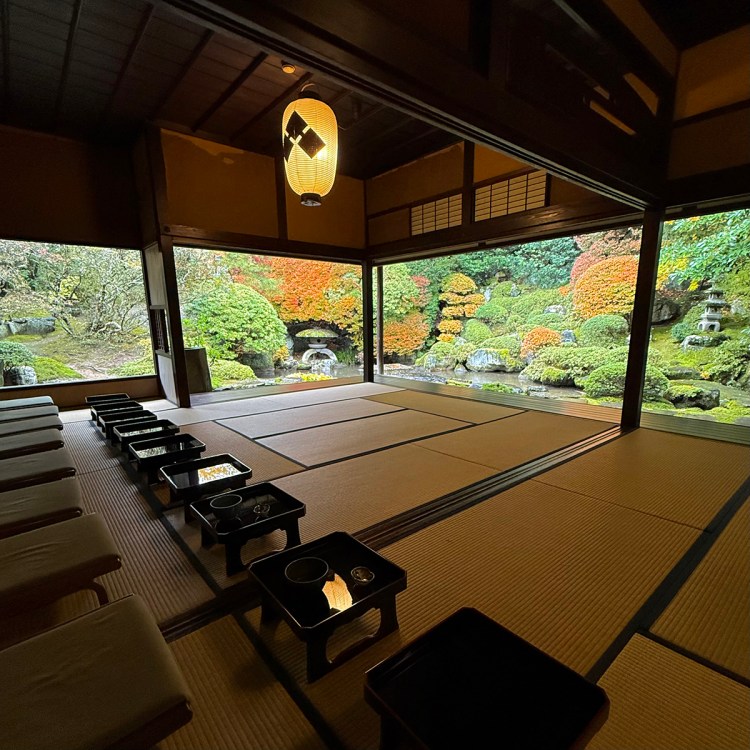
At first the ¥800 admission price seems a bit steep—there’s some fine memorabilia, but the interior and grounds exude an aura of ancient neglect—until we arrive in the room where the daimyōs slept.
This took my breath away. And when the nth-generation daughter of the innkeeper family appears to serve us a bowl of tea and a traditional sweet, there’s nothing more perfect than enjoying them in the room where royalty slept, surrounded by this exquisite private garden with a koi pond and murmuring waterfall.
But we have to tear ourselves away, because our next stop is also a hidden treasure that doesn’t advertise its glories from the street. Beyond this modest gate…
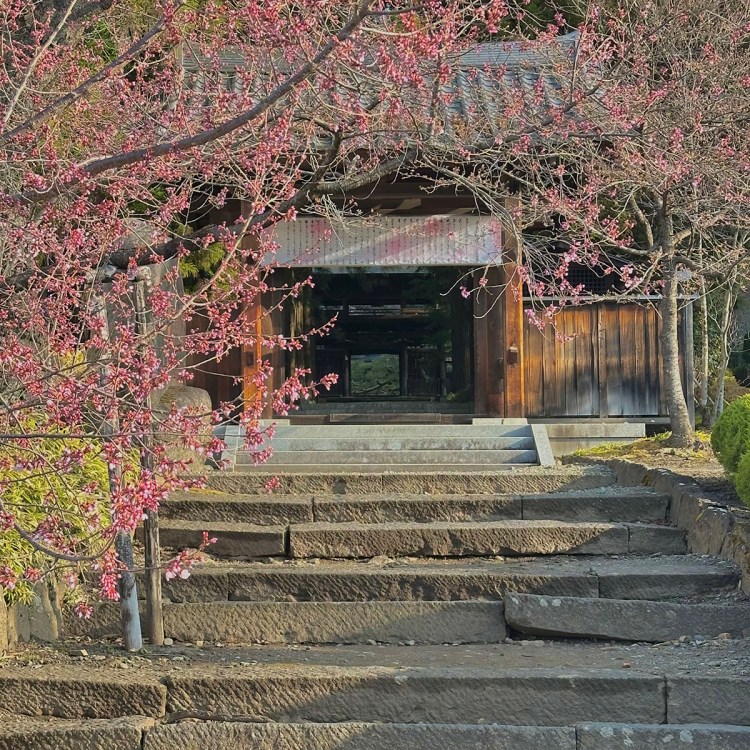
guarded by a friendly saint is the Juin-ji temple…

and we truly feel like we’ve stepped into another world. A moss carpet unfurls beneath our feet…

leading to a magnificent dragon gate that frames some of the delights to come.

Like this pine! It’s incredible, from every angle (yes, I have 1,000 photos of it AND SO WILL YOU)

But that’s just the intro to the gardens of Jiun-ji, which are a Zen masterpiece of rugged rocks…
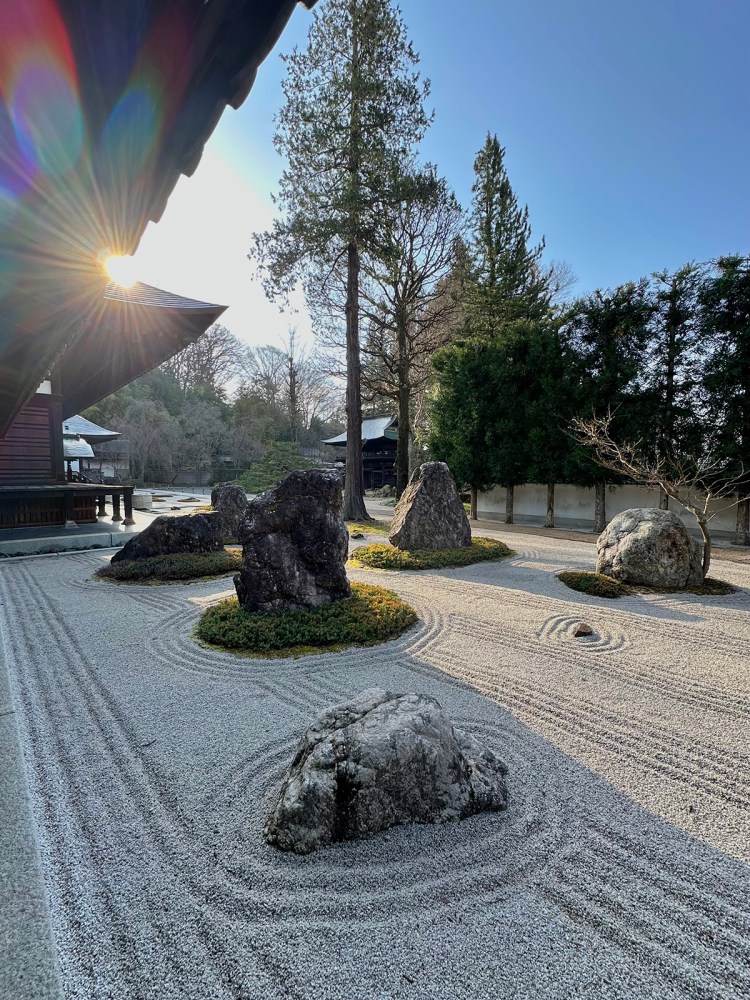
moss islands…

and venerable pines.
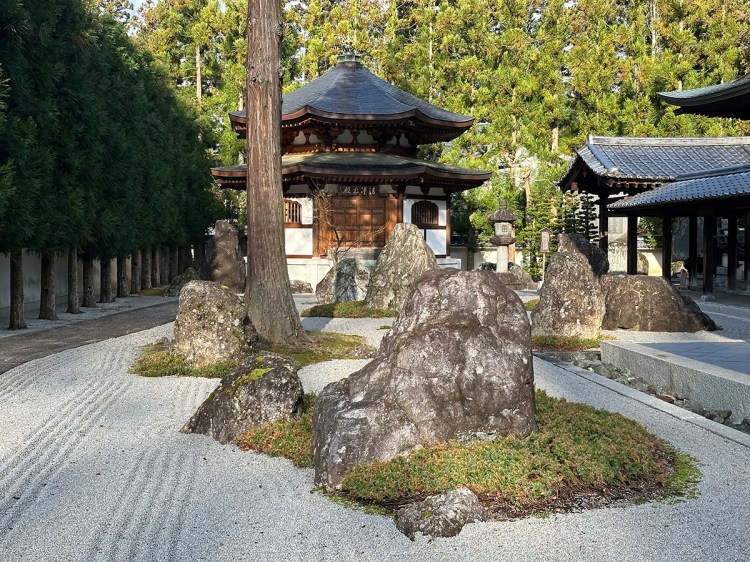
Wending our way past one landscape after another, we finally arrive at the contemplation garden tucked behind the main sanctuary, and pause on the long veranda to appreciate its serene beauty.

Back out in the real world, we continue on the Old Nakasendo and stop in at the Suwa Taisha Harumiya (the “Spring Shrine”)…

before making our way to the path that leads to the Manji Stone Buddha. It crosses several picturesque orange bridges…

on its way to this charming two-meter-high figure carved from one solid rock.

Legend has it that stonemasons working on the Suwa Taisha dug up this stone in 1660—intending to use it to build a massive torii gate—but when they made the first strike (which you can still see on its back today), it began to bleed. Utterly spooked, the head priest commanded work be stopped, and that night he dreamed of a location where an equally big rock could be quarried, and the stonemasons carved this one into a figure of the Buddha instead. They installed it amid a rice field in the forest, and in gratitude, the figure is said to have saved the townsfolk from starvation in a lean year by making the rice planted around it grow and ripen in a single day. These days, it’s said that if you make an offering and circle the Buddha three times, your wish will be granted.
After all that walking, it’s time to give our weary photo-snapping finger a rest back at the onsen. A cup of coffee before immersing in the steaming outdoor bath? The perfect end to a perfect day.

•
Here’s where Tateshina Shinyu Onsen is:

To figure out how to get to Tateshina Shinyu Onsen from where you are, use the Japan Navigation phone app, plugging in your location, travel date and preferred arrival/departure time. Here’s where to get the app and how to use it.
•
Click here for more Beyond Tokyo posts

•
Or get more must-see destinations sent to your email every month when you subscribe!

•

•
•

Jonelle Patrick writes novels set in Japan, produces the monthly Japanagram newsletter, and blogs at Only In Japan and The Tokyo Guide I Wish I’d Had
 Japanagram