

It’s no secret that Japan produces some of the worlds’ most eyepopping flower extravaganzas—like, yeah, cherry blossom season—but there’s an especially Japanese kind of master gardening that you can only see during wisteria season. What makes these wisteria so special?
1
Like bonsai, wisteria take years and years to reach peak bloom, and can outlast several generations of gardeners.

In Japan, they take the long view. These venerable vines were planted and lovingly tended by gardeners who would never see them grow to their full glory, but they put in the time and effort so future generations could enjoy them.
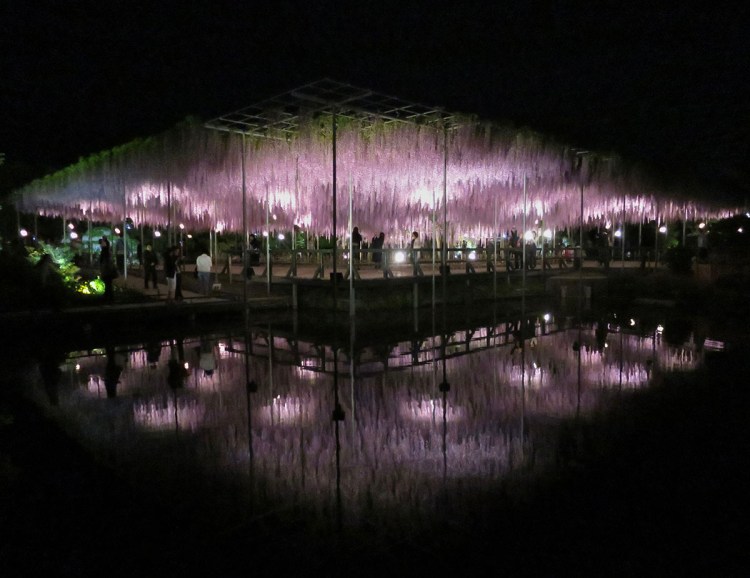
The single plant below, for example, is over 150 years old and its branches spread over 1,000 square meters.
2
Japanese gardeners figured out how to prune and feed the vines so the flowers all bloom at once
Some varieties bloom early, others bloom late, but each plant bursts into bloom all over, at the same time.

3
They train the vines into shapes that create wonderful places to be
Not just pretty to look at from afar…

Japanese wisteria invite you to dine beneath a canopy of flowers…
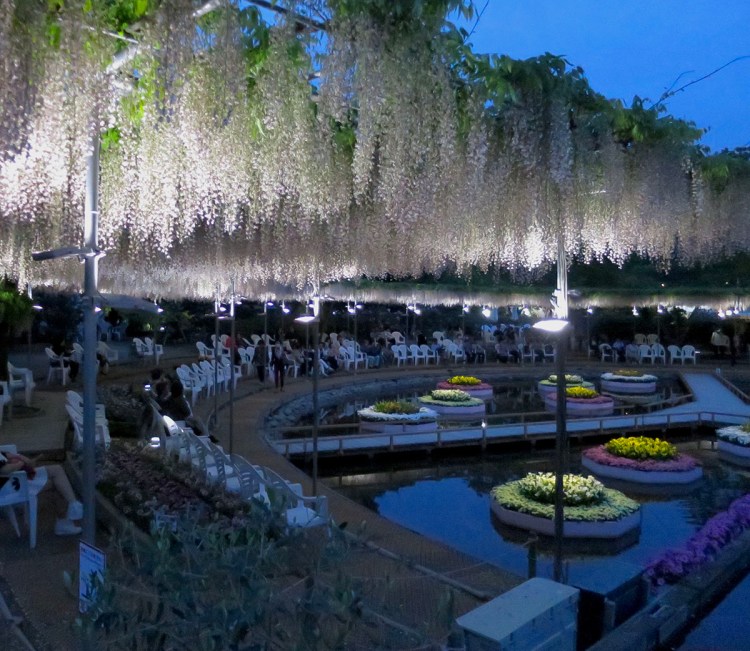
or come right in…
and see the world through a veil of undulating purple streamers.

4
They’ve hybridized each variety for maximum beauty
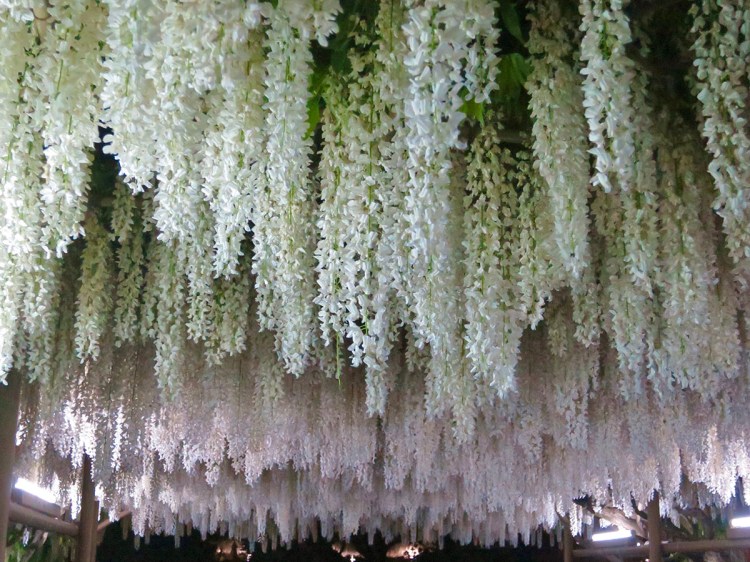
Some are bred for their delicate and unusual colors, from greenish-white to pale pink…
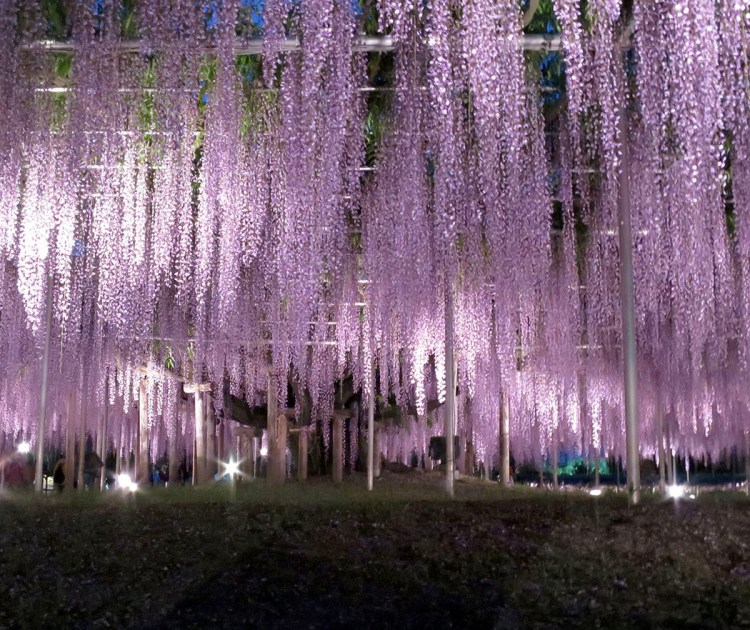
others for the extravagant length of their flower streamers.
5
Training the trunks into pillars of bonsai-like beauty is an art unto itself

You may have noticed that these ancient wisteria tend to grow in historic places: shrines & temples, old-fashioned stroll gardens, and castles. We know the ones at Kameido Tenjin shrine have been there since the Edo Period because they’re featured in famous woodblock prints from the time.

Kameido Tenjin’s distinctive semicircular bridges…
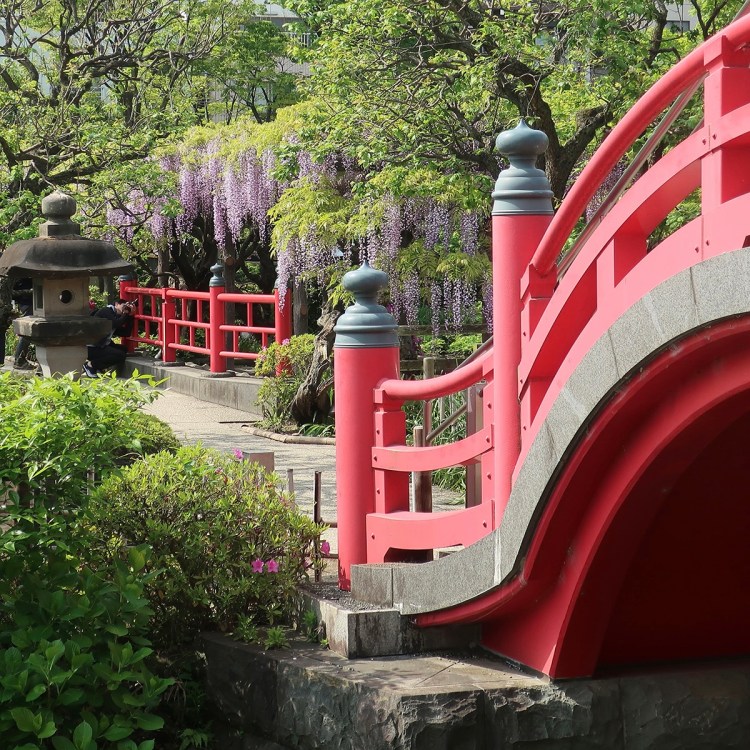
make a full moon shape when reflected in the still water…

but it’s the vast number of impressive purple flowers that people made special journeys to see…

and many people who come to ogle the acres of vines during the day…
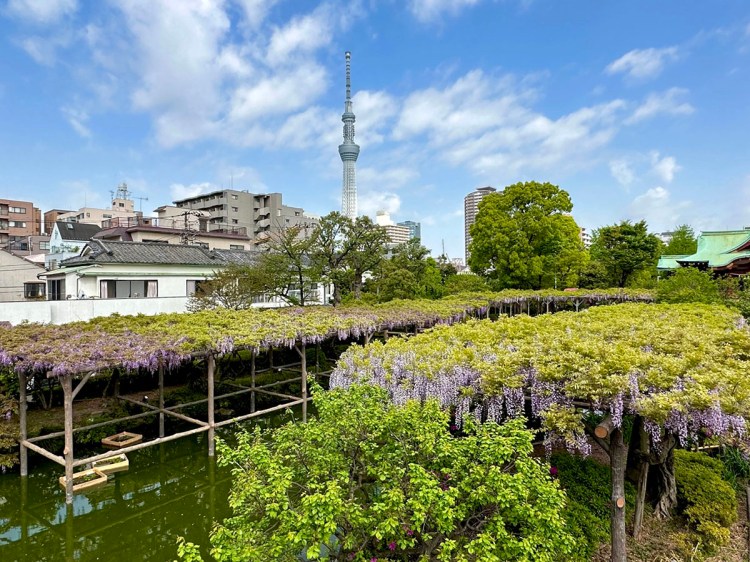
stay while the sun goes down…

to see these beauties lit up at night. Even if the moon is being shy, there’s always Skytree, glowing purple for The Season.

In contrast, there’s only one wisteria at the Hie Shrine, and it’s cultivated on a long trellis in the traditional way. But this is a shining example of the Japanese tradition of choosing only one thing to display, but making sure that one thing is the most exquisite color and shape for the setting.

The grand wisteria at Nishiarai-Daishi Temple delivers a different kind of spectacular…
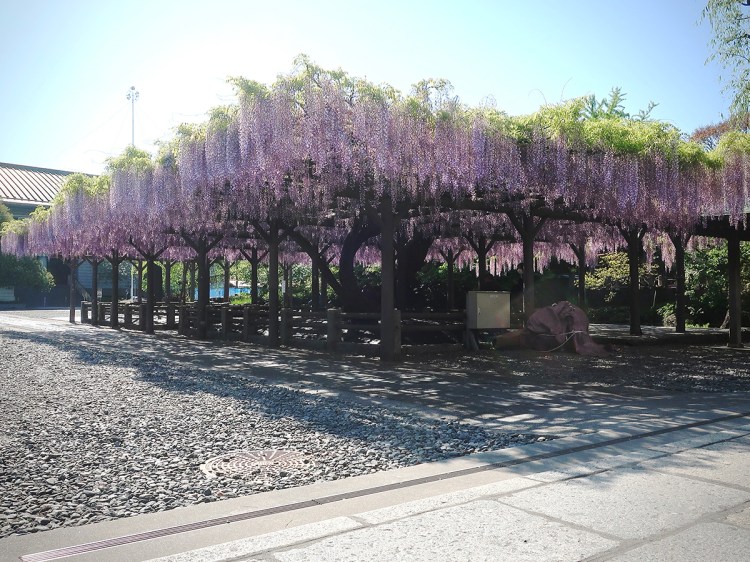
creating an island of dappled shade where neighbors gather to chat…

while glorious purple flowers frame the koi pond beyond.
The pair of behemoths at Odawara Castle double that invitation…

creating long corridors of restful shade…
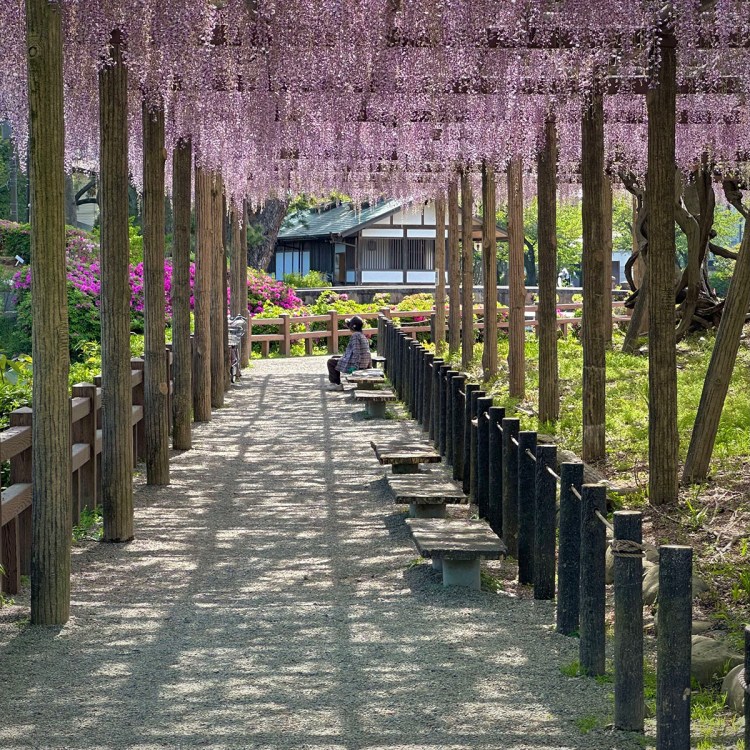
for contemplating the lotus pond and the surrounding castle park.

The vast trellises at Yakushiike Park in Machida make a lovely backdrop for its iconic double-barreled taiko bridge…

and its multi-layered trellis is home to several different varieties…

including an unusually large one that blooms in the most delicate shade of pink.

The truly huge wisteria tend to be on Tokyo’s outskirts, but the venerable gardens right in town offer gorgeous displays of their own. The arbors at Koshikawa Korakuen Garden bloom against a backdrop of lush greenery…

encircled by a picturesque zig-zag bridge that wends through the iris pond at their feet.

The stout old vines at Kyu Shiba-Rikyu Garden look out over a huge pond that now reflects the most modern of skyscrapers all around…

while creating a shady and fragrant oasis where you can enjoy your lunch…

while gazing out through a curtain of purple at the serene landscape beyond.

And finally, the charming trellises of wisteria at Hama-Rikyu Teien arch across scenic streams…

and offer shady pauses while crossing its many bridges or stopping for a bowl of tea at the island teahouse.

When do they bloom?
These days, Tokyo’s wisteria (Kameido Tenjin, Koshikawa Korakuen, Hama-Rikyu Teien, Kyu-Shiba Rikyu Garden, and the Hie Shrine) tend to start blooming around the third week in April, with the outlying ones (Ashikaga Flower Park and Yakushiike Park) hitting their peak about a week later.
For more information, opening hours, and maps, zip over to Where to see the best wisteria in Tokyo
•
Click here for more Seasonal Secret posts

•
Or get more seasonal delights sent to your email every month when you subscribe!

•

•
•

Jonelle Patrick writes novels set in Japan, produces the monthly Japanagram newsletter, and blogs at Only In Japan and The Tokyo Guide I Wish I’d Had
 Japanagram