
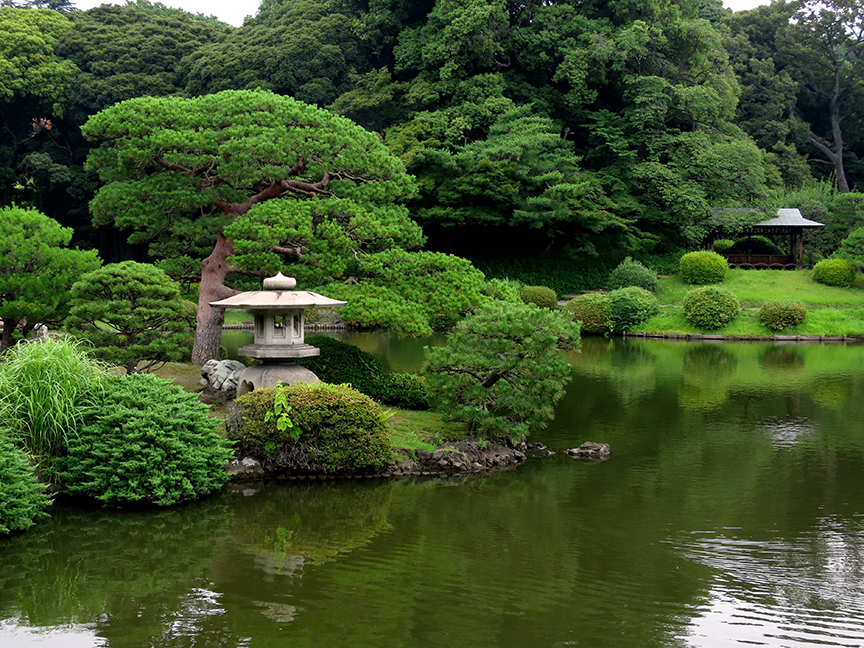
If there’s one thing Japanese gardens are the total boss of, it’s being green and serene. They’re stunning in every season, even without a single flower. They’re highly designed, but feel completely natural; miniature worlds where every tree and bush is ideally shaped, and every curve in the path delivers a beautiful view. In a Japanese garden, the world outside—with its cares and traffic and crowded subways—ceases to exist.
But how do they manage to be so inviting, even amid the summer heat? It’s all a matter of design!
How do Japanese gardens make the outside world disappear?
Many of the gardens in Tokyo are now surrounded by enormous skyscrapers, but—unbelievable as this may seem when you’re outside, looking in through a photo—when we’re actually walking in them, we don’t notice. Why?

Each garden is a world in itself, designed to draw our eyes to its own horizon, not the horizon of the world outside. For example, see the meandering river below? It seems to lead into a far distant forest, but this is actually just one small corner of Koshikawa Koraku-en. The illusion is amplified by the use of different colors of greenery—the ones that are “far away” are deepest in color, while the ones in the foreground are lighter and brighter. And the “river” is wider at this end than at the far end.

Now check out how the perfect proportions of the Kyu-shiba Rikyu garden create the illusion of full-sized hills and a vast lake. When walking the paths, the looming building in the background is so big and square and out of scale, it seems to have nothing to do with the world we’re immersed in. Our eyes just…ignore it.

Water, water, everywhere
Unlike many other kinds of gardens, where water is represented by occasional fountains, Japanese gardens have water at their hearts. And they use water in many forms, to enhance its effects.
We’re familiar with the deep coolness conveyed by a still pond…

or a rushing stream…

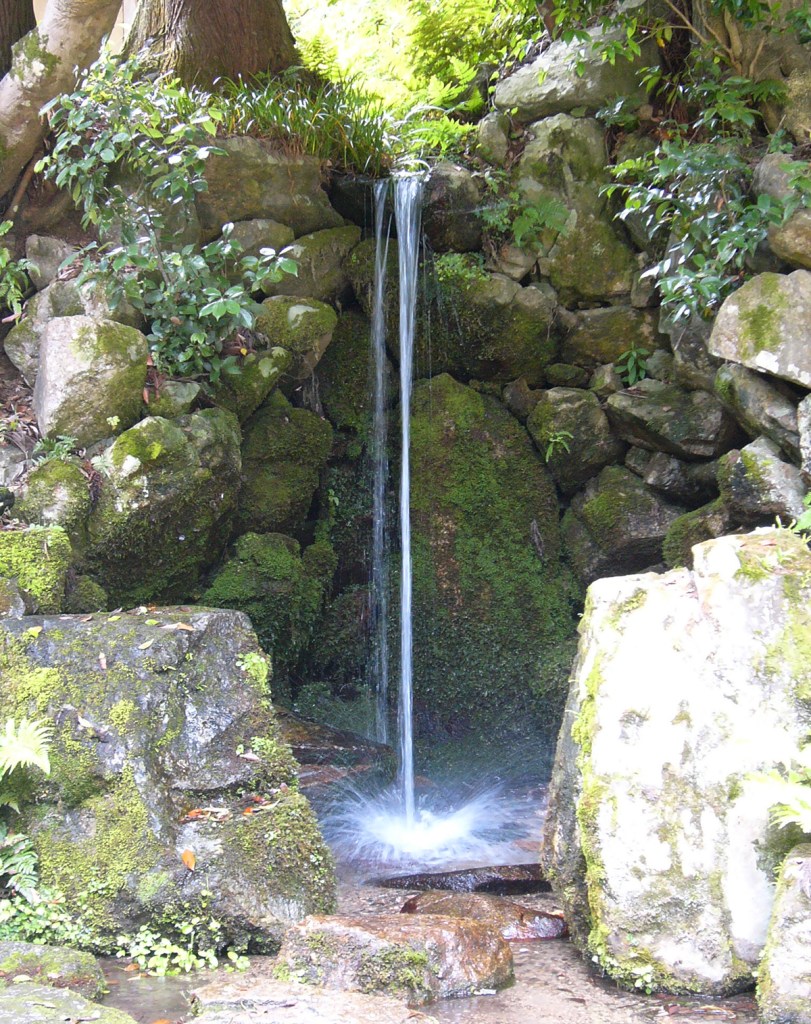
but Japanese gardens take the waterworks one step further, tucking waterfalls among the greenery and rocks…

where even small ones are a welcome splash of relief from the heat
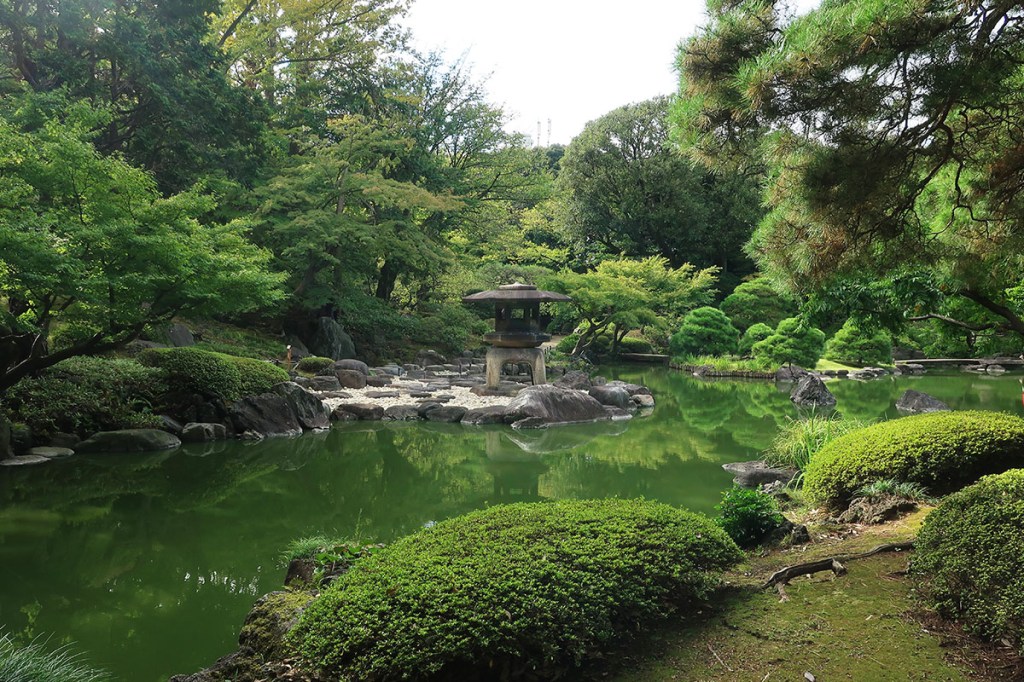
Plantings and other features around the shore are designed to make pleasing shapes when they’re doubled by reflections, inviting our eyes to the edge where coolness awaits…

and not every water feature needs to be big to deliver a refreshing effect. This stone basin attracts the ear and eye with its pleasing trickle.

And then there are the bridges
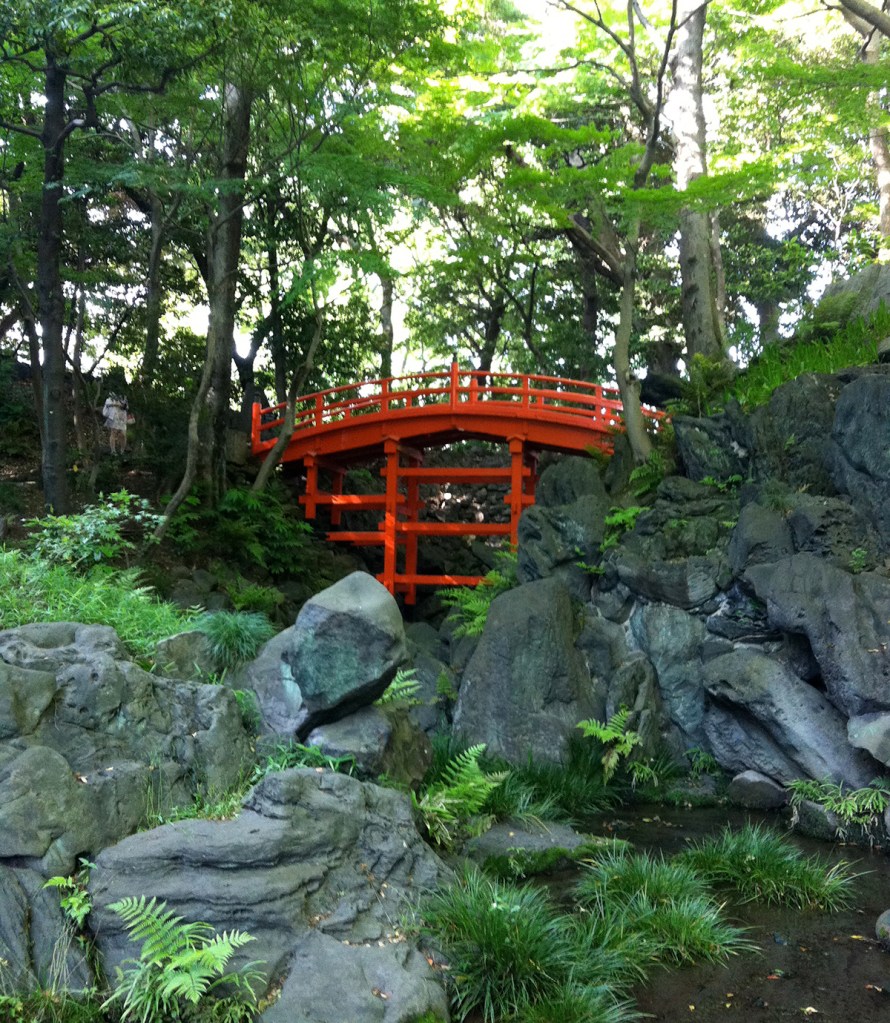
The lovely bridges in Japanese gardens do more than get you from one side to the other without getting your pants wet—seeing a bridge automatically triggers the hope that it’s spanning a body of water, and the ones in Japanese gardens are designed to get you as close to the water as possible. As you cross one, you can often see the next one ahead, beckoning you on with a different design, drawing you deeper into the garden world.
Bridges can be mossy…

or made of wood…

lacquered…
or made of stone.

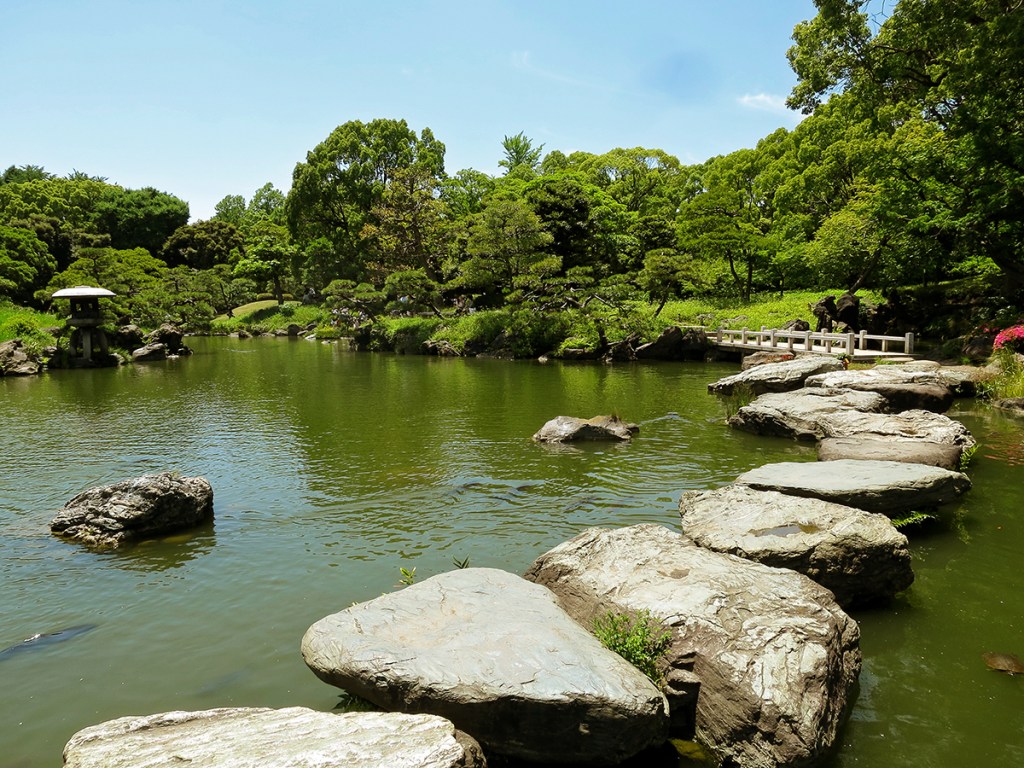
Stepping stones take you right out into the pond, so turtles and fish can swim up to say hello…
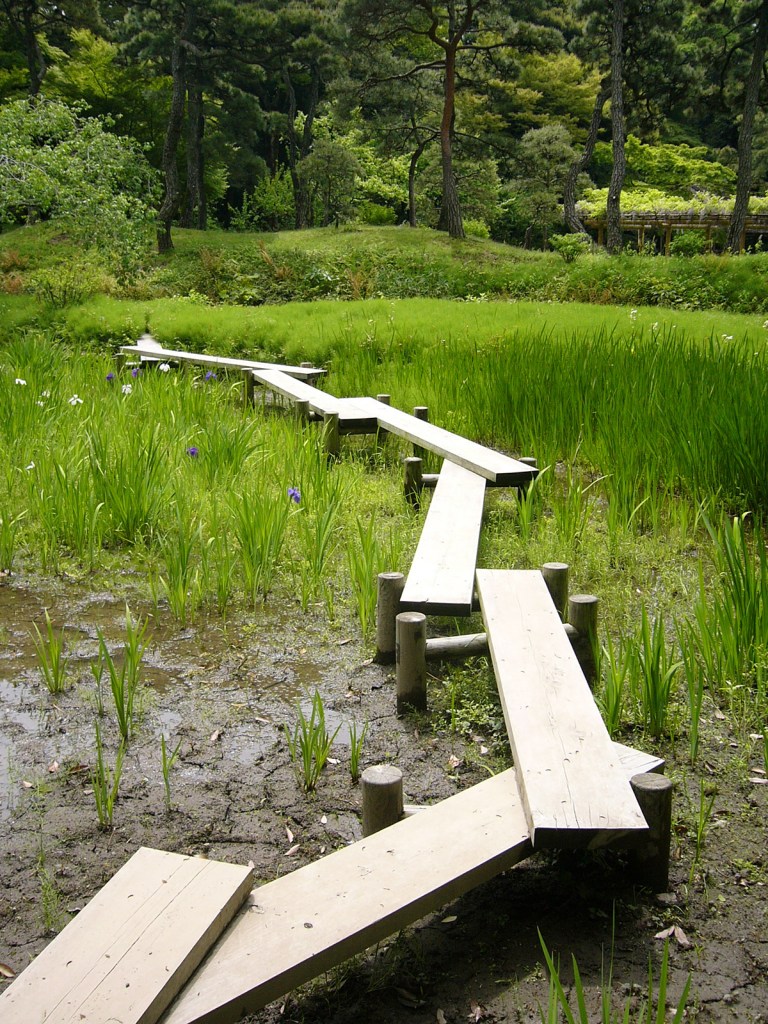
and there are even crooked wooden bridges that invite you to visit the plants that prefer a watery home
Some gardens feature other icons of cool running water in addition to bridges, like this waterwheel that everyone recognizes as the kind used to grind soba flour at old mills, which are famously situated along clear, running streams.

And finally…shade, shade and more shade
When you don’t need lots of sunny beds to encourage flowers to bloom, the pathways can be shaded by arching trees that shield visitors from the merciless sun.
Because Japanese gardens thrive on being a more intimate size than the grand gardens of the West, many feature jewel-like glades, which allow the sun to spotlight the decorative features while sheltering the viewing spots with a variety of greenery.
I hope you’re now inspired to get out and walk in your nearest Japanese garden to appreciate these wonders first hand, but even if you wait until it cools off, you can be sure that your local Japanese garden will be welcoming and restful in any season.

•
Click here for more Seasonal Secret posts

•
Or get more seasonal delights sent to your email every month when you subscribe!

•

•
•

Jonelle Patrick writes novels set in Japan, produces the monthly Japanagram newsletter, and blogs at Only In Japan and The Tokyo Guide I Wish I’d Had
 Japanagram