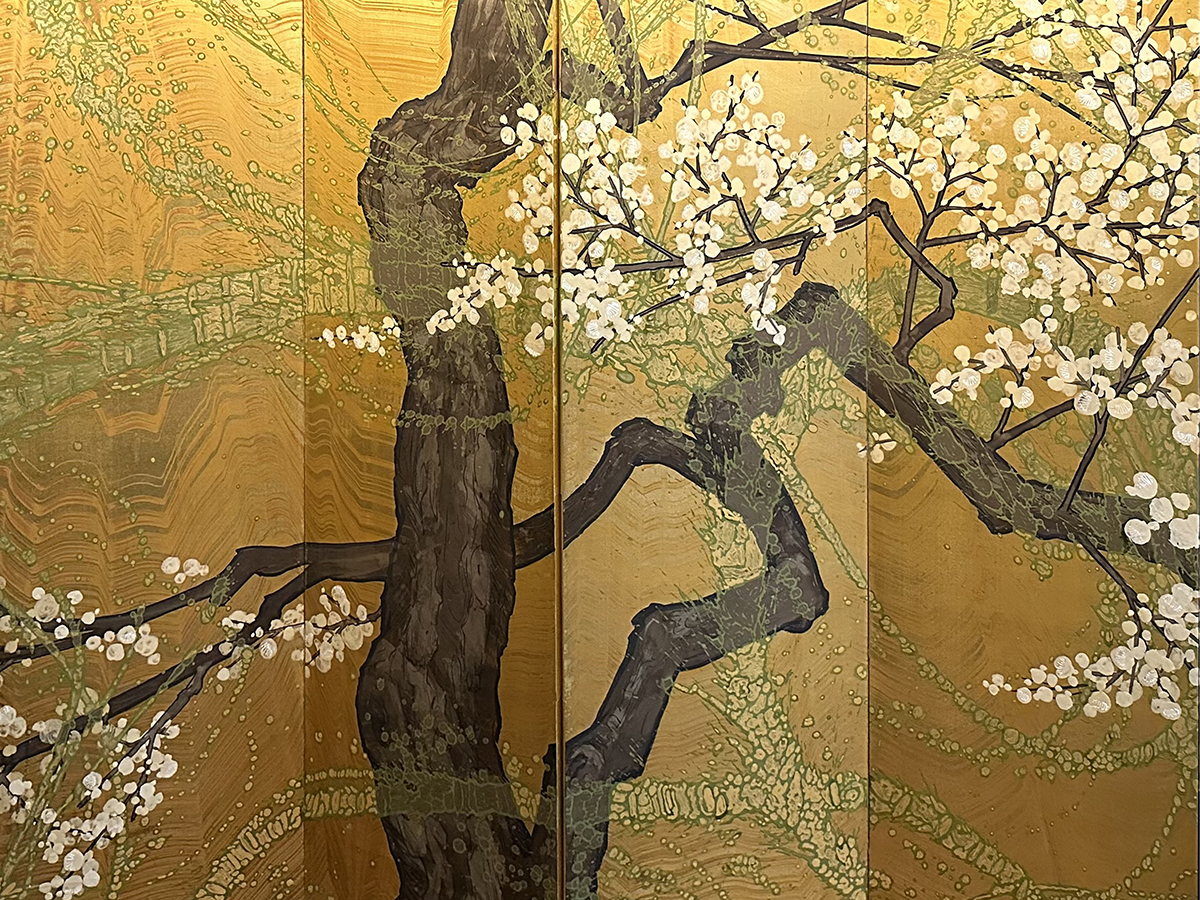

If there’s an incredibly difficult way of making something and it takes a lifetime to master, you can be sure Japan has perfected it. That is especially true of nihonga, the vanishing art of painting with pigments ground from precious stones. But what makes nihonga so special, when there are so many easier ways to paint a picture?
Let’s visit the Yanaka studio of master nihonga painter Allan West and find out…
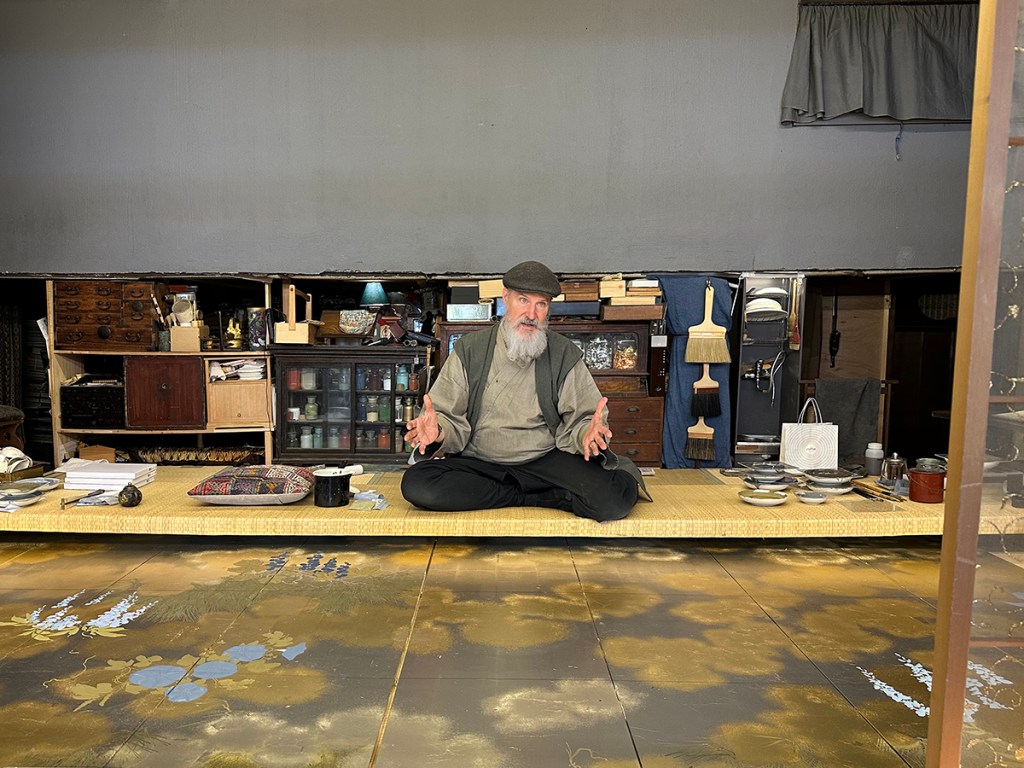
First of all, what the heckin’ heck is nihonga?
If you’ve ever swooned over a brilliantly colored Japanese scroll or a folding screen painted on gold or silver leaf, you’re already a nihonga fan. Unlike Western forms of painting that have embraced better living through chemistry, nihonga paint is still made from ground-up semi-precious minerals and animal glue. Deer glue, to be exact, which supplies a perfectly gooey translucent base to suspend the particles of stone so it can be brushed onto a prepared surface. This miracle combination dries to the kind of immortality that makes Japanese nihonga paintings from the eleventh century still wow as brilliantly as if they were painted yesterday.
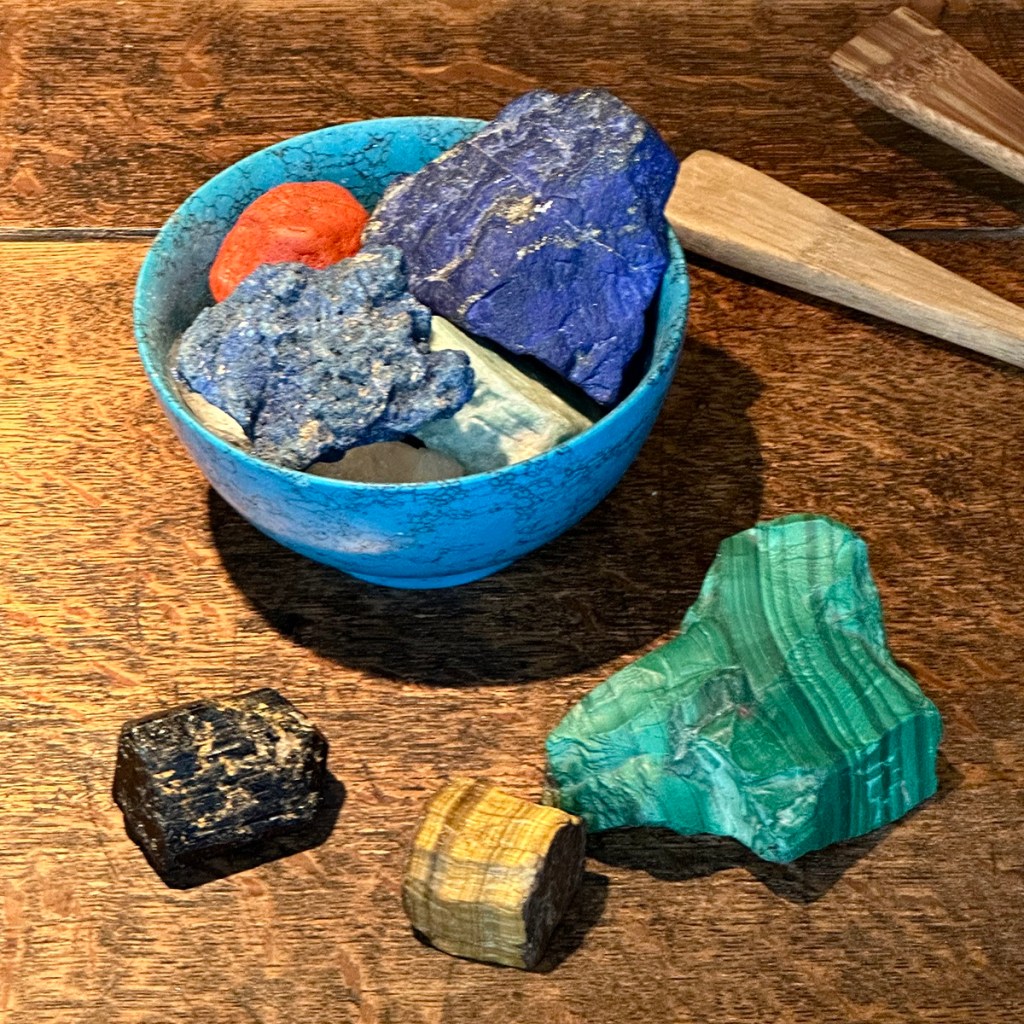
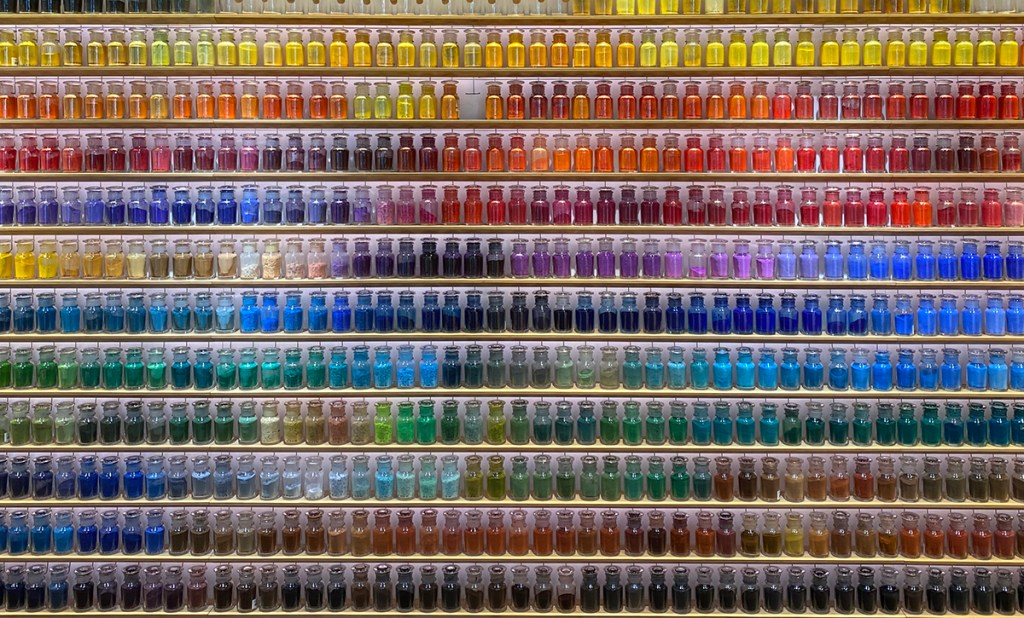

But besides having to compete with the jewelry trade for your raw materials, what makes nihonga so different from other kinds of painting?
1: Colors have to be matched, not mixed

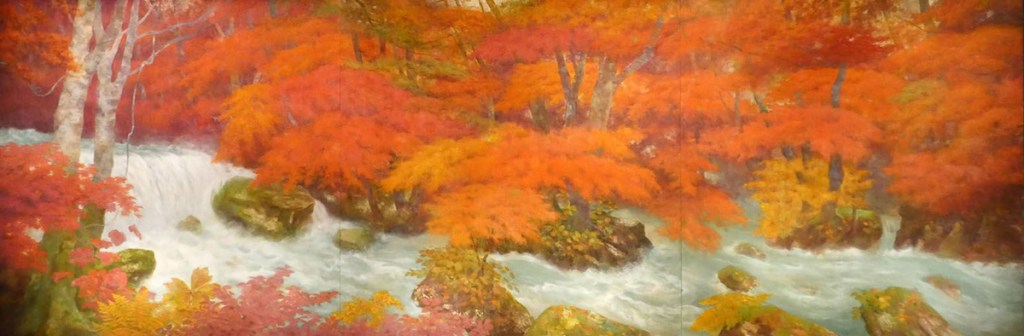
See the shading in all those autumn leaves? Feel the roughness of the tree bark? Each shade and highlight has to be painted using different minerals to make the leaves look like they’re transitioning from yellow to orange, and give the impression that some parts of the bark are catching the sun and others are in shadow.
And why can’t you just mix brown and white to get light brown, like you might with oils or watercolors? Because the minerals used for nihonga all have slightly different weights, so if you mix a heavier one with a lighter one, the lighter particles will float to the surface and the heavier ones will sink. When it dries, all you see is the color on top. (Allan laughed when he told me that one of the first painful lessons nihonga painters learn is that it’s usually the expensive colors that hide behind the cheaper ones.)
2: You can’t see through paint that’s made from rocks

Nihonga paint is unforgivingly opaque. So, why does it look like you can see the plum tree and the gold leaf background through the places where the energetic green elements cross them? Unlike with oils, acrylics and watercolors, the lighter bits that make it look like you’re seeing what’s behind aren’t made by diluting the color or layering the paint—you actually have to find a mineral that’s the right color and paint each and every “overlapping” bit with it.

3: Your new best friend better be a custom brushmaker

Feast your eyes on the silver background of this gorgeous screen. The pattern was painted in one continuous stroke, with a superwide horsehair brush that’s not exactly an off-the-rack item from Dick Blick. It was custom-made for this piece.
Also, this screen stands over five feet tall, so picture the gymnastics required to make that one stroke. Nihonga paint is runnier than oils, so works like this have to be painted lying flat on the floor to avoid dripping before drying, and Allan says he vastly enhanced his eccentric artist status with the neighbors by practicing the stroke with his new brush and water on the street outside his house, leaping and dancing from one side to the other as he drew it the length of the screen.
4: Every color has to be mixed fresh every day
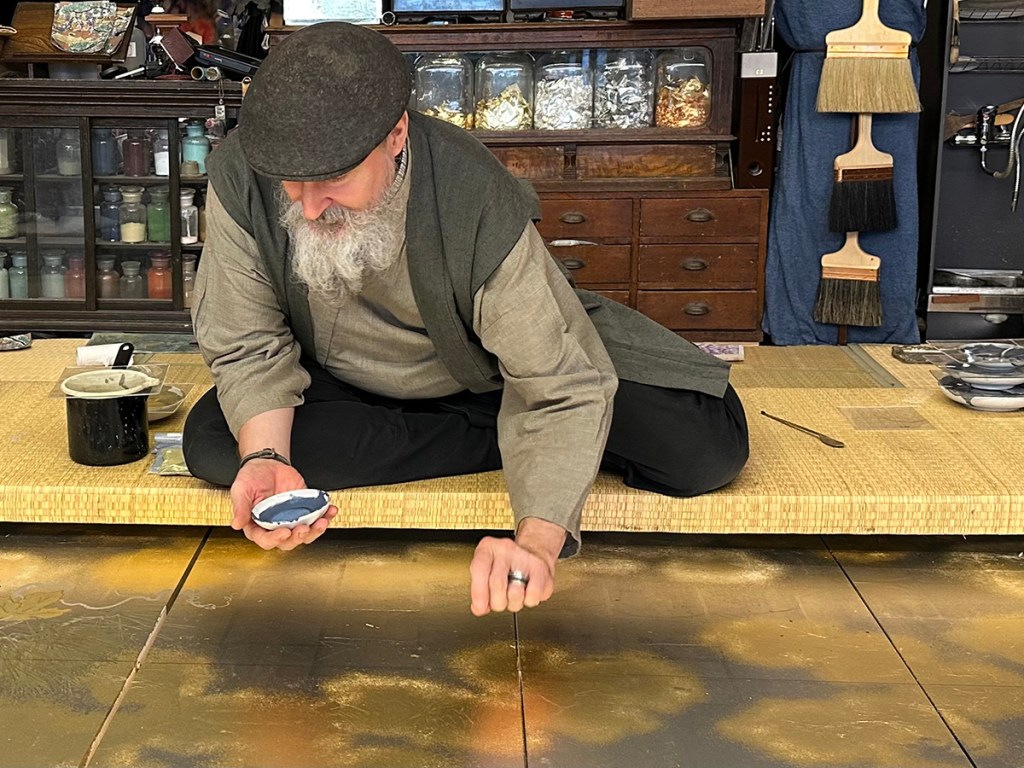
If your paint comes from the same basic source as venison, it’s going to smell like day-old meat if you leave it sitting out on the counter overnight. Which means that not only do nihonga painters have to mix their own colors from crunched-up rocks, they have to whip up a fresh batch every day.
The one thing nihonga shares with other venerable painting techniques is that it can be used to portray an infinite number of subjects in an infinite number of styles.
From spare stems of bamboo…

to this lavish spray of cherry blossoms.

From this dark and fiery abstract…
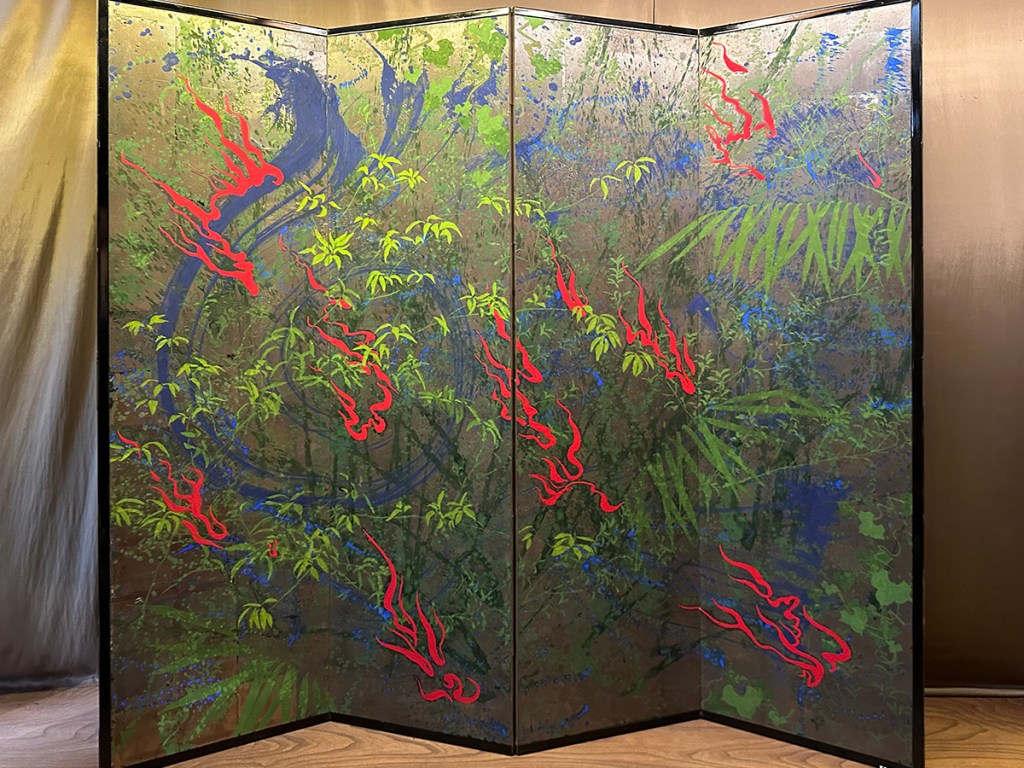
to this series that seems to depict Japanese Zen gardens…

but was actually sketched from the mountains surrounding Lake Lugano, in Switzerland…
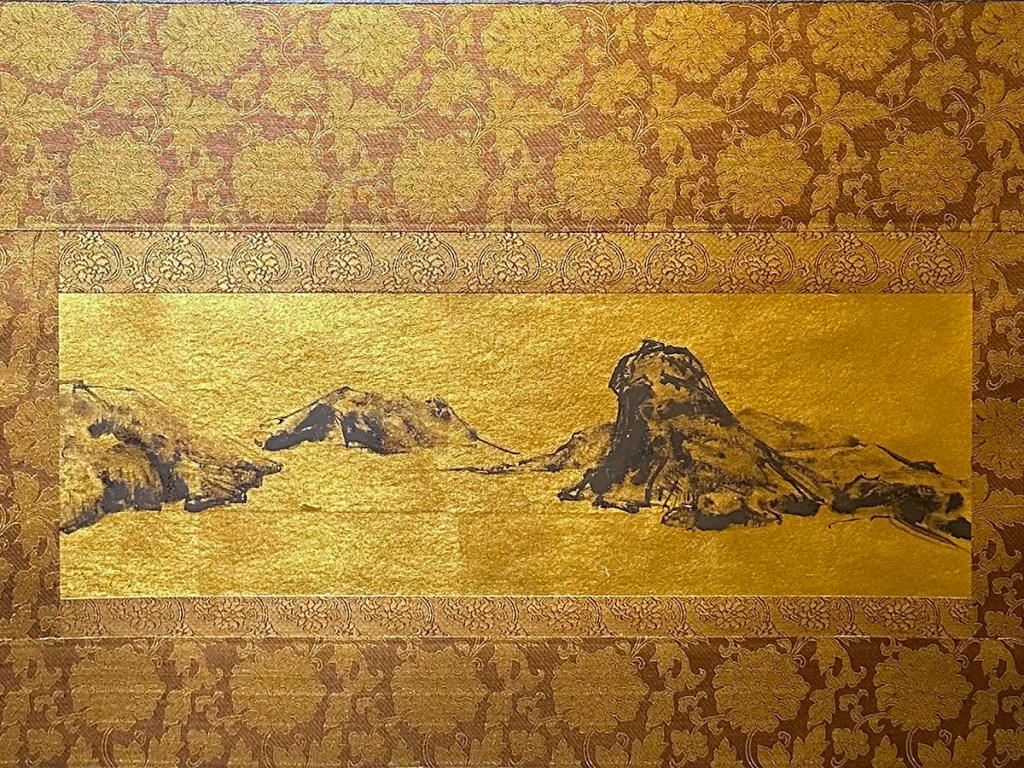
…it’s pretty clear that Allan West isn’t constrained by the daunting requirements of nihonga, he’s inspired by them.
If you’d like to see his work the next time you’re in Tokyo, drop by his Yanaka studio on any afternoon but Thursday. The door usually opens at 13:30, but check the closing times for each day on the Google map, because it varies. If you’re lucky, he’ll be there himself, and you’ll never meet an artist more willing to share his passion for Japan and all things nihonga.
•
If you’re interested in seeing more nihonga, the Yamatane Museum near Ebisu Station is an excellent place to get an idea of the wildly different effects achieved by the famous artists in its collection.
They range from Shoen Uemura’s scenes from the lives of beautiful women…

to Gensō Okuda’s eye-popping seasonal landscapes
•
Click here for more The Thing I Learned Today posts

•
Or get more amusing Japan stuff sent to your email every month when you subscribe!

•


Jonelle Patrick writes novels set in Japan, and blogs at Only In Japan and The Tokyo Guide I Wish I’d Had
 Japanagram
One thought on “All about nihonga: A master reveals the secrets behind Japan’s ancient form of painting”