
Kamakura in Kanagawa Prefecture

MAP
to all shrines and temples
If you want to set a record for seeing the most entertaining shrines & temples in a single day, the best of the best are just an hour away from central Tokyo in the charming town of Kamakura! Read on, to pick your must-sees.
Before we explore the area around Kamakura Station, let’s take a short ride from there to Hase Station on the Enoden Line to see two of the most popular temples in Kamakura before they get too crowded.
It would be wrong to come to Kamakura and not see the biggest bronze Buddha in Japan, the Daibutsu at Kotoku-in Temple. It is fabulous and serene, and if you want to get some idea of how big it is, check out those little tourists by the base!
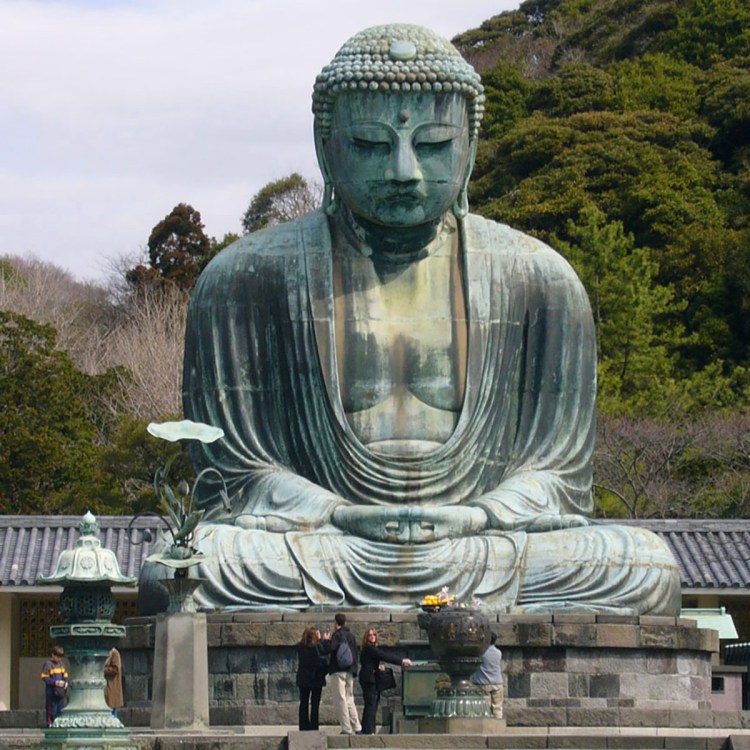
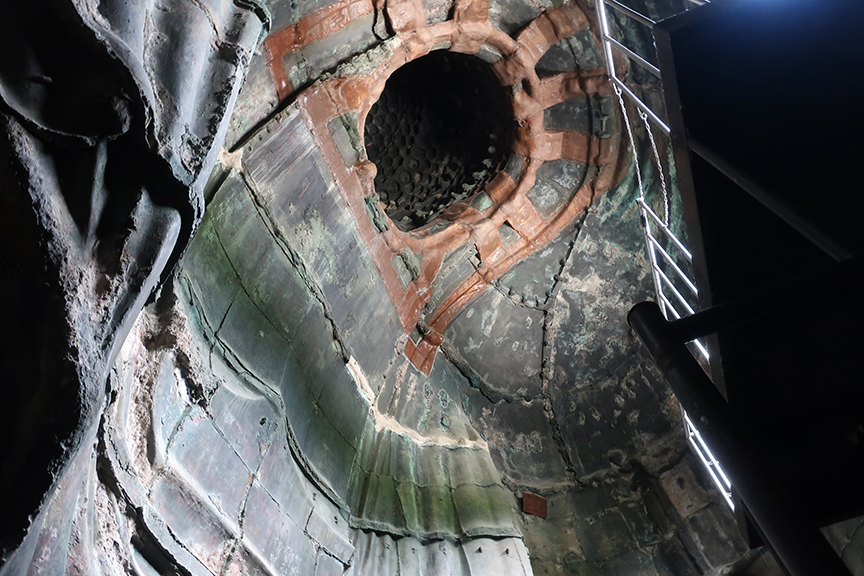
And you know what’s extra cool? You can go inside and see how it’s made!
Next, let’s visit Hase-dera, which is home to an eye-popping three-story-tall gold Kannon figure (also the biggest in Japan, and too sacred for photos to be allowed) but it also has a ton of other see-worthy sights.
If you’re there in early summer, the hydrangea gardens rival the best in Japan, with a kerbillion varieties…
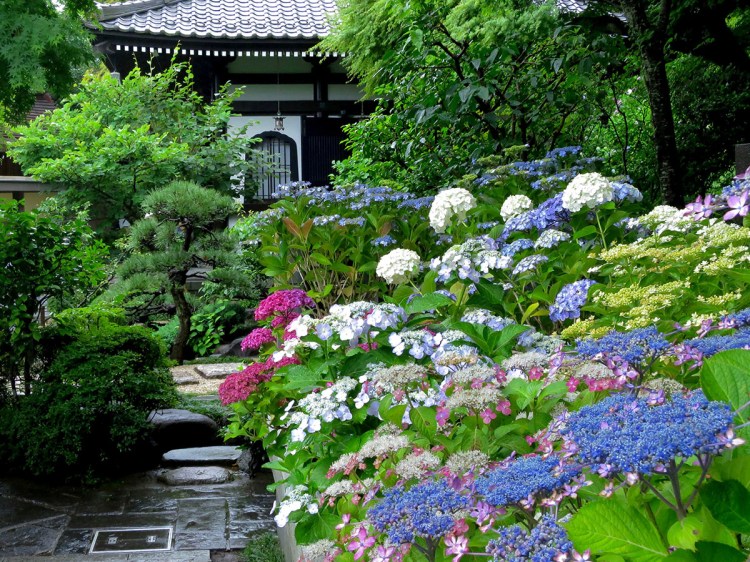
…and an entire hillside with trails that meander through a flowery wonderland that’s like nowhere you’ve ever seen.

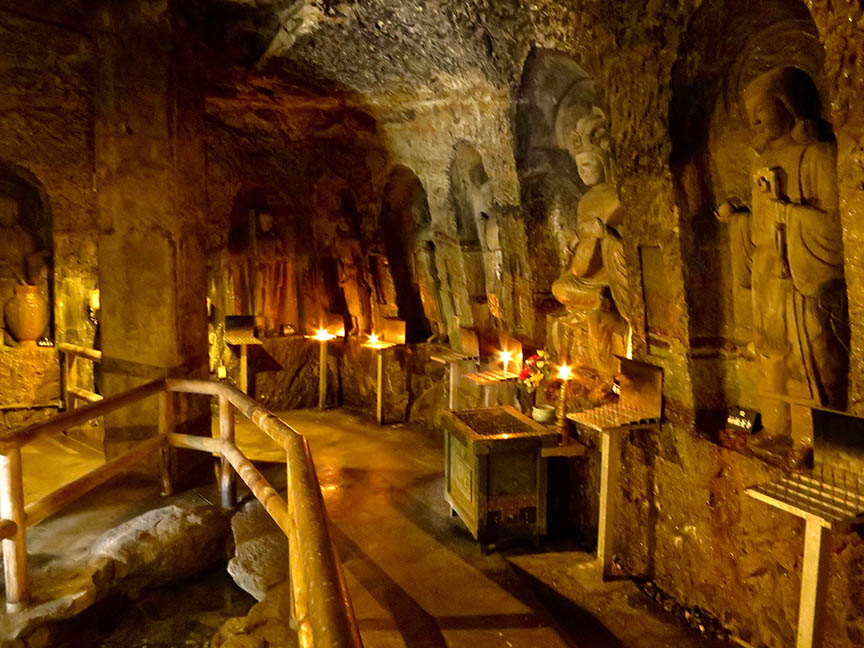
There’s also an awesome cave you can go inside…
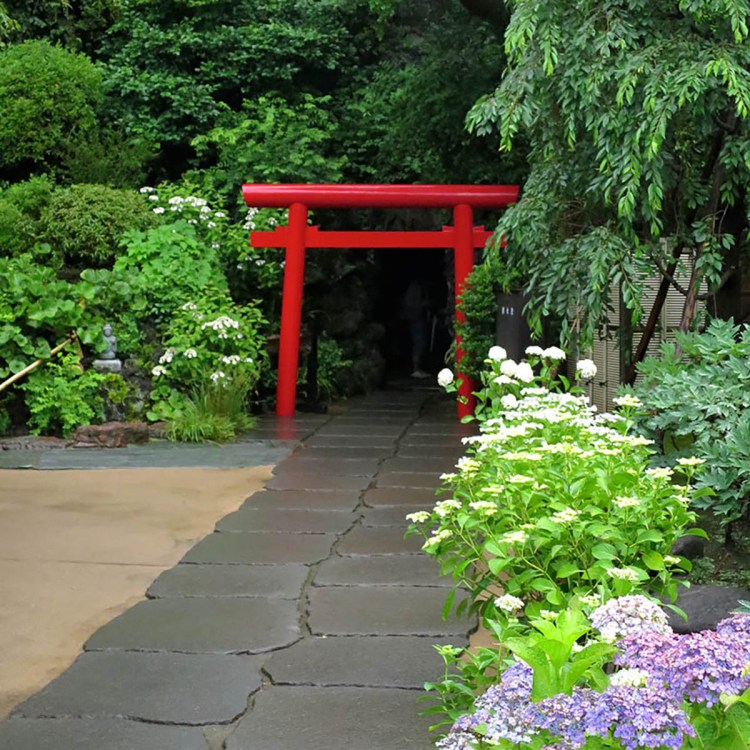
..that’s a shrine to Benten, goddess of music & literature, wealth and women.
Hasedera’s powerful giant prayer wheel can be taken for a spin on special holidays…

You can pay homage to Buddha’s footprints…

…and admire the thousands of Jizo figures hiding all over the grounds.

This temple is picturesque in every season, with small treats everywhere (like early summer, when iris bloom in these floating planters that wander across the koi pond).

Now let’s return to check out the excellent shrines and temples near Kamakura Station.
If you love foxes as much as I do, we can’t miss the Sasuke Inari Jinja (Fox Shrine). Climb through this tunnel of orange torii gates and at the top, we’ll find ourselves in another world, where fox figures reign supreme.

Thousands of foxes represent the hopes and dreams of those who have visited this renowned power spot..

…gathering into mossy, miniature villages along the trail that loops up into the forest behind…

…and clustering around the many sub-shrines that dot the grounds.

How to make your own wish: Buy a pair of fox figures from the shrine shop near the top of the torii tunnel, then leave them somewhere in the forest, along with your wish.
A little way down the road, let’s double our money at the ultra-Shinto Zeni-arai Benten (Money-Washing) Shrine that’s situated in a grotto like something straight out of Totoro.
This tunnel cut through the living rock leads to…
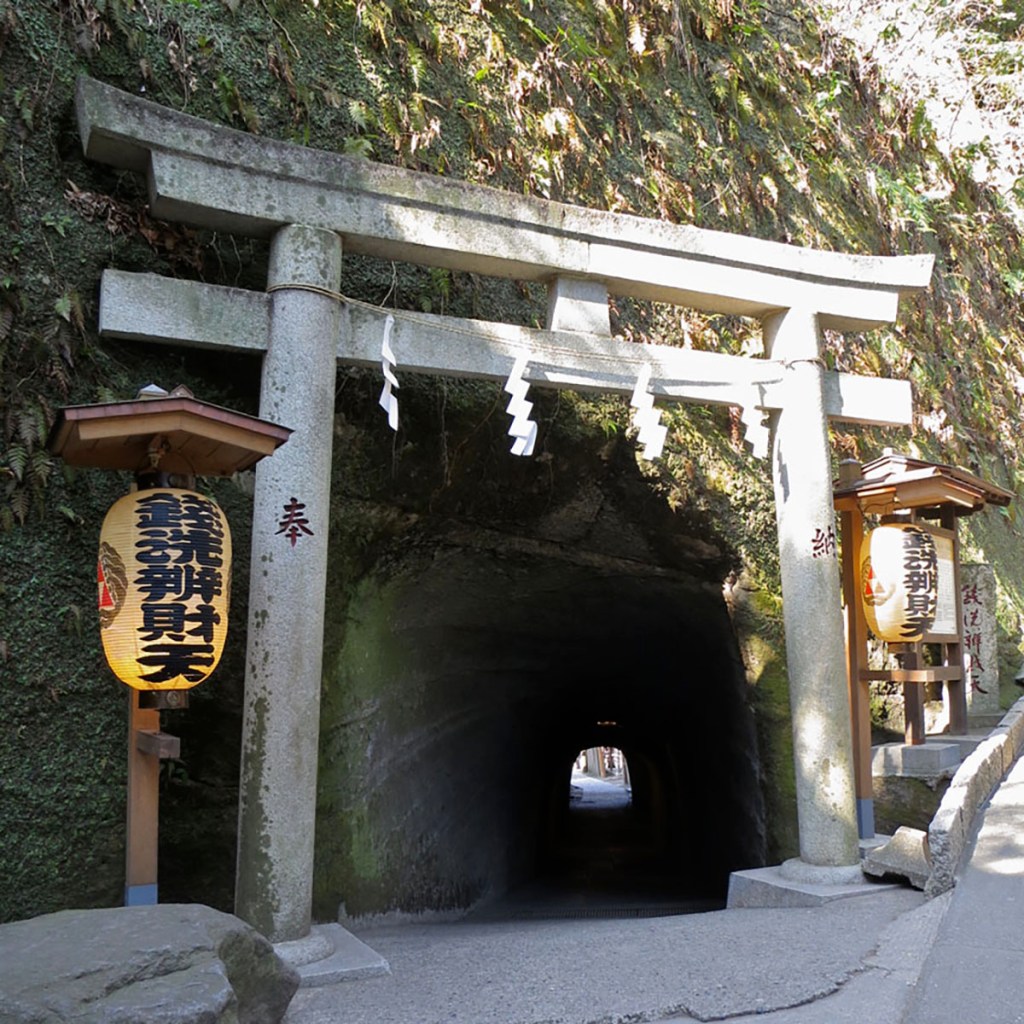
…a sacred ferny enclave with gushing waterfalls, where legend has it that if you wash your money in the sacred stream…
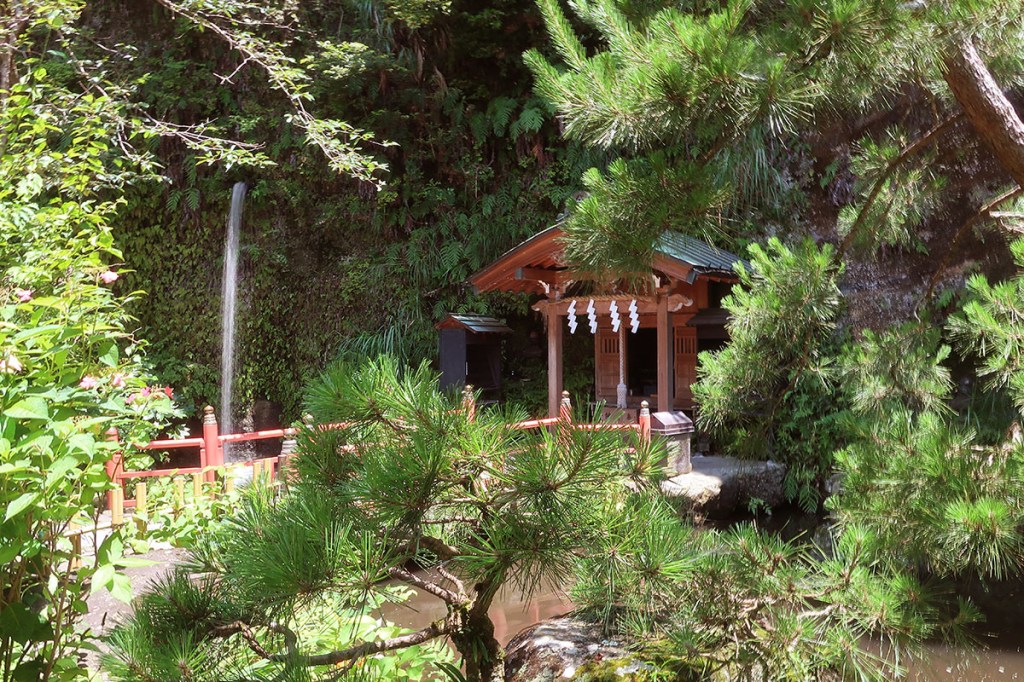
it will double within the year!
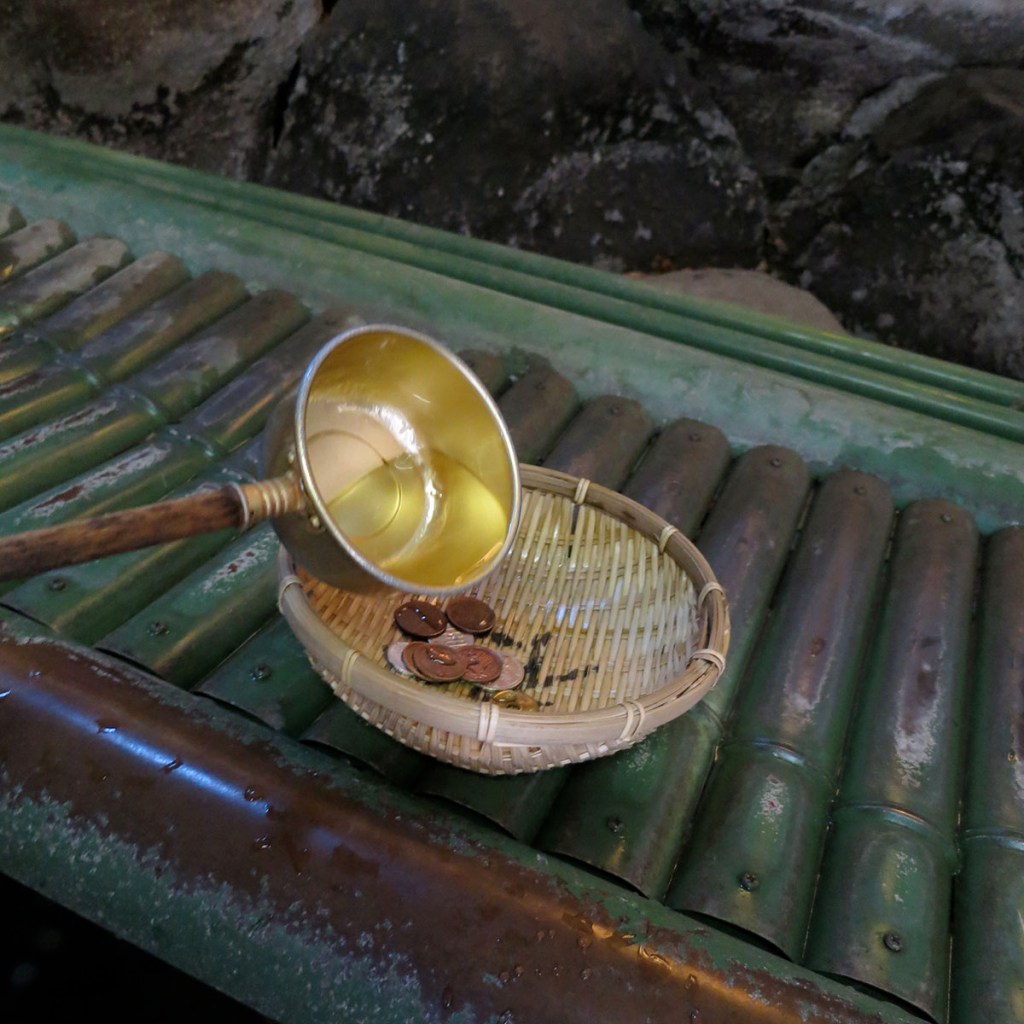
How to double your money: Rent a basket at the shrine shop and take it to the bamboo shelf in the nearby cave. Put your money in the basket and pour a dipper of stream water over it. Let it dry naturally (do not, uh, wave it over any bundles of burning incense lest that have the opposite effect).
On the other side of the station, let’s walk through the grand torii gate and wander through the Tsurugaoka Hachiman-gu Shrine. It’s a grand shrine built by one of Japan’s most powerful shōguns after his Minamoto clan bested their arch-enemy, the Tairas.

Their legendary rivalry is represented by a vast lotus pond split by a red bridge. On one side, the lotus bloom red to represent the Taira, on the other, they bloom white, to represent the Minamotos.

This is a glorious red and gold shrine with lots to see year-round, but my favorite time to go there is during peony season in February, when the prize plants are arrayed around the lotus pond and protected by little rice straw hats…

…or red parasols.

This next shrine isn’t one of the major attractions of Kamakura, but if you got some evil influences or annoying people to banish from your life, Kamakura-gu (The Dish-Breaking Shrine) is the shrine for you!
All you have to do is drop your coins in the slot, choose a dish, make your wish and throw it against one of the handy sacred rocks you see there just beyond. If it breaks, you’re free!

Also, who doesn’t need one of these adorable dragon clackers to take home for all their demon-chasing needs? If you’re looking for something your friends back home will cherish forever, this is it. The shrine shop is to the left of the main building.

Next stop, the fabulous Hokoku-ji (Bamboo Temple). If you only go to one temple in Kamakura, this should be it. Their bamboo forest amazing, but there’s so much more to see besides!

The entry is a stunning walk through a moss-covered garden, but that’s just a small taste of the wonders to come.
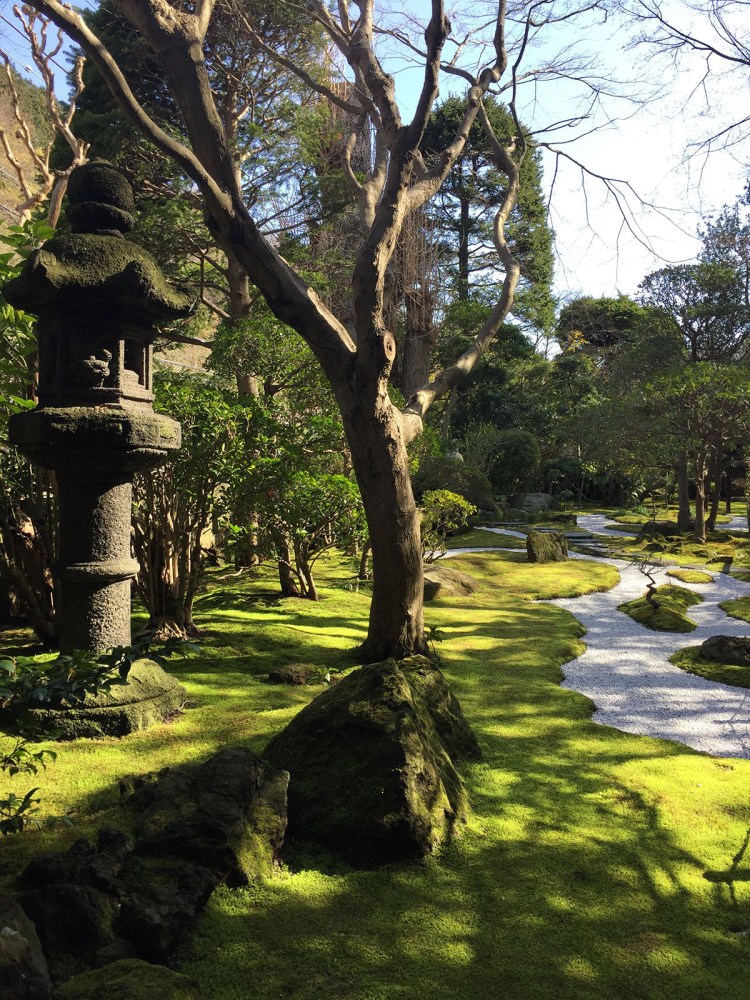
When you stop to buy an entry ticket at the window behind the big bronze bell…

…to pay the modest ¥300 entrance fee, you can also buy a ticket to try a bowl of matcha and tea ceremony sweets (¥600)…
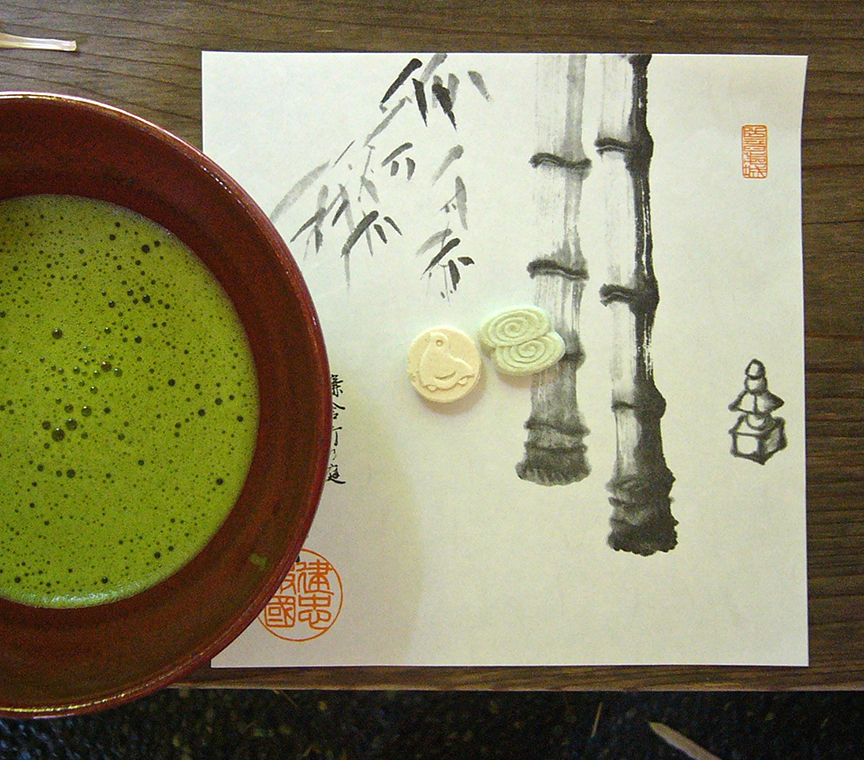
…and drink it while contemplating the famous bamboo grove and the other lovely Japanese gardens behind the temple.
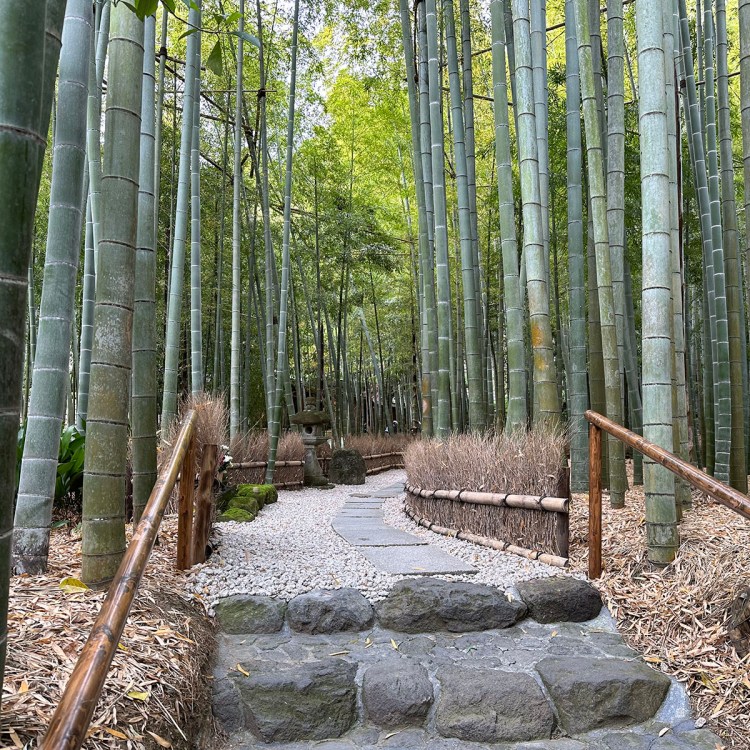
If it’s been raining, let’s detour to see Myohō-ji Temple and it’s famous mossy steps. This one is a bit out of the way, and if it hasn’t rained within the past few weeks, the moss doesn’t look great and it’s not worth the trip. But if you happen to catch it in July or after a spate of fall typhoons or winter rains, these long stone stairs are truly only-in-Japan sublime!

Now let’s move on to
Kita-kamakura Station
Meigetsu-in (the Secret Garden Temple) is known for its famous entrance steps, which are lined with hydrangeas in early summer…

But if you happen to be there during the summer or fall, there is a bigger treat in store! The secret garden might be open! You can catch a glimpse of it through this lovely hall…
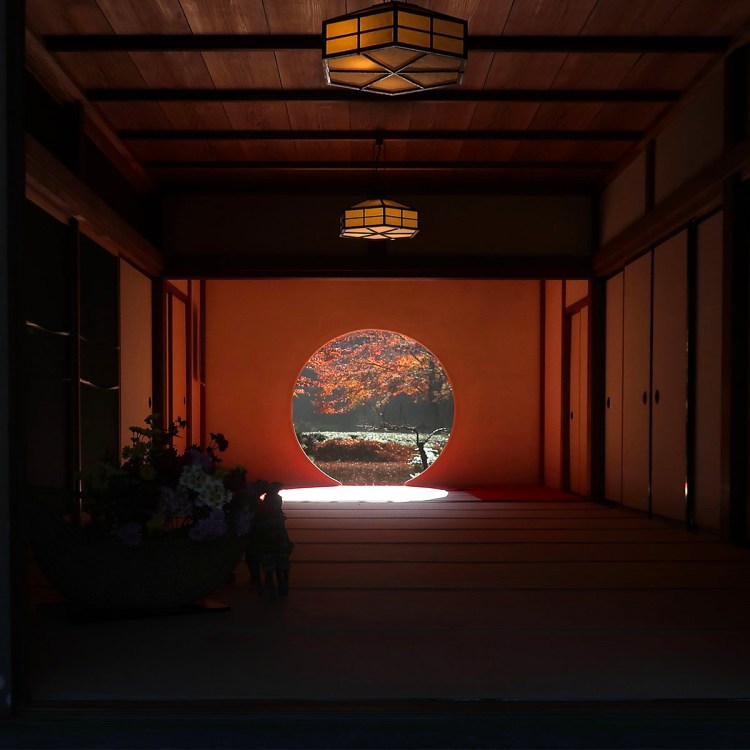
…and buy tickets to see it at the window off to the left. It’s well worth a look if it’s open! In iris season (early summer) it looks like this…

And in fall, it looks like this:

•
Tokei-ji (Divorce Temple)
This temple isn’t visually so special, but it’s super interesting because it offered one of the few ways a woman could get divorced from an abusive husband in the Edo era.

If she could manage to get inside the gate and live there with the nuns for three years without setting foot outside the walls, she was considered legally divorced.
MAP
to all shrines and temples
•
Here’s where Kamakura is:

Just an hour by train from central Tokyo! (Less, if you take the express.)
Here’s a map of which shrines & temples are near which stations:

Note: The Daibutsu (giant Buddha) and Hase-dera (giant golden Kannon) are on the Enoden local line, which you can catch from Kamakura Station
And here’s a link to the Google map.
How to get to Kamakura from Tokyo:
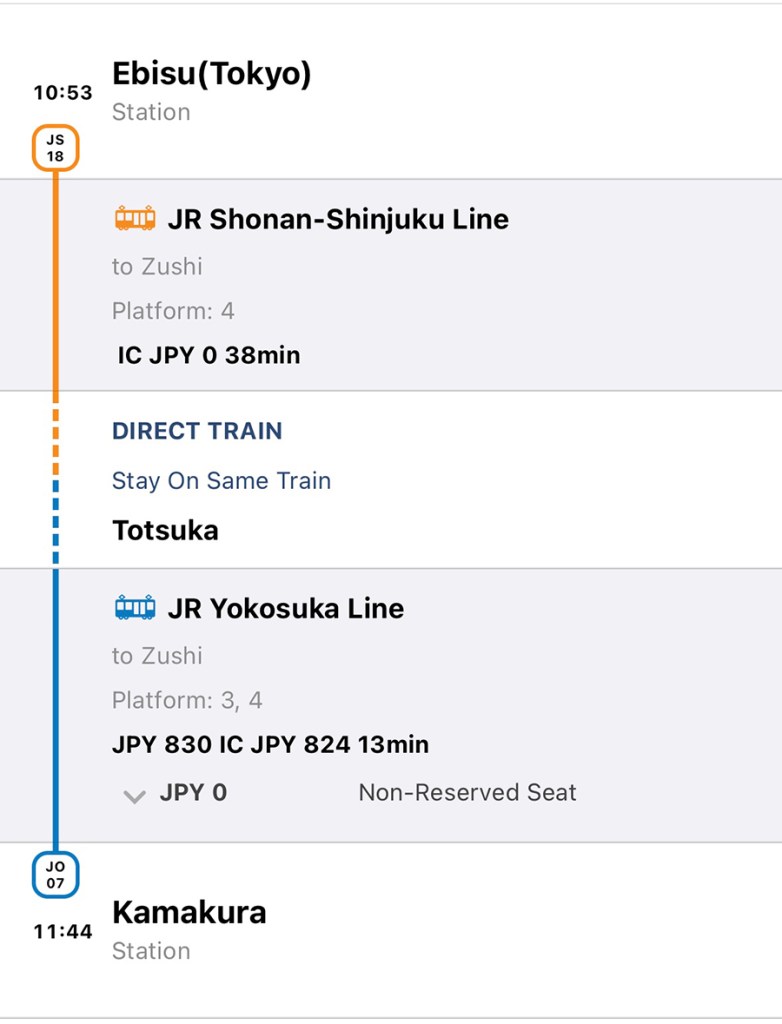
Here’s the website where you can reserve and pay for tickets on Tobu railway express lines (the Kegon and the Spacia are the ones you might see recommended, depending on when you decide to leave Tokyo). The rest of the trains can be boarded with your Suica or PASMO transit card.
I used the Japan Navigation phone app to figure out this route, and you can easily use it too, with your actual date and preferred arrival time. It’s also good for finding the easiest way to get to Tokyo Station from where you’re staying. Here’s where to get the app and how to use it.
•
Click here for more Beyond Tokyo posts

•
Or get more must-see destinations sent to your email every month when you subscribe!

•

•
•

Jonelle Patrick writes novels set in Japan, produces the monthly Japanagram newsletter, and blogs at Only In Japan and The Tokyo Guide I Wish I’d Had
 Japanagram